4 Korean Pianists Just Reached 180 Countries
 By Jang Hojin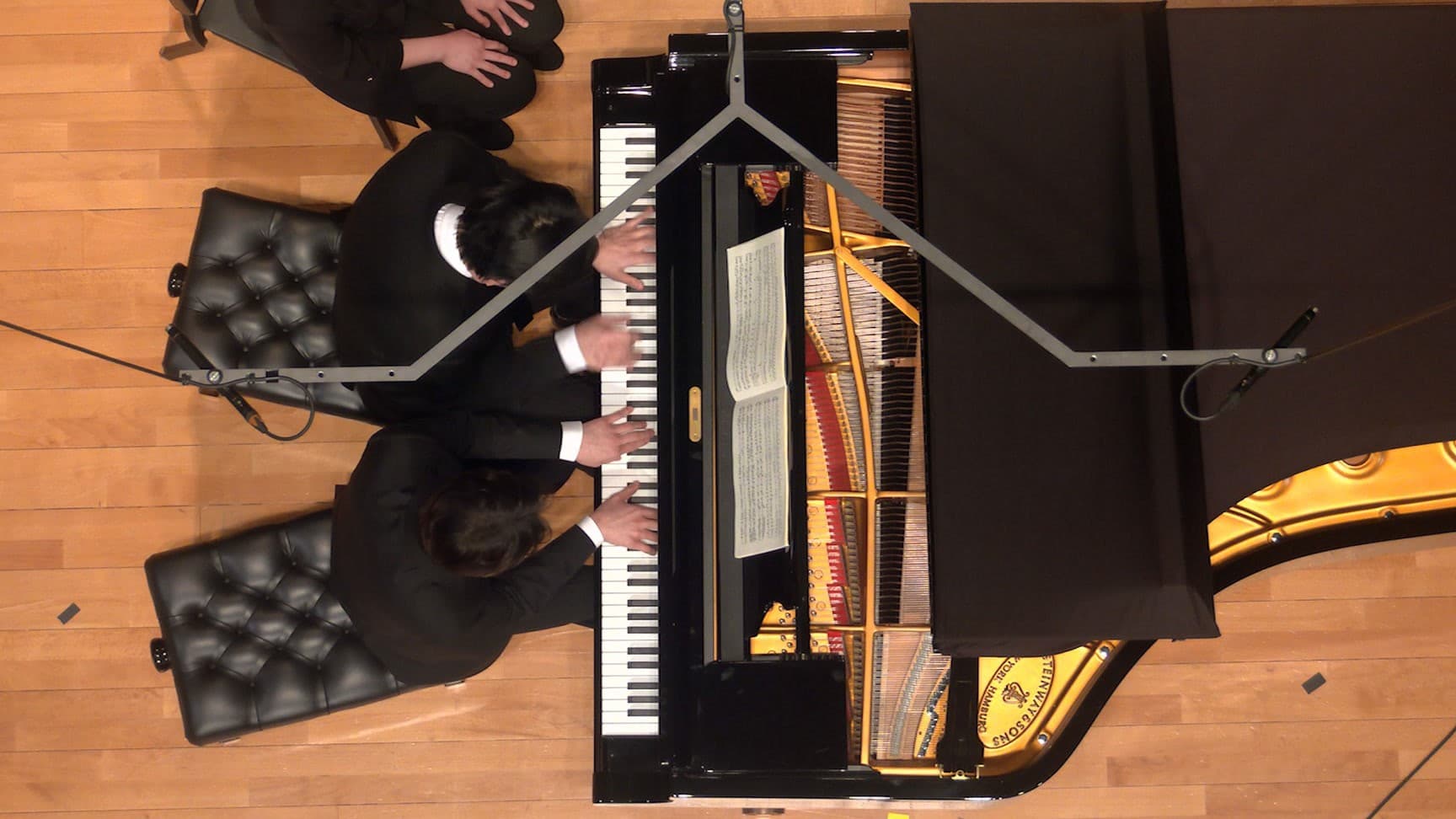
Four Korean pianists have turned a Seoul concert hall moment into a global culture story. Sunwook Kim, Yekwon Sunwoo, Seong-Jin Cho and Yunchan Lim appeared together for Hyundai Motor Group's special concert, and the behind-the-scenes story has now been carried by CNN's Showtime to audiences across more than 180 countries. For Korean classical music fans, the headline is not only the broadcast reach. It is the rare image of four internationally recognized Korean artists sharing one stage, one musical idea and one carefully built production.
The concert, held at Seoul Arts Center in February, was organized around the theme "Resonance That Continues." It honored the 25th anniversary of Hyundai founder Ju-yung Chung while framing the evening through music, craft and collaboration rather than a standard corporate ceremony. That shift is why the story has moved beyond business pages in Korea. The CNN feature presented the event as a performance project with emotional and technical stakes: four pianos, four star-level performers, years of planning, and a production team trying to make a symbolic idea sound alive.
For global viewers discovering the story through CNN, the names on stage carry real weight. Kim is both a pianist and conductor with deep ties to Korean and European classical scenes. Sunwoo is known internationally after major competition success. Cho became one of Korea's most visible classical exports after his rise on the global stage. Lim, the youngest of the four, has become a phenomenon for a new generation of classical listeners. Together, they give the concert a lineup that feels closer to a summit than a one-off appearance.
Why the CNN spotlight matters now
CNN's Showtime series is built around the preparation behind large-scale cultural events, and this episode gave the Korean concert a format that many overseas viewers can immediately understand. Rather than only showing a finished performance, the program looked behind the curtain: how the musicians came together, how the pianos were prepared, and how a team translated an abstract theme into sound and staging. That matters because Korean classical music often travels through competitions, solo recitals and viral performance clips. Here, the hook is collective: four Korean pianists playing in unison for the first time in a project designed for a global television audience.
The number attached to the broadcast is also hard to ignore. Korean reports and Hyundai Motor Group's own newsroom materials say the program reached more than 180 countries through CNN International. In Discover terms, that gives the story a simple reason to click: a Seoul performance that many Korean fans may have missed locally has suddenly become a worldwide culture export. It is not a comeback, a drama casting or an idol tour, but it has the same international logic that powers many Korean entertainment stories: local talent, a memorable visual, and a global platform amplifying the moment.
The emotional appeal comes from the unusual configuration. Four acclaimed pianists rarely align their schedules for one stage, and four-piano performance is not a casual format. It demands precise listening, careful balance and a shared sense of timing. A single pianist can command a hall through personality; four must create one musical body without flattening their individual colors. That is the part of the story that makes fans pause. Viewers are not just being told that Korea produced several major classical artists. They are seeing those artists placed side by side, asked to turn personal prestige into ensemble chemistry.
The details that made four pianos possible
The production detail that gives the CNN segment texture is the instrument work. Hyundai Motor Group's official material notes that the program also introduced Lee Jong-Yeol, Seoul Arts Center's master piano tuner, and the Steinway artisans whose work sits behind the instruments. That may sound technical, but it is central to the drama of a four-piano performance. If one piano is brighter, heavier or less stable than the others, the balance can shift immediately. The audience hears the result as music, but the preparation is closer to engineering a shared sound world.
The Steinway detail gives the story another global layer. The official release notes that each piano involves more than 12,000 parts and that artisans at the historic Astoria, Queens factory were part of the episode's craft narrative. For viewers outside Korea, that connects the concert to a longer classical tradition: Korean performers, a Seoul hall, American-made instruments, and an international broadcaster turning the process into a global feature. It is a polished cultural package, but its strongest element is still human concentration. The players need touch, trust and restraint; the technicians need the instruments to speak as one without losing character.
The program's timeline adds to the sense of scale. Korean coverage says the concert took shape over roughly two years, with Chairman Chung Eui-sun's earlier experience of a four-piano performance by Kim Sunwook becoming one of the seeds for the project. That origin gives the event a personal hinge without making it only a corporate story. The stage image remains the reason fans will care: Kim, Sunwoo, Cho and Lim gathered at Seoul Arts Center, giving Korean classical music a visual moment that is easy to remember and easy to share.
A different kind of Korean wave story
Korean entertainment coverage is often dominated by pop groups, streaming dramas and celebrity appearances. This story is quieter, but it fits the same broader movement: Korean artists are increasingly treated as global cultural figures, not just domestic successes. Classical music has always moved internationally, yet the current Korean wave gives even a piano concert a new frame. When a CNN entertainment-style program devotes time to the behind-the-scenes process, the event becomes accessible to viewers who may not follow recital schedules or competition histories.
That accessibility is important for younger fans who know Yunchan Lim from viral clips or international headlines but may not yet follow the full classical ecosystem. Seeing Lim alongside Seong-Jin Cho, Yekwon Sunwoo and Sunwook Kim places him in a lineage rather than an isolated moment. It also shows how Korean classical performers can create a headline together without relying on rivalry. The story is not about who played fastest or who received the loudest reaction. It is about a group of elite musicians agreeing to serve a single concept.
The February concert also gives Korean audiences a reason to revisit an event that may have felt formal at first glance. A commemorative program tied to a corporate founder could easily sound distant from everyday entertainment readers. The CNN angle changes the temperature. It spotlights rehearsal, tuning, craftsmanship and the challenge of gathering four artists whose calendars are usually built around separate stages. That turns the event into a behind-the-scenes performance story, which is exactly the kind of context that makes global viewers understand why the moment was unusual.
For Hyundai Motor Group, the broadcast frames the concert as a statement about legacy and collaboration. For classical fans, the more exciting part is what it suggests about Korean performers' collective presence. A single Korean pianist winning attention abroad is no longer surprising. Four of them appearing in a production distributed around the world is a different signal. It says Korean classical talent is not only producing stars; it is producing scenes, collaborations and cultural images that can travel.
What fans should watch next
The immediate question is whether the CNN exposure creates a second life for the performance online. Official clips and highlight videos already give the concert a visual afterlife, and the strongest Discover image is obvious: black concert attire, polished pianos, and the overhead geometry of hands meeting on the keyboard. That image does not need heavy explanation. It tells viewers they are looking at something rare before they even read the full story.
There is also a practical effect for the four pianists. Fans who arrive through Lim may leave with curiosity about Kim's conducting work, Cho's discography or Sunwoo's competition-winning repertoire. Fans who already follow Cho may discover why a four-piano arrangement changes the listening experience. A broadcast like this can widen the audience not by simplifying the music, but by giving viewers a doorway into the people and craft behind it.
The story lands at a moment when Korean culture's global visibility is no longer limited to one genre. Pop music, drama and film still drive most mainstream attention, but classical performers are increasingly part of the same international conversation about Korean creative excellence. This CNN feature gives that shift a clean, memorable frame: four Korean piano masters, one Seoul stage, and a performance story now visible in more than 180 countries.
That is why the trend keyword matters. Search interest around Chung Eui-sun led readers to a corporate name, but the article hidden inside the trend is a culture story. At its center are four artists whose collaboration transformed a formal anniversary concert into a global showcase for Korean classical music. For fans, the lasting image is not a boardroom or a press release. It is four pianists listening to one another, turning a difficult format into a shared sound big enough to travel.
How do you feel about this article?
저작권자 © KEnterHub 무단전재 및 재배포 금지
Entertainment Journalist · KEnterHub
Entertainment journalist specializing in K-Pop, K-Drama, and Korean celebrity news. Covers artist comebacks, drama premieres, award shows, and fan culture with in-depth reporting and analysis.
Comments
Please log in to comment