7 Korean Stars Who Stepped Outside Their Comfort Zone — And Owned It
From Rain's bone-chilling villain turn to Byeon Woo-seok's conflicted prince, Korean actors are delivering their most unexpected performances yet
 By Park Chulwon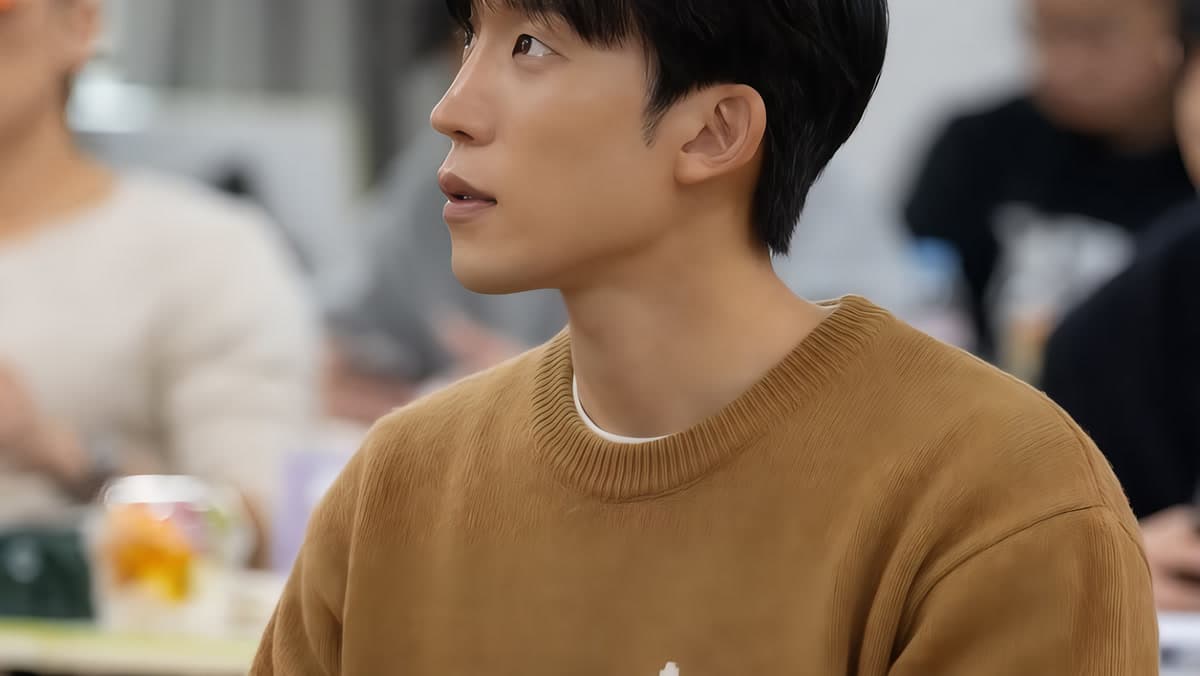
Something unexpected has been happening in Korean entertainment over the past year. One by one, some of the most familiar, likeable faces in the industry have been trading in their "nice guy" or "girl next door" reputations for villain roles, power-hungry royals, and characters that demand a completely different emotional register. The results have surprised even longtime fans — and in several cases, the performances have become the defining moments of their careers so far.
Here are seven Korean stars who stepped well outside their comfort zones — and proved they were built for the roles they had always been avoiding.
1. Rain (Jung Ji-hoon) — The Villain That Stopped Netflix Viewers Mid-Scroll
For decades, Rain has been one of the most recognizable figures in Korean pop culture — a singer, actor, and entertainer whose charisma consistently outpaced whatever genre he happened to be working in. What he had never done, across a career stretching back to the early 2000s, was play a genuinely frightening villain. That changed with Bloodhounds Season 2 on Netflix, where he was cast as Im Baek-jeong, a former boxer who runs an illegal underground fighting ring and kills without hesitation.
The performance hit differently. "I always wanted to play a sinister role at least once," Rain said, but he was careful not to make the character feel like his usual action work. He studied shadow boxing specifically to develop movement that would feel distinct from his established on-screen fighting style, and pushed through neck and back pain across 10-plus-hour shooting days with nothing but painkillers — refusing to let physical discomfort blunt the character's menace. He shaved his head into a buzz cut for the role, committing to a visual transformation that left nothing to the audience's imagination.
The result was a performance that helped push Bloodhounds Season 2 into Netflix's global Top 10 non-English TV shows within two weeks of release, and eventually to the number one spot in that category worldwide. It was also the catalyst for a musical comeback: Rain announced a return to music on May 11, 2026 with a new single, "Feel It (It's You)" — a mellow R&B pop track that lands in sharp contrast to the ferocity he brought to the screen.
2. Ha Ji-won — Playing Fake Tears for the First Time in a 25-Year Career
Ha Ji-won built her reputation on performances that required enormous physical and emotional commitment — action sequences, period dramas, historical epics. What she had not done was play the villain. When the drama Climax cast her as Choo Sang-ah, a character whose defining trait is manipulating public sympathy through calculated deception, she treated it as an entirely new challenge.
"Every moment of erasing Ha Ji-won and becoming Choo Sang-ah was difficult," she said. "I approached it with the heart of a newcomer." The character — stylish, ruthless, and willing to weaponize crocodile tears to cover up crimes — required the actress to leverage the warmth she's spent decades building in the audience's mind, and weaponize it as a trick. That's a harder acting problem than simply playing a monster from the start, and Ha Ji-won tackled it with the thoroughness that has defined her career since Secret Garden.
3. D.O. (EXO) — The Villain Was on His Bucket List
EXO's D.O. (real name Do Kyungsoo) established himself as one of K-pop's most respected crossover actors with nuanced performances in films like Cart and Room No. 7. His screen persona has always leaned toward the understated — calm, thoughtful, occasionally funny. Playing a genuinely evil character was, by his own admission, something he had been waiting to do.
"Playing a villain was on my bucket list," D.O. said of his role as Ahn Yo-han in the OTT series Mosaic City (조각도시), a character who engineers other people's downfalls with a precision that borders on art. For the role, he worked closely with the stunt director on developing physical movement that would read as chilling rather than simply aggressive. He sat through four-plus hours of hair and makeup each day — repeated dyeing and perming to shift his silhouette — and focused on external details that would register in the audience subconsciously, making the performance disturbing before he had even said a word.
4. Park Jinyoung (former B1A4) — A Cult Leader in the Making
Park Jinyoung, the singer-turned-actor who has steadily built a reputation for his warm, youthful screen presence, took on one of his most physically demanding and tonally extreme roles in the film High Five (하이파이브). He plays Yeong-chun, a cult leader who has received a pancreas transplant, regained his youth, and is now hunting down other people with special abilities to steal their powers.
The role required a physical transformation away from his natural image. He cut his diet significantly to achieve sharp muscle definition — not the bulk of an action star, but the lean, purposeful look of someone dangerous in a quieter way. He also spent time studying voice recordings of senior actor Shin Goo, who plays the older version of the same character, working to match an eeriness in tone that would connect the two versions across decades of the character's life. The collaboration between the two actors, though never on screen at the same time, runs as a consistent emotional thread beneath the film.
5. Byeon Woo-seok — From Romantic Lead to a Prince With Nowhere to Stand
After Lovely Runner made him one of the most watched actors in Korea, Byeon Woo-seok returned in the MBC drama 21st Century Grand Prince Wife (21세기 대군부인), this time as the second prince in a constitutional monarchy version of South Korea — a character beloved by the public but deliberately kept from the spotlight by the rules of his position.
The drama, co-starring IU, has become one of the most-watched Korean dramas of 2026, recording a peak minute rating of 14.3% in its fifth episode and consistently holding in the double digits. Byeon Woo-seok described his character as one who looks composed and strong from the outside while carrying significant loneliness and unresolved emotional weight. He worked with his styling team to blend traditional Korean court costume with a more contemporary silhouette, wanting the character's power and restraint to register visually before he spoke.
The drama is currently airing on MBC and global streaming platforms, with new episodes generating sustained audience interest week over week.
6. Park Jihoon — 15 Kilograms and a Bow and Arrow
Former Wanna One member Park Jihoon has transitioned into acting with the kind of careful project selection that signals a long-term commitment to the craft. His role as King Danjong — the historically tragic young ruler — in the film The Man Who Lived With a King (왕과 사는 남자) required one of the more extreme physical preparations seen in recent Korean cinema.
He lost 15 kilograms for the role. "I wanted to express the helplessness of someone so young facing all of this," he said. "I basically stopped eating." Alongside the weight loss, he trained in Korean traditional archery (국궁), an experience he described as unexpectedly meditative: "I was told it was about emptying your mind, and I really did just try to empty it and keep practicing." Veteran actor Yoo Hae-jin, his co-star, was visibly moved by the younger actor's commitment. "Park Jihoon made me feel sorry for him — he gave so much. I'm so grateful to him," Yoo said.
7. Yoo Hae-jin — The First King After 25 Years
One of Korea's most beloved veteran character actors, Yoo Hae-jin has spent 25 years playing working-class underdogs, sidekicks, and physically active roles that often require him to run, fight, and get thrown around. In the historical film Owl (올빼미), he was cast as King Injo — and it was the first time in his career he had played a king.
"After all I've done, now I'm playing a king — I can't help but smile," he said. "Usually I'm running away and rolling around doing action, but now they dress me up and put me in court robes. My whole mindset shifted." He channeled that sense of novelty into studying the subtle, contained performance the role demanded — focusing on the psychological interior of the character and working to express it through the smallest physical details: a faint tremor in the face, a pause that carries more weight than a speech. The result was one of the most discussed supporting performances in recent Korean cinema.
Across all seven of these cases, the common thread is not simply that actors tried something new — it's that they prepared with the kind of specificity that made the unfamiliar feel inevitable. Rain didn't just play a villain; he studied the mechanics of how his body moved so the villain wouldn't look like Rain. Ha Ji-won didn't simply adopt a cold expression; she thought through what it means to perform sincerity while feeling none. D.O. focused on the external before the internal. The commitment to craft behind these transformations says something significant about where Korean acting is right now — and where it is likely heading.
How do you feel about this article?
저작권자 © KEnterHub 무단전재 및 재배포 금지
Entertainment Journalist · KEnterHub
Entertainment journalist focused on Korean music, film, and the global K-Wave. Reports on industry trends, celebrity profiles, and the intersection of Korean pop culture and international audiences.
Comments
Please log in to comment