aespa's SYNK: aeXIS Line Tour: How SM Entertainment's Biggest Act Became a Stadium Powerhouse
 By Park Chulwon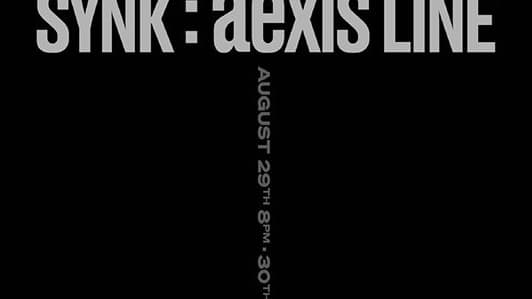
aespa confirmed their third world tour in June 2025, and by August the ticket landscape told the story with unusual clarity. SYNK: aeXIS Line — the tour's full title — launched with three Seoul dates at the KSPO Dome from August 29 to 31, all of which had sold out during fan club pre-sale before general tickets even went on sale. The Tokyo Dome finale, scheduled for April 2026, sold out at comparable speed. The numbers established a straightforward fact: aespa had become a stadium act, and the infrastructure of their fanbase had grown to match.
The tour's announcement followed the June 2025 release of "Dirty Work," a pre-tour single that had placed on multiple international charts and demonstrated the breadth of aespa's sonic range — aggressive electronic production layered over the members' increasingly confident vocal delivery. It was a departure from the more orchestral texture of Armageddon (2024), suggesting the tour would offer a different energy from the dramatic peak of that album cycle.
From Concept Act to Concert Powerhouse
aespa's journey from concept-forward debut act to concert headliner deserves contextual framing. They debuted in November 2020 with a science fiction narrative — each member paired with a digital avatar "ae-member," set in a world called KWANGYA — that was ambitious, strange, and polarizing. Some listeners found the concept intellectually interesting; others found it an obstacle to emotional engagement with the music. The debate about whether aespa's concept worked lasted roughly three years, and the answer arrived not through critical consensus but through commercial performance.
The 2024 full-length album Armageddon sold over 1.15 million copies in its first week globally — the first SM Entertainment act to achieve million-seller status in a single week. The tour that followed, SYNK: Parallel Line, demonstrated that aespa's live performance could deliver on the scale their recorded output had promised. The group's choreography, always technically demanding, had been refined through two years of touring into something that felt both precise and alive. By August 2025, SYNK: aeXIS Line was not a test of whether aespa could sustain stadium-level interest — it was a celebration of the fact that they already had.
The Tokyo Dome Significance
The tour's endpoint — Tokyo Dome on April 26, 2026 — deserves specific attention. Tokyo Dome is one of East Asia's most prestigious concert venues, with a capacity of approximately 55,000 and a history that includes landmark performances by Western acts like Madonna and Michael Jackson alongside domestic Japanese artists and a selective list of K-pop groups. Performing there signals not just commercial success but a specific kind of cultural legitimacy in the Japanese market.
For aespa, the Tokyo Dome booking reflected a Japanese market development strategy that had been building since 2022. Their Japanese fanbase had grown steadily across the SYNK tour series, with Japanese dates regularly selling out faster than equivalent American or European dates. The structural support from SM Entertainment's historically strong Japanese market operations — developed across decades with TVXQ, Super Junior, and Girls' Generation — provided infrastructure for the kind of sustained campaign that converted interest into committed concert-going fandom.
SM Entertainment's Strategic Stakes
SYNK: aeXIS Line represented a significant financial event for SM Entertainment. Live touring revenue had become increasingly central to K-pop entertainment companies' business models as physical album sales fluctuated and streaming revenue remained structurally limited relative to traditional music market revenues. A world tour of this scale — with stadium dates across Seoul, multiple Japanese cities, North America, and Europe — generated direct ticket revenue, merchandise income, and the less quantifiable but commercially significant effect of amplifying streaming and physical sales in each market visited.
aespa had become SM Entertainment's primary commercial engine for 2025, filling a structural role that Girls' Generation had occupied in the 2010s. The company's investor communications consistently highlighted aespa's touring and album performance as key drivers. SYNK: aeXIS Line was, in this sense, not just a concert tour but a central pillar of SM Entertainment's annual revenue projection — the kind of event that moved financial forecasts in a measurable way and that justified the significant production investment that characterized SYNK-series staging.
The tour also represented a test case for SM's evolving approach to artist management. The company had been navigating organizational changes since 2023, and aespa's commercial consistency provided a stabilizing narrative for both the label and its parent company KAKAO Entertainment. A successful world tour of this scale would demonstrate that SM's core artist development capabilities remained intact through periods of corporate transition.
Future Outlook
By August, with the Seoul KSPO Dome dates less than a month away, aespa's promotional activity had reached its pre-show intensity peak. The group's social media engagement was at sustained high levels; "Dirty Work" was cycling through final chart performance; production teams were finalizing the elaborate stage design that had become a signature of SYNK productions. In the months following the Seoul opener, the tour would move through Japan, North America, and Europe — confirming with each sold-out venue that the girl group that debuted with a science fiction concept had become one of the most formidable live acts in contemporary K-pop.
How do you feel about this article?
저작권자 © KEnterHub 무단전재 및 재배포 금지
Entertainment Journalist · KEnterHub
Entertainment journalist focused on Korean music, film, and the global K-Wave. Reports on industry trends, celebrity profiles, and the intersection of Korean pop culture and international audiences.
Comments
Please log in to comment