Afro House Meets K-Pop: Why TXT's 'Love Language' Is More Than a Genre Experiment
TOMORROW X TOGETHER's May 2 release signals how top-tier K-pop acts are using commercial security to pursue genuine sonic exploration
 By Park Chulwon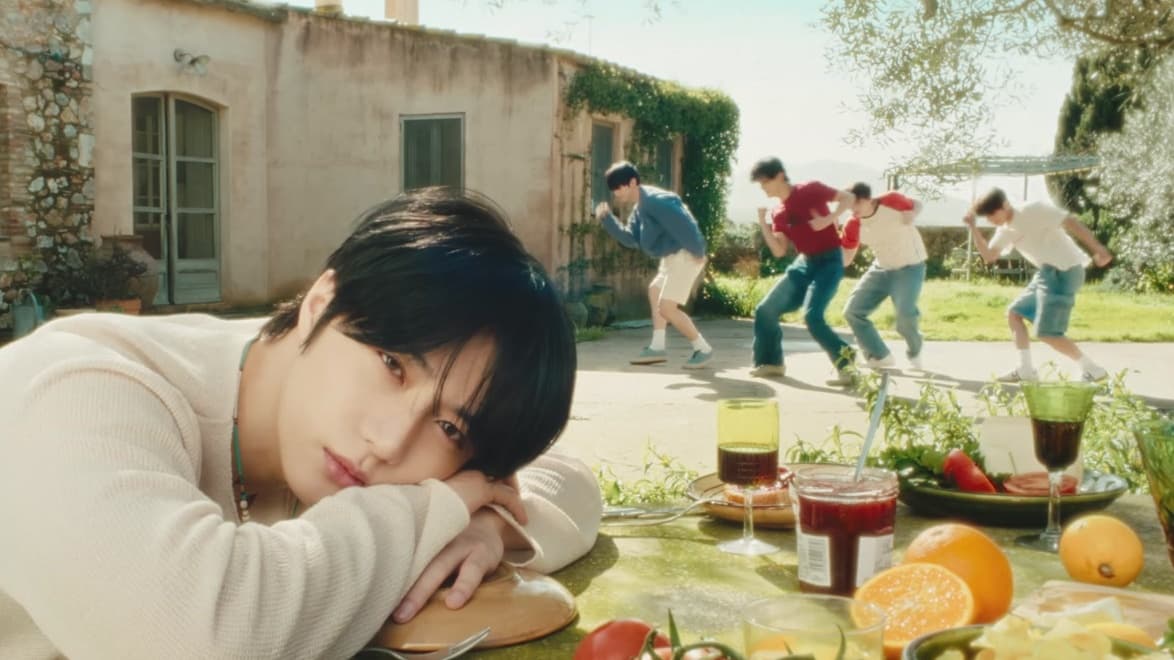
TOMORROW X TOGETHER dropped "Love Language" today — and what matters most is not that the song is good, but what it represents as a genre choice. The five-member BigHit Music group has built a reputation for emotional complexity and dark thematic arcs. "Love Language," their first release of 2025, is built on Afro house, a South African electronic music genre defined by warm percussion, syncopated bass, and a rhythmic buoyancy that physically resists melancholy. Choosing Afro house for a K-pop release in May 2025 is not coincidental. It is a deliberate signal about where a group at TXT's level of artistic development can now afford to go.
What Afro House Actually Is — And Why It Arrived in K-Pop Now
Afro house emerged from South Africa's club music scene in the late 2000s, blending elements of deep house with African rhythmic traditions. Its international breakthrough accelerated through the mid-2010s as producers like Black Coffee brought the sound into global club circuits, and by the early 2020s it had cross-pollinated into Western pop production through collaborations and streaming algorithm serendipity. The genre's warm, percussive textures — as opposed to the harder-edged electronic sounds that dominated EDM's peak commercial moment — have made it highly compatible with pop vocal production, which typically favors melodic space over rhythmic abrasion.
K-pop's relationship with African and Afrobeats-adjacent sounds accelerated sharply around 2022-2023, as producers working with major Korean acts integrated amapiano, Afrobeats, and Afro house elements into tracks for groups including aespa, ATEEZ, and several SM and HYBE-affiliated artists. The genre choice in those cases often remained embedded within a larger song architecture — a bridge, a pre-chorus texture — rather than as the dominant framework. "Love Language" goes further: the Afro house groove is the song's structural foundation, not an accent.
TXT's Genre Moves as Career Architecture
To understand why "Love Language" lands differently than a typical K-pop sonic experiment, it helps to map TXT's previous genre history. The group's early work — particularly the "Dream Chapter" and "Chaos Chapter" albums — drew heavily from alternative rock, post-punk revival textures, and cinematic pop production. Their 2022 breakout single "Good Boy Gone Bad" was built on nu-metal and rock fusion elements that raised international eyebrows and significantly expanded their press footprint in Western music media. The willingness to go uncomfortably heavy was noted as a differentiator.
The "Minisode" series then pulled the sonic palette back toward introspective mid-tempo pop and ballad-adjacent territory, demonstrating tonal range in the opposite direction. "Minisode 3: TOMORROW" (2024) debuted at No. 3 on the Billboard Top 200, confirming that TXT's fanbase (MOA) would follow them regardless of genre. Having established that commercial floor, the group had earned the latitude to experiment again — this time outward and upward rather than inward and dark. Afro house, with its intrinsically positive and communal energy, was the logical direction.
This career-level genre sequencing reflects a kind of accumulated creative capital. Groups that have not yet established a reliable commercial floor tend to stay closer to proven sonic templates in their releases. Groups with a proven fanbase and multiple Billboard-charting albums have room to explore. "Love Language" is what that room looks like when TXT uses it.
The HUENINGKAI Co-Writing Dimension
HUENINGKAI's co-writing credit on "Love Language" deserves analytical attention separate from the genre discussion. The youngest member of TXT — half German, half Korean, and a trained multi-instrumentalist — has contributed to production across the group's catalog. But a co-writing credit on a lead comeback single is a specific kind of milestone: it signals that the group's internal creative contribution is being foregrounded as a marketing point, not just acknowledged in the liner notes.
In K-pop's industrial structure, the degree to which idol members participate in songwriting sits on a spectrum that correlates with both agency strategy and member development. HYBE's explicit policy of encouraging artist involvement in songwriting has been visible across BTS, TOMORROW X TOGETHER, and their newer acts. Foregrounding HUENINGKAI's credit for "Love Language" is a continuation of that transparency — and, practically, a layer of authenticity marketing that resonates with MOA and with K-pop listeners who track songwriting credits as a measure of artistic seriousness.
What the Music Video Is Actually Doing
The "Love Language" music video, filmed in the Catalonian countryside of Spain, does something visually that complements the song's genre architecture. K-pop music videos in the current era tend to divide into two production philosophies: the high-concept, CGI-heavy spectacular that uses visual complexity to compensate for sonic simplicity, and the documentary-adjacent, naturalistic shoot that trusts the song to carry weight while the visuals provide context and texture. "Love Language" falls firmly into the second category.
Open landscapes, warm light, and the group in casual, summer-coded clothing — the video signals accessibility. The "love lock" choreographic motif (symbolic locking and unlocking gestures built into the dance sequence) provides a sharing hook for short-form video without requiring elaborate visual setup to deliver. On release day, clips from the MV are already circulating across TikTok and Reels among audiences who have not necessarily consumed TXT's full back catalog. That reach — casual viewer capture through visually clean, sonically unfamiliar, emotionally immediate content — is precisely what Afro house's structural warmth enables.
The Broader Signal for K-Pop in 2025
TXT releasing an Afro house single in May 2025 is part of a legible pattern in which top-tier K-pop acts with established international fanbases are using their commercial security to import and commit to non-Western, non-US genres in a way that earlier K-pop waves rarely could. The industry's globalization has created a fanbase with sufficiently diverse musical backgrounds — and sufficiently deep emotional investment in specific acts — to absorb genuine genre experimentation rather than demanding genre predictability.
"Love Language" works because TXT earned the trust for it to work. That is an observation about how genre experimentation functions in a fan-economy pop system as much as it is an observation about the song itself. Today, the song arrived. It will be interesting to see, across the next few months, how many other acts follow its genre lead.
How do you feel about this article?
저작권자 © KEnterHub 무단전재 및 재배포 금지
Entertainment Journalist · KEnterHub
Entertainment journalist focused on Korean music, film, and the global K-Wave. Reports on industry trends, celebrity profiles, and the intersection of Korean pop culture and international audiences.
Comments
Please log in to comment