AKMU Survived a Breakdown and Left YG — "Flowering" Is Why It All Mattered
Seven years after their last album, K-pop's most honest duo returns with their most personal work yet
 By Jang Hojin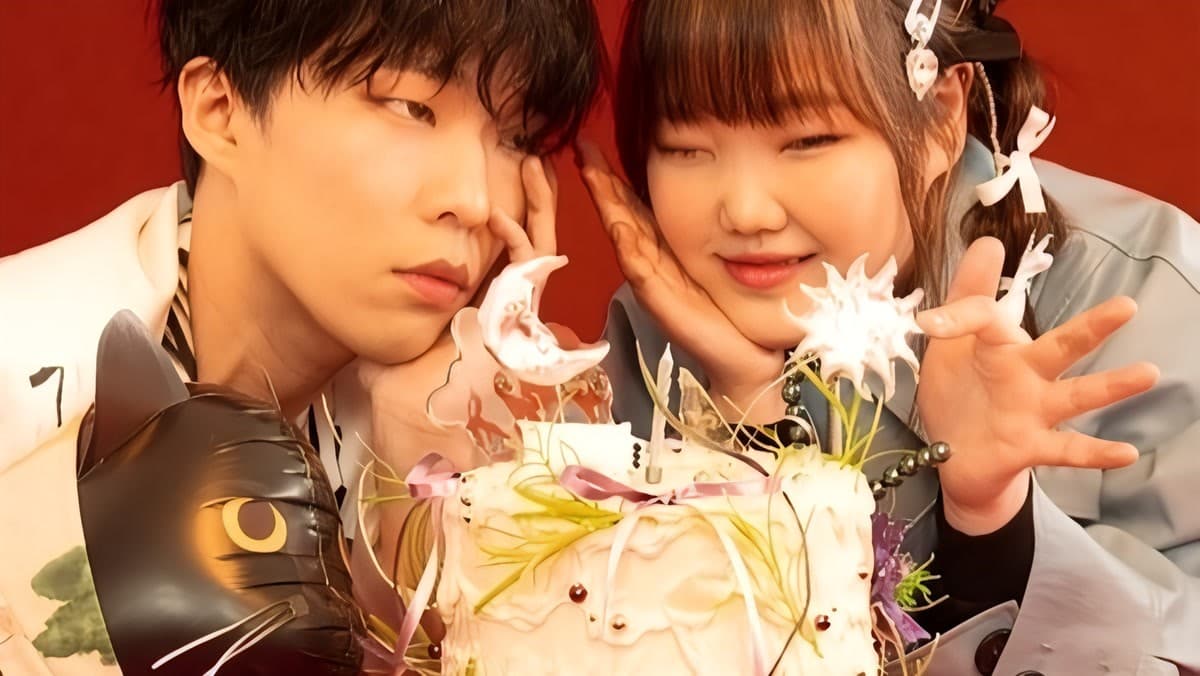
Seven years is a long time to wait for any album. For AKMU fans, the wait for the South Korean sibling duo's fourth studio album has meant navigating military service, a quiet but deeply real mental health struggle, and the end of a 12-year relationship with YG Entertainment. When 개화 (Flowering) arrives on April 7, it carries the weight of all of that — and somehow, it sounds lighter than anything they have made before.
AKMU — Lee Chan-hyuk and Lee Su-hyun — are releasing Flowering through Fountain of Inspiration, the independent label they founded in January 2026 just months after parting ways with YG. The album's title is not accidental symbolism: this is a duo emerging from a long dormancy, blooming on their own terms for the first time in their career. What makes Flowering remarkable is not just that it exists, but why it almost did not.
Twelve Years, One Label, and a Clean Break
AKMU's story begins in Mongolia. Chan-hyuk, then a teenager, wrote his first songs while his family lived abroad, and those songs eventually carried both siblings to the finals of Superstar K Season 2 in 2012 — one of K-pop's most watched talent competitions of its era. YG Entertainment signed them, released their debut Play in 2014, and for the next decade the duo became one of Korea's most beloved acts: folk-influenced songwriting, disarmingly honest lyrics, and a chemistry that made the sibling-duo concept feel less like a gimmick and more like a musical philosophy.
Their first three albums — Play (2014), Spring, Summer, Fall, Winter (2017), and Sailing (항해, 2019) — charted dominantly in Korea and built an international following that valued artistry over idol aesthetics. But behind the warm public image, the relationship between the duo and YG had quietly run its course. In November 2025, YG confirmed that AKMU's 12-year contract would not be renewed. According to reports, producer Yang Hyun-suk himself raised the idea first, suggesting that a new creative environment could fuel their next chapter. By January 2026, Fountain of Inspiration was official.
That level of amicable separation is rare in K-pop, where label departures often turn adversarial. That it did not — and that the result is an album this personal — tells you something about where AKMU's priorities have always been.
The Crisis That Almost Ended Everything
But the real story of Flowering is not the label transition. It is what happened during Chan-hyuk's mandatory military service, which ran from 2021 to 2023.
With her musical partner gone, Su-hyun entered what she has since described as one of the darkest periods of her life. In a frank appearance on tvN's You Quiz on the Block in April 2026, she revealed that she had essentially shut herself inside her room — blocking out sunlight, stepping back from music entirely, and beginning to question whether AKMU would continue at all. The divergence in musical direction between the two had become a source of genuine conflict. Dissolution was not just a thought; it was a real possibility under serious consideration.
What turned it around was Chan-hyuk. Understanding that his sister needed intervention rather than distance, he planned what he called a "personality reconstruction camp" — a three-week reset focused not on music, but on rebuilding Su-hyun's relationship with herself and with joy. He also wrote her a song: 햇빛 bless you (Sunlight Bless You), which appears on Flowering and functions as a musical letter — an acknowledgment of what she endured and a gentle pull back toward the light.
"If it were not for my brother, I would not be here now," Su-hyun said. The word she chose was savior.
That context transforms Flowering from a comeback album into something closer to a document. Chan-hyuk described the project's title concept as natural growth — things blooming not because they were forced to, but because conditions finally allowed it. For the first time, the duo recorded outside the YG studio system, working in external spaces where they could hear their music with fresh ears. The result, by Chan-hyuk's own account, prioritizes naturalness over perfection.
What the Album Sounds Like
The pre-release single 소문의 낙원 (Paradise of Rumors) offered the first glimpse of what that approach sounds like in practice. Warm acoustic textures, a melody that unfolds without announcing itself, lyrics that feel confessional without being performative — it is AKMU being distinctly AKMU, but with something looser and more spacious in the arrangement.
Flowering's 11 tracks span a range that feels wider than any previous AKMU project. 봄 색깔 (Spring Colors) expands into something more cinematic. Tent steps into deliberate minimalism. 어린 부부 (Young Couple) draws on the domestic intimacy that has always been part of their lyrical world. The title track, 기쁨, 슬픔, 아름다운 마음 (Joy, Sadness, Beautiful Heart), sits somewhere between a prayer and a pop song — not resolving into either, but holding both at once.
What unifies the album, and what distinguishes it from their YG-era work, is a willingness to stay inside uncomfortable emotional spaces rather than resolving them neatly. K-pop, even at its most introspective, tends toward resolution — the rough thing smoothed, the crisis narrativized into triumph. Flowering does not always do that. Some of these songs end in the middle of a feeling, and that honesty is precisely the point. Chan-hyuk's gift as a songwriter has always been specificity; freed from the commercial pressures a major label inevitably exerts, that specificity is sharper here than it has ever been.
Hearing the album in context of Su-hyun's depression, the estrangement, and the slow return makes songs like 햇빛 bless you and 난민들의 축제 (Festival of Refugees) register differently — not as metaphors but as dispatches from actual experience. That is uncommon in K-pop, which tends to aestheticize personal pain rather than report it directly.
What Independence Could Mean for K-Pop's Next Wave
Flowering lands at an interesting structural moment in K-pop. Major labels remain dominant, but a growing number of established artists have moved toward greater creative independence — from IU's self-managed projects to solo artists building imprints outside the traditional big-label ecosystem. AKMU's departure from YG was not driven by public conflict or scandal, but by a quiet mutual recognition that the system had given them everything it could.
The test of that independence is this album. If Flowering charts as strongly as their YG-era work while demonstrating the artistic range that their label years did not fully allow, it will become a reference point in the ongoing industry conversation about whether creative control and commercial success can coexist in K-pop's current market. Chan-hyuk's Korean Music Award wins — the duo has won three times at Korea's most respected music industry awards — suggest the critical groundwork is already in place.
Their EBS Space Concert on April 8, one day after release, will be the first live test of how this music translates to a room. If the reunion their music describes is as complete as it sounds on record, K-pop's most genuinely honest duo is not just back — they are, for the first time, entirely themselves.
How do you feel about this article?
저작권자 © KEnterHub 무단전재 및 재배포 금지
Entertainment Journalist · KEnterHub
Entertainment journalist specializing in K-Pop, K-Drama, and Korean celebrity news. Covers artist comebacks, drama premieres, award shows, and fan culture with in-depth reporting and analysis.
Comments
Please log in to comment