AWON Frames Insomnia as a First Step Forward
 By Park Chulwon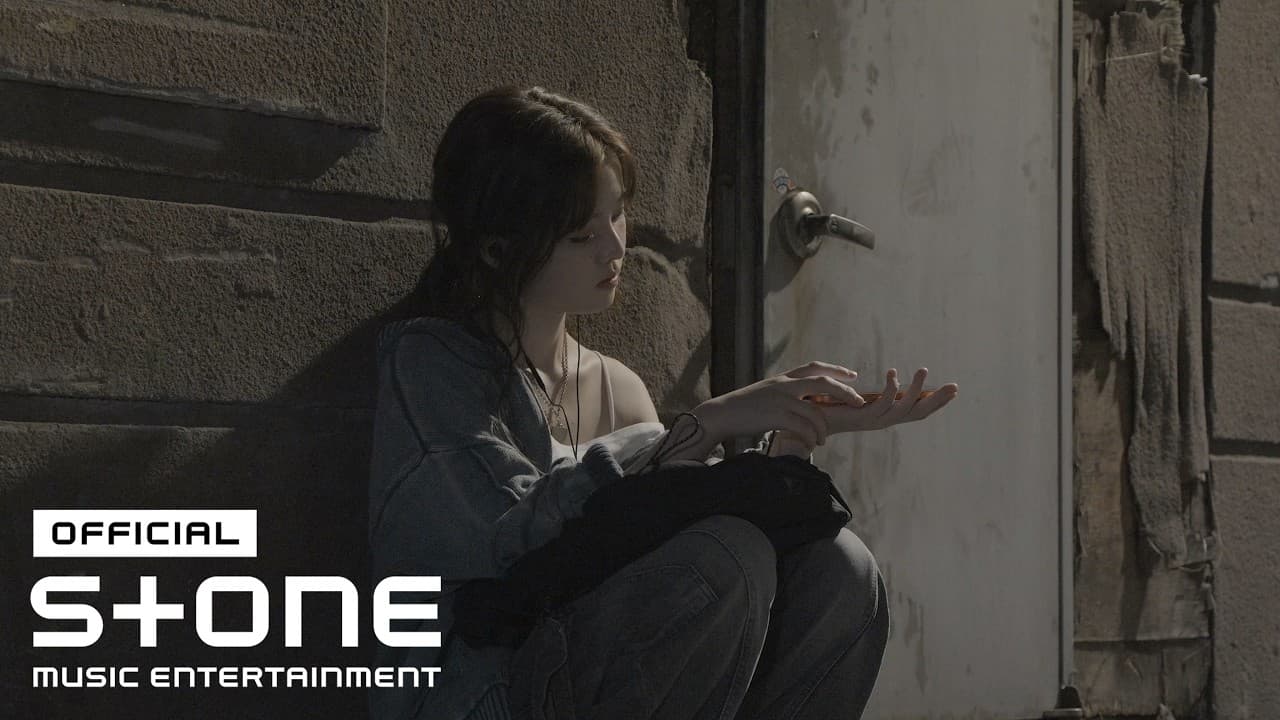
AWON has released the official music video for insomnia, introduced in Korean as 나만이었나, through Stone Music Entertainment's YouTube channel on June 13, 2026. Featured on Stone Music Entertainment, the video arrives as a small-scale but pointed artist statement: a song about sleepless hours, social second-guessing and the difficult decision to stop running from one's own thoughts. It is not built like a comeback that demands instant spectacle. It is built like a beginning that wants to be heard closely.
The source description frames the song around repeated nights spent awake until morning. In that space, the narrator revisits minor conversations, overreads other people's feelings and recognizes a pattern of avoidance. The crucial turn is that sleeplessness does not remain only a symptom of loneliness. It becomes the place where the artist notices what they want to say and what they want to do next. That makes insomnia more than a sad-night track. It is a declaration of movement after hesitation.
A Sleepless Concept With a Clear Emotional Arc
Many pop songs use insomnia as shorthand for heartbreak. AWON's release takes a broader route. The official description does not reduce the night to one lost relationship or one dramatic event. Instead, it describes a mental loop: replaying casual exchanges, defining other people's hearts too quickly, feeling lonely and then recognizing that those thoughts have changed the speaker. That choice gives the track a coming-of-age quality. The conflict is internal, but the outcome is active.
The Korean title, roughly asking whether it was only the narrator who felt a certain way, adds a delicate ambiguity. It can point toward unreturned feeling, but it can also describe the isolation of believing that no one else is experiencing the same confusion. Paired with the English title insomnia, the song suggests a private hour when questions become louder because there is nothing to distract from them. That is a strong frame for a solo artist because it introduces personality without needing heavy exposition.
The most interesting part of the premise is its final direction. The description says the speaker wants to put aside the urge to flee somewhere unknown and push through the opening that has appeared. In article terms, that is the headline emotion: not sleeplessness itself, but the decision made inside it. AWON is presenting insomnia as a turning point, a place where avoidance begins to lose authority.
The Credits Emphasize Personal Songwriting
The music credits reinforce that personal frame. insomnia is credited as composed by Yeon., shrmthedreamer and AWON, with lyrics by shrmthedreamer and AWON and arrangement by Yeon. The release also lists Lee Minwoo for management, Kang Miyeon for artwork and music video direction, and Yeon for mixing, mastering and production. The project is produced by 0310 Entertainment.
Those credits matter because they place AWON inside the song's authorship rather than only in front of it. For emerging soloists, that distinction can shape how audiences read the music. A track about sleepless introspection lands differently when the artist is directly involved in the lyric and composition process. It signals that the song is not merely assigned mood, but part of a self-defining catalog. The video then becomes a visual extension of that authorship.
The presence of a single director on both artwork and music video also suggests a compact visual identity. Smaller releases often benefit from consistency more than abundance. A few coherent images can do more for recognition than a large amount of scattered material. If insomnia is meant to introduce AWON's inner world, then the title, credits and MV rollout are all working toward the same goal: presenting a voice that is quiet, unsettled and ready to move.
How the MV Fits Today's Korean Music Discovery
Stone Music Entertainment's channel gives the release an important public platform. Unlike an agency-only channel that primarily speaks to an existing fandom, Stone Music functions as a broad discovery lane for Korean music. Viewers may arrive for one artist and encounter another through recommendations, playlists or the channel's steady MV uploads. For a soloist such as AWON, that context is valuable because the first audience may include listeners who know nothing about the artist but are open to a mood-driven track.
insomnia also fits a current listening pattern: songs that work as private soundtrack rather than public event. The global K-pop market is still dominated by high-concept idol releases, but Korean music audiences continue to make room for restrained solo tracks that articulate a particular emotional condition. Sleeplessness, overthinking and emotional avoidance are themes that travel well because they require little cultural explanation. The song's job is to make them feel specific rather than generic.
AWON's version of that territory is defined by hesitation becoming intent. The lyrics, as summarized in the release material, are less interested in blaming someone else than in noticing the narrator's own limits. That is a mature angle for an introductory single. It makes the artist sound less like a character trapped in sadness and more like someone documenting a threshold. In a market where new names must become legible quickly, that kind of precise emotional framing is useful.
What Comes Next for AWON
The next phase will depend on how AWON extends the song beyond the MV. A live clip could reveal the vocal color behind the studio production. A lyric-focused short video could help the Korean title travel to listeners who connect with the sleepless theme. Playlist placement would also be important, especially in late-night pop, Korean indie pop and emotional R&B contexts. The track's length and direct premise make it suitable for repeat listening if it reaches the right lane.
There is also a branding opportunity in the contrast between the two titles. 나만이었나 carries the intimate uncertainty of the Korean phrase, while insomnia gives international listeners an immediate conceptual handle. Used well, that bilingual framing can help AWON's music feel personal without becoming inaccessible. It gives fans a way to talk about the song whether they enter through the Korean lyric idea or the English mood word.
For now, the official video establishes AWON as an artist interested in turning private unease into forward motion. According to Stone Music Entertainment's official YouTube channel, insomnia is rooted in nights of wakefulness, loneliness and self-questioning, but it ends by pointing toward the first thing the narrator has discovered they want to do. That is a modest promise, but it is a meaningful one. AWON is not presenting sleeplessness as an aesthetic pose. The MV presents it as the place where a new artistic direction begins.
That measured posture may help the release last longer than a louder introduction would. The song gives listeners a simple emotional doorway, but it also offers enough specificity to make AWON's perspective identifiable. If future releases keep that balance between diary-like detail and accessible pop structure, insomnia could become a useful first marker in a catalog built around reflective, self-written music.
How do you feel about this article?
저작권자 © KEnterHub 무단전재 및 재배포 금지
Entertainment Journalist · KEnterHub
Entertainment journalist focused on Korean music, film, and the global K-Wave. Reports on industry trends, celebrity profiles, and the intersection of Korean pop culture and international audiences.
Comments
Please log in to comment