Baek Ji-yeon's Coffee Metaphor for Workplace Bullying Is Going Viral
 By Seung Jung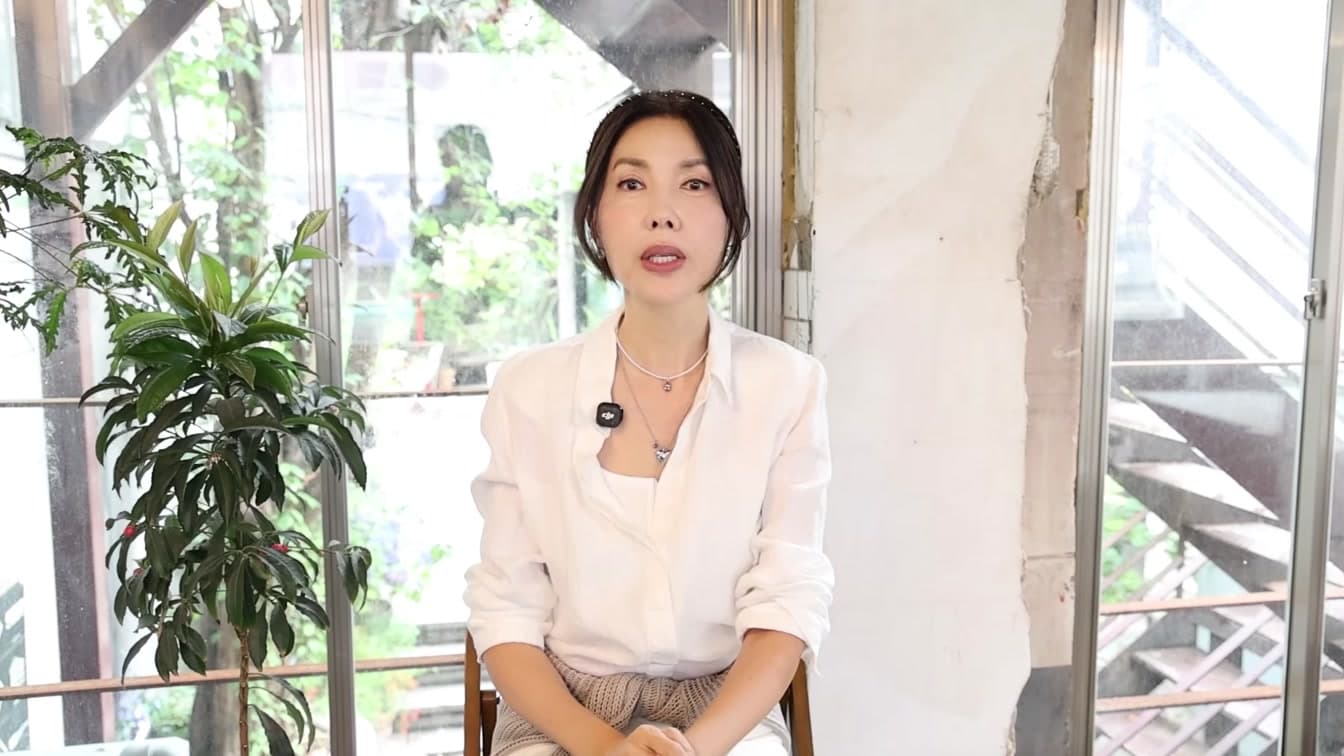
Baek Ji-yeon has spent decades being one of the most respected faces in South Korean broadcasting. But on July 20, 2026, the former MBC News Desk anchor used her YouTube channel to deliver something more forceful than any headline she ever read on air: a pointed, detailed takedown of workplace harassment — and a rare public account of the bullying she endured at the very network that made her famous.
The video, titled "The Real Reason People Choose Silence" (침묵을 선택한 사람들의 진짜 이유), opens with a metaphor that has since circulated widely across Korean social media. "If you apply too much heat to coffee, it burns," she said. "People work the same way. Constructive feedback from seniors is necessary — but bullying is not feedback. Coffee just burns. People turn to ash." The distinction she's drawing is one that Korean work culture has historically resisted making, and her willingness to make it explicitly — and to ground it in her own experience — has struck a nerve.
The Anchor Who Was Never Supposed to Make It
Baek Ji-yeon's career at MBC began with a paradox that set the tone for everything that followed. She was 23, a junior trainee, when MBC held an internal audition for a new female anchor for its flagship evening news program, "News Desk." Trainees weren't supposed to be eligible for the position — the audition was for established staff. Her supervisors told her to attend as an observer. She did. And then she won.
The network declared the result invalid. Another audition was held. She won again. Faced with consecutive first-place finishes that the organization had tried to make impossible, MBC eventually gave her the job — and then the real battle began.
"There were rumors everywhere," she recalled in a past appearance on MBC's "Radio Star." Because her family shared a surname with a powerful financial figure known as "Baekgom," stories spread that she was his daughter — that her family had funded MBC advertising campaigns worth a decade's worth of contracts to put her on screen. The rumors were false. Her path to the anchor desk was competitive, documented, and won twice over. That didn't stop the whispers.
The senior colleague who confronted her directly was blunter than any rumor. "I was against having you here," this colleague told her face-to-face. "I don't know how you were selected. This is a gamble. If you last six months, I'll put my hand to fire." It was the kind of statement that, delivered to a 23-year-old at the beginning of her career, might have ended it before it started. Instead, it did something else.
What Bullying Actually Built
"Those things made me stronger," Baek Ji-yeon said, describing the period now with the clarity that comes from having spent decades on the other side of it. "I made up my mind. I won't fall. I'll become the lead anchor. No one will push me out." It's a response that sounds clean in retrospect but would have been forged under considerable pressure in real time — a young woman in an industry that, by her own account, had gone out of its way to communicate that she didn't belong.
She lasted considerably longer than six months. By the time her tenure at MBC ended, Baek Ji-yeon held three records simultaneously: she was the first woman to anchor MBC News Desk, the youngest anchor in the program's history, and its longest-serving anchor — eight years and three months in the chair. The colleague who issued the six-month ultimatum did not, presumably, put his hand to fire.
That career arc — from audition that wasn't supposed to count, through rumors and face-to-face hostility, to record-breaking tenure — is the foundation beneath everything she said in her July 20 video. When she talks about workplace harassment now, she isn't theorizing. She's describing a system she navigated from the inside, and survived by refusing to internalize the verdict it kept trying to hand her.
The Silence That Organizations Teach
The bulk of her July 20 video wasn't autobiographical — it was analytical. Baek Ji-yeon's point wasn't just "this happened to me." It was a structural argument about how organizations reproduce harm through the behavior of people who aren't the direct perpetrators.
"In most cases of workplace harassment, the bullies and victims are a minority," she said. "The majority are the bystanders — the people who say nothing. And they're not silent because they're cowardly. They're silent because the organization trained them to be. It taught them that silence is how you survive."
She offered a concrete counter-model: the U.S. Navy's debriefing protocol, which requires junior personnel to speak first in group discussions. The rationale is simple but counterintuitive — when a superior speaks first, that statement becomes an anchor point that shapes every opinion that follows. By inverting the hierarchy for the purposes of feedback, the Navy creates conditions where honest input can actually surface.
"Think about a project meeting where the manager asks for opinions," she said. "People have ideas. But they don't speak. This isn't dysfunction — it's a learned behavior. The organization taught them that sharing ideas leads to nothing, or worse." Her prescription: change the structure, not just the individuals. Punishment matters, but it's not sufficient. Organizations that rely on reporting and punishment to manage harassment are addressing the symptom without touching the culture that produced it.
The Shadow of Oyo-Anna
Baek Ji-yeon's video arrived in a moment when workplace bullying in Korean broadcasting is not an abstract concern. In late 2025, it became publicly known that Oyo-Anna, a weather presenter who died in 2024, had experienced severe workplace harassment during her time at MBC. The revelation triggered an official investigation at the network, a wave of public grief, and a long-overdue reckoning with how broadcasting organizations handle — or fail to handle — the treatment of junior employees, particularly those in precarious contract arrangements.
Former MBC weather presenter Kim Hye-eun addressed the issue directly in a 2025 appearance on Baek Ji-yeon's own YouTube channel, raising questions about how MBC values its on-screen talent in non-permanent positions. "Are they seen as consumable? As products?" she asked. The implication was uncomfortable: that broadcasting culture's treatment of people as interchangeable resources creates exactly the conditions where harassment flourishes unchecked.
Baek Ji-yeon's July 20 video lands in that context. She is not pointing fingers at any individual or institution by name. But the specificity of her analysis — the way she describes how organizations actively reproduce silence, how good people become complicit not through malice but through learned survival behavior — makes the structural critique impossible to miss.
Why Her Voice Carries Weight
There is a particular kind of credibility that comes from being both a survivor and a success. Baek Ji-yeon has both. She endured the rumors, the face-to-face hostility, and the institutional skepticism at the beginning of her career — and she became the benchmark against which every subsequent female anchor at MBC News Desk has been measured. When she says that these experiences "made her stronger," it isn't a motivational platitude. It's a factual account of outcome.
That credibility also means her message carries complexity that simple survivor narratives often flatten. She is not arguing that hardship is secretly good for you, or that victims of workplace harassment should simply outperform their abusers. Her point is more precise: the organization failed her, she overcame it despite that failure, and organizations need to stop relying on individual resilience as a substitute for structural accountability.
"The question to ask," she said near the end of the video, "is what kind of organization you belong to. Is it one where silence has become the norm? Because it's not individuals who go quiet — it's environments that train silence. And it's those environments that need to change." She ended with a direct appeal: "Silence doesn't create change. Voices do."
For a broadcaster who spent eight years delivering the news on the most watched evening program in South Korea, it may be the most pointed thing she has ever said on camera — and she said it not on a national network, but on her own channel, on her own terms. In a media landscape where that kind of control is increasingly possible and increasingly rare to use well, Baek Ji-yeon appears to know exactly what she's doing with it.
How do you feel about this article?
저작권자 © KEnterHub 무단전재 및 재배포 금지
Senior Entertainment Correspondent · KEnterHub
Senior entertainment correspondent with a wide-angle view of Korean show business. Seung Jung covers celebrity news, variety television and award season, and writes the interviews and features that connect individual stories to the larger currents of Korean entertainment.
Comments
Please log in to comment