Beyond the Parentheses: How i-dle's Rebrand Reframes Seven Years of K-Pop Identity
With 'We Are' selling over 1 million copies in its first week, the group formerly known as (G)I-DLE proves that strategic identity shifts can deepen rather than disrupt fandom loyalty
 By Jang Hojin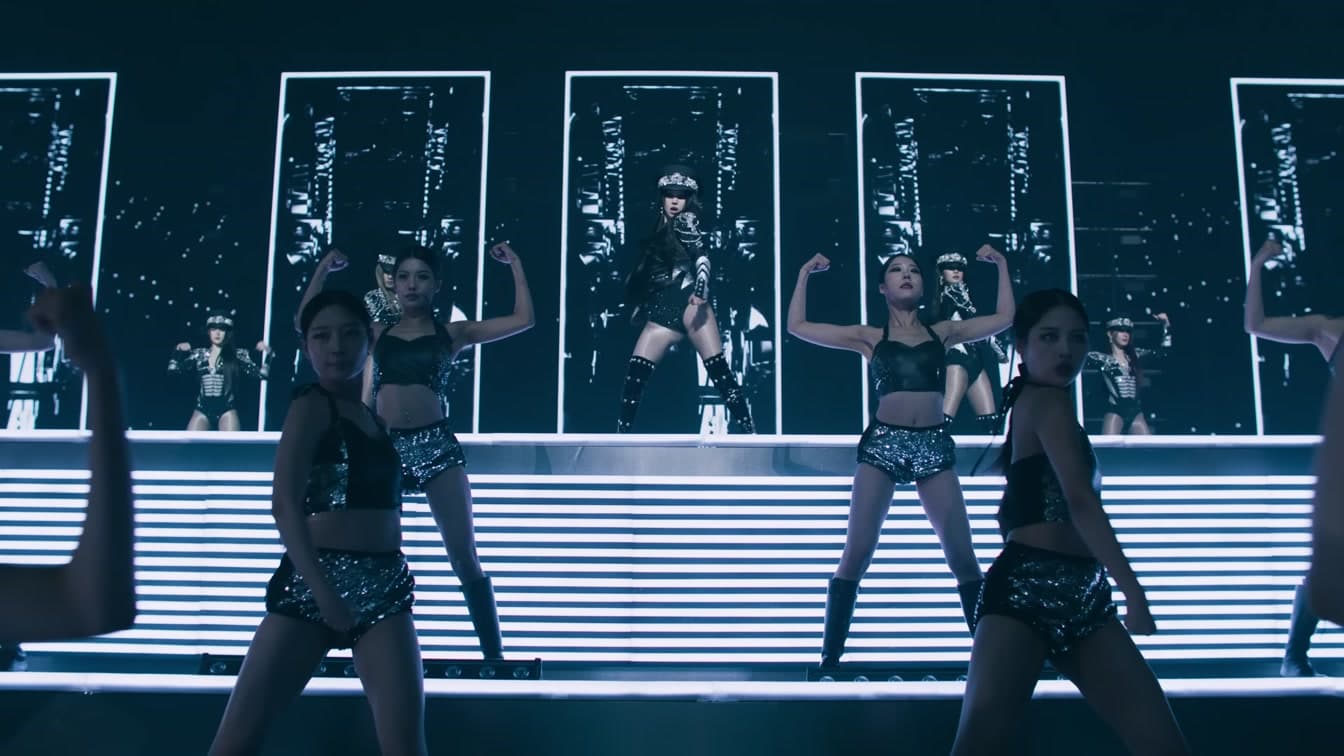
(G)I-DLE became i-dle on May 2, 2025 — the group's seventh anniversary. The name change was deliberate and architecturally significant: Cube Entertainment stripped the "(G)" prefix and its implicit gender marker, releasing a group that had spent seven years building one of the most distinctive artistic brands in fourth-generation K-pop from the label that defined them. Their eighth mini-album We Are, released May 19 with first-week Hanteo sales of 1,063,526 copies, validates the decision commercially. The harder question is what it means creatively.
Why the Name Carried Weight — and Why It Had to Go
The original "(G)I-DLE" name carried embedded meaning that served the group well in 2018 and became limiting by 2025. The "(G)" stood explicitly for "girl," a designation that situated the group's identity within a gendered framework at exactly the moment K-pop's global fanbase was diversifying in ways that made such labels commercially restrictive. The "I-DLE" component — derived from the Korean "아이들," meaning "children" — carried its own connotations of youth and early career status. After seven years and a catalog of records, neither label fit the group's actual position in the market.
Cube Entertainment's announcement framed the rebrand as a return to an earlier identity: i-dle was the group's pre-debut name, and reverting to it carries the implication of completing a circle rather than beginning something new. The new lowercase visual branding — five "i" characters arranged in a circular motif — reinforces this: individuals forming a collective, the group's longstanding creative philosophy made into a logo. What is notable is the timing. Rebranding mid-career at seven years, with million-plus first-week sales and a stable lineup, is not distress signaling. It is the move of a group with enough accumulated equity to absorb the risk.
The Sales Data: Four Consecutive Million-Sellers
Whatever the philosophical motivations, We Are delivered the numbers that validate the rebrand. With 1,063,526 first-week copies sold on Hanteo Chart, the album became i-dle's fourth consecutive release to surpass one million copies in its opening week — placing them alongside aespa and IVE as the only girl groups in Hanteo history to achieve that milestone with four different albums.
That milestone also carries a generational dimension. When (G)I-DLE debuted in 2018, they were part of K-pop's third-to-fourth generation transition — a cohort that included ATEEZ, Stray Kids, and ITZY. Seven years later, i-dle are among the senior acts of that generation, having outlasted several contemporaries and maintained growth across a market that has become significantly more competitive. Sustaining million-seller status across four consecutive albums without a lineup change or agency shift is a data point that deserves its own category.
Creative Authorship: Soyeon, "Good Thing," and the Writing Credit
The artistic dimension of the rebrand is inseparable from member Soyeon's role as the group's primary songwriter and producer. "Good Thing," the lead single of We Are, is a Soyeon-written track — an addictive, confidence-forward pop song that serves as both a commercial hook and a philosophical statement about the group's orientation. The title itself functions as a rebrand summary: moving forward is the good thing.
What distinguishes i-dle from most girl groups in the current market is the degree of documented creative input from members across multiple albums and multiple roles. All five members contributed to the We Are songwriting credits. This level of in-group creative ownership shapes how the album is marketed and how it is received by critics, but it also shapes the group's internal identity and durability. Groups where creative control is concentrated within member songwriting tend to have stronger alignment between artistic direction and commercial output over time.
Industry Context and the Rebrand Calculus
K-pop group rebranding mid-career is structurally uncommon because the risks are high. A name change severs the SEO value of the original brand, potentially confuses existing fans, and invites critical scrutiny about motivations. Cube Entertainment's decision to proceed reflects a specific judgment: that the "(G)" designation was creating more drag than the rebrand would cost. The available evidence supports that judgment. International press coverage of i-dle's May announcement was broadly positive, framing it as a maturing of identity rather than a reinvention driven by commercial distress.
The contract renewal by all five members with Cube Entertainment, confirmed in December 2024, was an essential precondition. Without a unified lineup, a name change becomes a distraction and a symbol of instability. With all five members re-signed and involved in writing on We Are, the rebrand reads as a collective decision — which is exactly the image it needs to project.
What Comes Next for i-dle
With We Are establishing the commercial foundation for i-dle's new chapter, the group is positioned to extend the rebrand through expanded world tour dates and brand partnerships that benefit from the simplified, lowercase branding. Billboard Korea's recognition of We Are as one of the 25 best K-pop albums of 2025 adds critical validation alongside the Hanteo sales milestone.
As i-dle enters its eighth year, the rebranding is less a reinvention than a clarification. The group's identity was always larger than a parenthetical gender marker. The removal of that marker is a statement of confidence in accumulated equity — the kind of move that only becomes available to groups that have earned the standing to make it.
The broader K-pop industry will watch i-dle's post-rebrand trajectory carefully. Whether a name change can accelerate fanbase growth in markets where the original brand was well-established — Japan, Southeast Asia, the United States — will provide a data point for other groups weighing similar decisions. If world tour attendance and streaming numbers grow in the twelve months following We Are, the rebrand will be cited as a template worth following.
How do you feel about this article?
저작권자 © KEnterHub 무단전재 및 재배포 금지
Entertainment Journalist · KEnterHub
Entertainment journalist specializing in K-Pop, K-Drama, and Korean celebrity news. Covers artist comebacks, drama premieres, award shows, and fan culture with in-depth reporting and analysis.
Comments
Please log in to comment