BIGBANG Earned $2M at Coachella — Their 20th Anniversary Just Started
Nine years after their Last Dance tour, G-Dragon, Taeyang, and Daesung delivered one of K-pop's most anticipated comebacks
 By Park Chulwon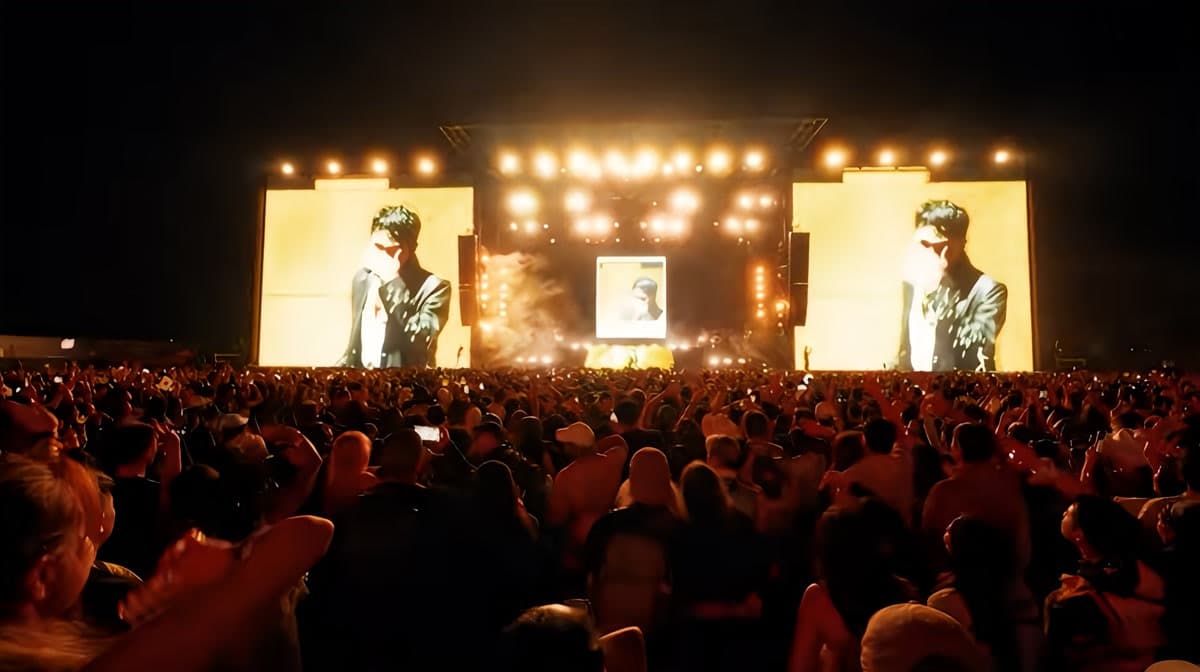
BIGBANG stood on the main stage at Coachella on April 13, 2026, and for one hour, it was 2012 again — except the crowd was bigger, the stakes were higher, and the comeback had taken nine years longer than anyone planned. G-Dragon, Taeyang, and Daesung delivered a set of anthems so precisely calibrated to maximize emotional impact that even the silence between songs felt charged. By the time they walked off, the only question left was why it took this long.
The performance marked BIGBANG's first full-scale group stage since their 2017 "Last Dance" tour — a farewell that, in hindsight, was not a farewell at all. It was also their Coachella debut, an appearance originally scheduled for 2020 before COVID canceled every large-scale event in the world. Six years later, the group finally arrived in Indio, California, at the Outdoor Theatre, to an audience that had waited long enough to turn any ordinary performance into something historic.
A $2 Million Set and a 20th Anniversary Message
BIGBANG's appearance fee for the Coachella set was reported at $2 million USD — approximately 2.97 billion Korean won. The number generated immediate conversation, both for its size and for what it signals about where the group sits in the global entertainment landscape after nearly a decade of fragmented activity, legal controversies, mandatory military service, and a public that never stopped watching.
Netizens reacted with enthusiasm rather than surprise. "The pay for BIGBANG is high!" read one widely shared comment. "BIGBANG's 20th anniversary comeback is going out with a bang," read another — a sentiment that captures the mood around the group's current moment. The fee is not simply a number; it is a statement about market position at a time when BIGBANG's standing had been genuinely uncertain.
G-Dragon set the tone from the opening minutes. "It took us a long time to get here," he said from the stage. "B to the I to the G to the Bang is back." By the time the set ended, he had delivered the other line that is already being clipped and shared across platforms: "This is just the beginning of our 20th anniversary. We've got big things coming."
The Setlist, the Absences, and the Recorded Voice
The one-hour set drew from every era of BIGBANG's career. High-energy anthems — "Bang Bang Bang," "Fantastic Baby," "Sober" — anchored the crowd early. Reflective classics followed: "A Fool of Tears," "Lies," "Haru Haru," "Loser." Party hits kept the momentum: "Home Sweet Home," "Bad Boy," "We Like 2 Party." Each member also had solo segments, with G-Dragon performing "Power" and Taeyang bringing "Ringa Linga." Daesung, known for his vocal range, made a notably bold choice: he brought trot music to Coachella, performing "Overflow" (2026) and the 2008 classic "Look at Me, Gwisoon" to a desert audience that had no roadmap for what they were hearing. It landed.
T.O.P was not there in person. The former member, who formally departed from YG Entertainment and navigated a series of legal and personal difficulties in the years since the Last Dance tour, did not appear on the Coachella stage. His presence was felt anyway: recorded vocals from T.O.P were incorporated into the group's closing track, "Still Life," transforming what could have been an absence into an acknowledgment. Fans who recognized the vocal described the moment as emotional — the song functioning as a kind of bridge between what BIGBANG was and what three of its members are choosing to become.
Taeyang, always the group's most emotionally direct communicator, addressed the crowd plainly: "This stage means a lot to us. We've spent half our lives together and we're grateful." Crown-shaped VIP light sticks — the group's iconic fan merchandise — appeared throughout the audience, glowing in unison as Korean lyrics were sung back from the crowd. This was not a situation where a K-pop group performed for a confused audience waiting for the next act. This was BIGBANG's crowd.
What the Coachella Moment Actually Means
BIGBANG's relationship with Coachella is not new. The group was originally booked for Coachella 2020 — a booking that would have taken place during one of the most complicated periods in the group's history, after T.O.P's legal issues and Seungri's departure had fundamentally changed the public conversation around them. COVID effectively canceled that chapter before it could be written. What arrives instead in 2026 is a cleaner story: a 20th anniversary reunion, a three-member core, a new beginning with the weight of a full two decades behind it.
The 2017 "Last Dance" tour was marketed as a finale, and for several years it functioned as one. Members served military service — mandatory for South Korean men — went on to solo projects, and navigated individual controversies at different scales of severity. The public remained attentive throughout, because BIGBANG's cultural footprint is too large to simply ignore. G-Dragon's solo releases continued to generate significant attention. Taeyang's music, including his collaborative work, reached international audiences. Daesung maintained a dedicated fanbase in Japan in particular, where BIGBANG's commercial reach has always been among the strongest in Korean music history.
The Coachella appearance, the reported appearance fee, and G-Dragon's direct address to the crowd about what comes next all point in the same direction: this is an active group with a plan, not a nostalgia tour staged for sentimental purposes. The hint of a world tour, combined with Taeyang's upcoming solo album Quintessence, suggests a coordinated calendar rather than an improvised comeback.
A Second Weekend and What Comes Next
BIGBANG is scheduled to perform again at Coachella's second weekend on April 19. The dynamic for repeat Coachella performances is well understood in the music industry: the first weekend sets the conversation, the second consolidates it. For BIGBANG, the question is whether what happened on April 13 will continue to circulate — through clips, reactions, and coverage — in ways that expand their reach to audiences who did not watch it live.
The evidence from the first weekend suggests the answer is yes. The reported appearance fee alone has driven significant pickup in entertainment media. The T.O.P recorded vocal moment has circulated widely in BIGBANG fan communities. And G-Dragon's stage presence, whatever the Korean media may have noted about his vocal performance on the night, read internationally as the return of one of K-pop's most commanding performers to exactly the kind of stage where that quality is visible at its full scale.
BIGBANG debuted on August 19, 2006. They are 20 years old this year, in the way that bands measure such things — by the date the first recording was released to the public, by the first time a name attached itself to a sound. Coachella 2026 was not a victory lap. It was, as G-Dragon made clear, just the beginning.
How do you feel about this article?
저작권자 © KEnterHub 무단전재 및 재배포 금지
Entertainment Journalist · KEnterHub
Entertainment journalist focused on Korean music, film, and the global K-Wave. Reports on industry trends, celebrity profiles, and the intersection of Korean pop culture and international audiences.
Comments
Please log in to comment