BIGBANG Proves 20 Years Cannot Erase a Legend: The Significance Behind Their Greatest Comeback
From Coachella to a World Tour and a Fan Club Reborn After 11 Years
 By Jang Hojin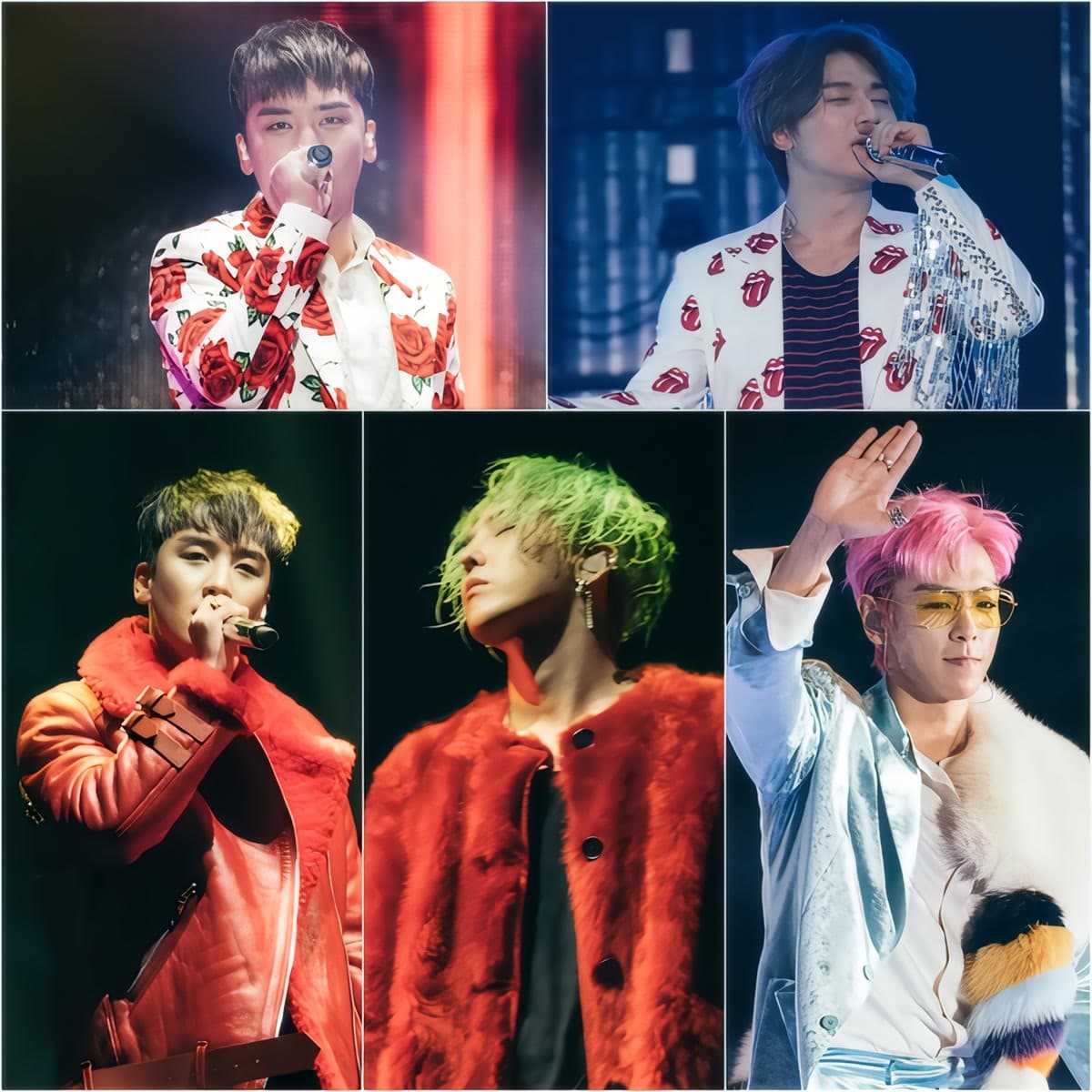
Eleven years is a long time to wait. But when BIGBANG officially reopened its V.I.P fan club on May 18, 2026 — the first membership drive since 2015 — tens of thousands of global fans did not hesitate for a moment. The speed of sign-ups told a story no chart number could capture: BIGBANG is back, and the world noticed.
This is not merely a nostalgia play. The group's 20th anniversary comeback — spanning a triumphant Coachella debut, a confirmed August world tour, and the revival of a fandom infrastructure that had gone dormant for over a decade — signals something far more consequential. In an industry that routinely discards its older acts to make room for the next generation, BIGBANG is quietly rewriting the rules of what longevity looks like in K-pop.
The three members who now carry the BIGBANG name — G-Dragon, Taeyang, and Daesung — have individually sustained remarkable solo careers across the years of group inactivity. But when they reunite, something shifts in the atmosphere of the entire industry. That shift was felt in the California desert last April, and it is set to echo around the world this August.
The Coachella Moment That Reminded Everyone Who Started This
April 12 and 19, 2026. Coachella Valley Music and Arts Festival. Outdoor Theatre stage. When BIGBANG walked onto that platform, they were not just headlining a slot — they were completing a journey that began when a COVID-19 pandemic canceled their planned appearance years earlier. The anticipation was palpable long before a single note played.
The performance itself was a masterclass in earned authority. The setlist wove through two decades of mega-hits, from the raw, genre-defying energy of their early breakthrough era to the sleek, emotionally resonant anthems that defined their peak years. Midway through their one-hour set, each member stepped into a solo segment — a structural choice that underscored how BIGBANG has always functioned as a collective of individually compelling artists rather than an interchangeable group.
The international media response was immediate and unequivocal. Billboard, covering the festival's highlights, wrote that BIGBANG "led fans back to the era known as the golden age of K-pop," citing as evidence the passionate crowd who surged toward the stage with an urgency that newer K-pop acts rarely generate at Western festivals. Forbes went further, calling them "the emperor of K-pop" and noting that BIGBANG "laid the foundation for the global K-pop industry and profoundly influenced the music styles, fashion, and ambitions of almost all groups that emerged afterward." The LA Times observed that their distinct party-driven musical DNA drew crowds to the stage in ways that felt genuinely spontaneous rather than choreographed.
During Weekend 2, G-Dragon officially announced the 2026 World Tour — setting off a global wave of fan responses that crashed social media servers. It was a perfect stage for a declaration: the world's most prestigious music festival, a crowd of tens of thousands, and three artists who had earned every decibel of that reception through two decades of creative risk-taking.
Why the Fan Club Relaunch Is About More Than Membership Cards
The V.I.P fan club reopening carries weight that transcends the logistical. Since its 2015 closure, BIGBANG's fandom has existed in a kind of informal suspension — devoted, vocal, globally present, but without an official structure through which to connect. The 6th generation launch, hosted on the global fan platform b.stage, does not just create a membership database. It rebuilds the institutional skeleton of a fandom that has waited, patiently and loudly, for over a decade.
The practical benefits are significant. V.I.P 6th generation members receive priority access to world tour ticket presales — a meaningful advantage for concerts expected to sell out within hours across multiple continents. But the symbolic meaning runs deeper. For YG Entertainment, this represents the formal reactivation of one of K-pop's most globally recognized fan communities. The official poster — featuring thousands of yellow light sticks ("bangbong") illuminating a packed concert hall — was not accidental design. It was a declaration that the full infrastructure of BIGBANG's relationship with its audience is being restored.
This is a calculated move. In today's K-pop landscape, where fandom platforms like Weverse and Bubble generate significant recurring revenue and behavioral data, the reactivation of a dormant mega-fandom carries measurable commercial implications. BIGBANG's V.I.P community, when it was last active, was one of the largest organized K-pop fandoms in the world. Reactivating it in 2026 — the year of the 20th anniversary and a world tour — is a strategic amplification of every subsequent announcement.
What Coachella Revealed About the Second-Generation K-Pop Advantage
The broader context of BIGBANG's Coachella performance matters as much as the performance itself. This was BIGBANG's debut appearance at the festival — a stage they were originally booked for before the pandemic intervened. The long gap between booking and performance only heightened the occasion's significance.
But Coachella also served as a live stress test for something that industry analysts and K-pop scholars have long debated: whether 2nd generation K-pop acts retain genuine Western mainstream crossover appeal in an era dominated by 4th and 5th generation groups. BIGBANG's reception answered that question decisively. The group did not perform to a nostalgic Korean-American niche crowd. They drew a mixed, multigenerational audience whose enthusiasm rivaled that of the festival's headliners.
This is the 2nd generation advantage that newer acts have not yet had time to build: a catalog so embedded in global pop culture that it functions as communal memory. Songs like "Bang Bang Bang," "Fantastic Baby," and "Still Life" do not require recent promotion to move a crowd — they carry two decades of accumulated emotional weight. That weight is BIGBANG's most durable competitive asset, and Coachella demonstrated that it has not depreciated.
For YG Entertainment, the calculus is equally clear. 2026 marks a year of extraordinary symbolic convergence: the company's 30th anniversary, BIGBANG's 20th, and BLACKPINK's 10th — three pillars of YG's legacy arriving at milestone years simultaneously. BIGBANG's revival is the flagship of a broader YG narrative about institutional legacy, creative continuity, and the long-term value of cultural investment.
Looking Ahead: A World Tour, New Music, and an Open Question
The 2026 World Tour — set to begin in August and span multiple continents — will be BIGBANG's first large-scale global tour in nine years, since the emotionally charged "Last Dance" run of 2017. The weight of that name was not lost on fans at the time. What felt like a farewell has, nearly a decade later, revealed itself to be a pause.
Reports from South Korean industry sources suggest that a new studio album is in preparation, with material reportedly complete ahead of the tour launch. If confirmed, it would mark BIGBANG's first new group project in years — filling the one gap that even Coachella and the fan club relaunch could not address. A catalog act returning to the stage is powerful; a catalog act returning with new creative work is transformative.
The question that remains is whether the group can write a second chapter as culturally resonant as its first. The Coachella performance, the V.I.P relaunch, and the August world tour suggest the appetite is there — from the group, from YG, and from millions of fans across five continents who kept the yellow light sticks ready. BIGBANG built K-pop's global infrastructure before most of the current generation's artists had debuted. Now, twenty years later, they are testing whether the industry they helped create still has room for the people who built it.
Based on everything that has happened since April, the answer appears to be a resounding yes.
How do you feel about this article?
저작권자 © KEnterHub 무단전재 및 재배포 금지
Entertainment Journalist · KEnterHub
Entertainment journalist specializing in K-Pop, K-Drama, and Korean celebrity news. Covers artist comebacks, drama premieres, award shows, and fan culture with in-depth reporting and analysis.
Comments
Please log in to comment