BLACKPINK's 'JUMP' Is Out — Diplo, Hardstyle, and the Return K-Pop Didn't See Coming
 By Park Chulwon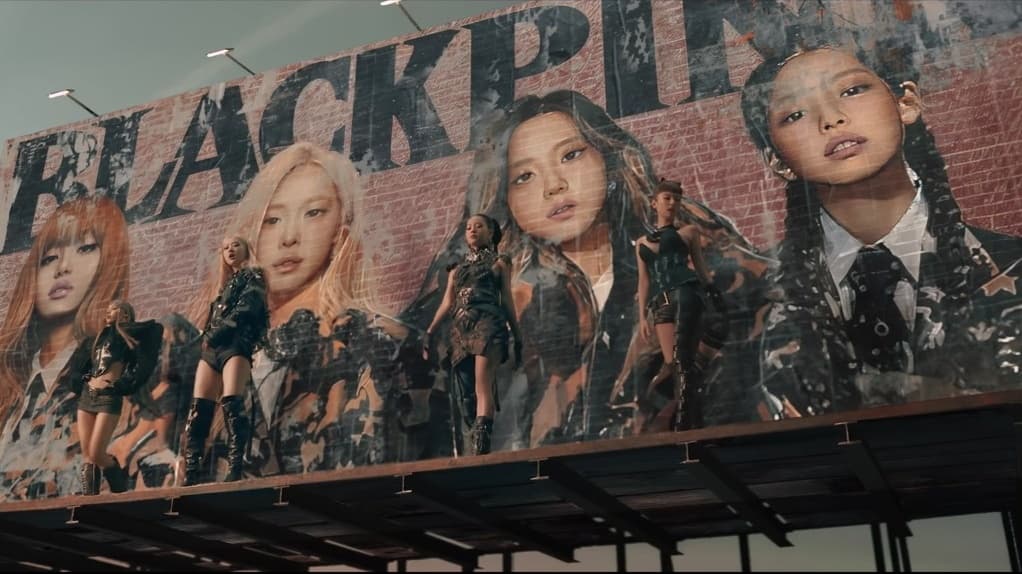
BLACKPINK released '뛰어(JUMP)' at 1 p.m. KST today — the first group music from the quartet in 2.8 years — and the sound that arrived was not what the group's BORN PINK era had trained audiences to expect. Where BORN PINK had leaned into guitar-forward rock-inflected production, 'JUMP' is a hardstyle and Eurodance track co-written and produced by Diplo, who has described the song as originally conceived for his Major Lazer project before it was refashioned for BLACKPINK. The tonal shift is immediate: thumping techno drums, a stabbing synth lead that references the rave aesthetics of late-1990s European dance music, and a chorus melody that critics immediately traced to Da Hool's 1997 track 'Meet Her at the Loveparade.' BLACKPINK in 2025 sounds like a group that has absorbed what each member learned during their individual work and routed it back into a collective statement that is sonically more European club than Seoul pop.
The Diplo connection is not incidental to understanding the track's positioning. Diplo has spent the past decade navigating the intersection between global pop infrastructure and genre-specific electronic communities — Major Lazer's output was specifically designed to function in both festival main-stage settings and Caribbean soundsystem contexts. Bringing that production logic into a BLACKPINK record is a deliberate statement about where YG sees the group's global audience sitting in 2025: not just streaming-platform K-pop consumers but the overlap between K-pop fandom and the electronic music festival circuit that has expanded significantly in Asia and Europe over the same period the group was on hiatus.
The MV's Visual Departure: What Changed in 2.8 Years
The 'JUMP' music video reinforced the sonic shift with a visual language that departed from the glamour-heavy production BLACKPINK had used as their signature aesthetic. Early reviews noted the futuristic and experimental quality of the visuals — less of the high-fashion-editorial framing that had defined videos like 'How You Like That' and 'Lovesick Girls,' more of the kinetic intensity associated with European rave culture's visual vocabulary. The BLACKPINK mural backdrop in the opening sequence, featuring oversized portrait images of all four members in military-inflected outfits, positioned the return as a statement of scale rather than an aesthetic continuation.
Within the first 24 hours of release, the 'JUMP' music video accumulated more than 5 million views and 1 million likes on YouTube — metrics consistent with the group's historical debut-day benchmarks — and would go on to claim YouTube's global daily chart for eight consecutive days, surpassing 100 million views within 15 days of release. On Spotify, 'JUMP' reached the top position on the global daily songs chart, making BLACKPINK the first K-pop group to claim three daily chart toppers on the platform, following 'Pink Venom' and 'Shut Down' from their 2022 return. These results would confirm in the days that followed what the release-day tracking had suggested: the infrastructure held.
Hardstyle and the Genre Risk
Hardstyle is not a safe pop choice. The genre has a devoted European festival community and a specific sonic signature — tempo typically above 150 BPM, the characteristic "reverse bass" kick drum, melodic breaks — that functions well in those contexts and tends to polarize mainstream pop audiences encountering it for the first time. 'JUMP' does not commit to full hardstyle orthodoxy; it hybridizes the form with Eurodance melody conventions and elements of trance, creating something that borrows hardstyle's energy without fully entering its taxonomy. The reference to 'Meet Her at the Loveparade' operates in this hybrid space: Da Hool's track is recognizable to anyone who lived through late-1990s European rave culture, but its melody is accessible enough to reach listeners who encounter it without that historical context.
The production decision to anchor 'JUMP' in this sound — rather than returning to BORN PINK's guitar-adjacent territory or pursuing the maximalist K-pop production that many comeback announcements had led fans to anticipate — reflects a reading of the 2025 market that prioritized global streaming velocity over genre comfort. A track built for rave contexts streams differently from a ballad or a standard K-pop production: it loops, it builds, it rewards repeated listening in active (dance, workout, festival) rather than passive settings. Whether that decision translates to the kind of sustained streaming performance that drives Billboard Global 200 positions into the following weeks will be measurable data. By the chart dated July 26, 'JUMP' would confirm its arrival at #1 on the Billboard Global 200 with 123 million streams and 14,000 sold worldwide in the week ending July 17.
What the Return Sound Says About BLACKPINK's 2025 Positioning
Reading 'JUMP' strictly as a comeback single misses the larger argument the track is making about where BLACKPINK as a commercial entity is positioned in the mid-2020s. The four members spent their group hiatus developing distinct solo profiles — Jennie expanded her creative and business footprint, Lisa continued solo releases, Rosé signed with Atlantic Records, Jisoo built a Warner Records deal. Each trajectory pulled in a slightly different direction. 'JUMP' does not attempt to resolve those trajectories into a unified aesthetic synthesis; it instead picks one direction — the globally-oriented electronic production aligned with the kind of music those members' individual work had moved toward — and commits to it. The bet is that the BLACKPINK name, applied to a production that sounds nothing like their previous era, carries enough brand weight to reach its commercial ceiling without needing to sound like a return at all.
How do you feel about this article?
저작권자 © KEnterHub 무단전재 및 재배포 금지
Entertainment Journalist · KEnterHub
Entertainment journalist focused on Korean music, film, and the global K-Wave. Reports on industry trends, celebrity profiles, and the intersection of Korean pop culture and international audiences.
Comments
Please log in to comment