BTOB's Changsub Returns With EndAnd: How Trickle Down Captures What a Vocal Recovery Actually Sounds Like
The second solo mini album arrives after a period of health uncertainty — and the music knows it
 By Park Chulwon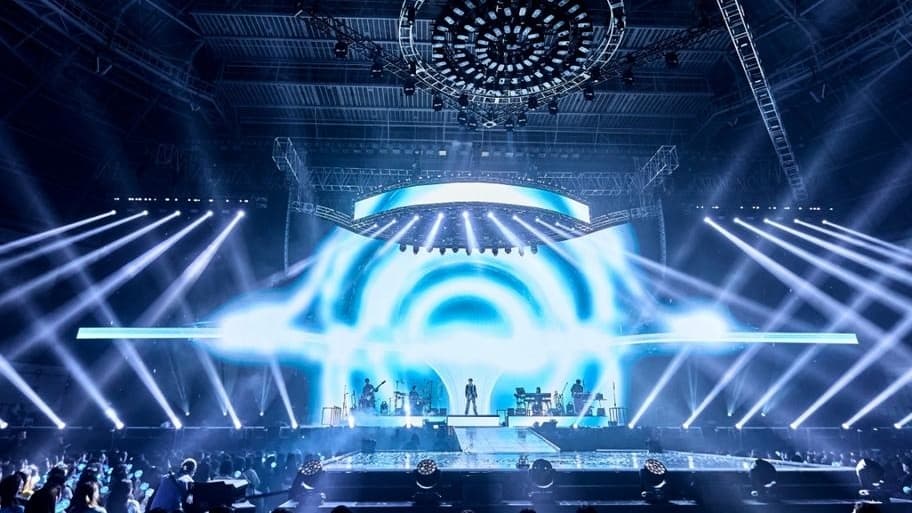
Lee Changsub released EndAnd today — his second solo mini album, arriving nearly two years after his debut solo release. This is the comeback of a vocalist who was not certain he would have one.
Changsub's vocal condition, which required extended treatment and kept him out of full promotional activities through much of 2024 and early 2025, defined the context for everything EndAnd represents. The album exists because the recovery succeeded. Its title — a wordplay on "end" and "and," suggesting endings as the start of new beginnings — maps directly onto that biographical fact.
The Album and Its Title Track
Trickle Down, the title track, is a breakup song structured as an endurance narrative. Its core proposition — that time continues to pass even when emotions feel frozen, that life trickles forward regardless of heartbreak — functions as both lyrical content and personal metaphor for Changsub's own period of uncertainty. The production team built the track around an emotional register that Changsub's voice handles with particular credibility: not the aggressive belting of his BTOB showcase moments, but the sustained, expressive delivery that characterizes his solo artistic identity.
The mini album's three versions — 이별 (EndAnd), 이-별 (EndAnd), and Ever — use a typographic split in the title to foreground the Korean word for "farewell" (이별) alongside the English framing. The dual reading is intentional: this is a project about endings, about the point where something concludes and something else begins. For an album conceived during a period when Changsub was genuinely uncertain about his vocal future, that thematic choice resonates as more than packaging.
Solo Identity Within the BTOB Framework
Changsub's solo career has always operated in deliberate distinction from his BTOB identity. As the lead vocalist of a group whose vocal line is widely regarded as among the strongest in third-generation K-pop, Changsub carries specific expectations: powerful range, emotional control, live performance reliability. His solo projects have consistently explored the edges of that reputation — the moments of vulnerability and uncertainty that the group context typically frames differently.
EndAnd extends that exploration. The album's emotional terrain — heartbreak, resilience, the passage of time — is more introspective than the peaks that BTOB delivers in concert. This is intentional: solo albums from group vocalists function as personal arguments about artistic identity, and Changsub's argument is that his artistry includes quiet intensity, not just powerful scale. Cube Entertainment has supported this positioning across both his solo projects, which suggests institutional confidence in the distinction he is making.
The Comeback Narrative and Its Stakes
The biographical dimension of EndAnd is unavoidable for anyone who has followed Changsub's trajectory through the vocal condition period. Korean media coverage of his recovery was sympathetic and detailed; the Melody fan base — BTOB's devoted fandom — maintained visible engagement throughout the period of reduced activity. That accumulated emotional investment means that the reception of EndAnd is not purely a music evaluation but also a reunion: listeners who stayed with Changsub through the uncertainty are now receiving the artistic response to that period.
The tour that follows the album's release — beginning with Seoul dates before moving through other cities — will provide live context for the recovery story in a way that streaming numbers cannot fully capture. Changsub's voice, heard live after the treatment period, will tell the audience directly what EndAnd only implies in recording.
The Vocal Recovery in Context
Vocal conditions that require extended treatment represent a specific kind of professional crisis in K-pop, where live performance capability is a core commercial asset. The pressure to return to activity before full recovery can compound the condition; the decision to take the time necessary for genuine healing requires both personal resolve and institutional support. Changsub's recovery trajectory — the Korea Times reported his aim for a triumphant comeback, framing the return in explicitly redemptive terms — suggests that both the artist and Cube Entertainment made the right call in allowing the timeline to extend as long as necessary. EndAnd is the evidence that the patience was justified.
The album's physical release in three editions gives the Melody fan base multiple points of engagement with the project, and the typographic wordplay between versions — the splitting of 이별 and 이-별 — rewards close attention from listeners who care about the conceptual dimension of K-pop releases. For an album about endings and transitions, making the packaging itself a meditation on how words carry meaning differently depending on how they are divided is a coherent creative choice.
What the Solo Album Cycle Means for BTOB
Changsub's EndAnd release coincides with a period of reconfiguration for BTOB as a group. With some members managing military service timelines and others active in solo or sub-unit capacities, the group's promotional schedule has operated on a modified basis. Individual solo activity during these intervals keeps the group's collective presence visible and the Melody fan base engaged.
EndAnd therefore serves multiple functions simultaneously: it is Changsub's personal creative statement after a period of recovery, a solo artist project that stands on its own commercial terms, and a maintenance signal to BTOB's fandom that the group's individual members remain creative and active. That these functions can coexist within a single mini album reflects the operational sophistication that long-running K-pop acts develop over time.
Trickle Down's central metaphor — time moving forward, life continuing past the point of emotional pause — applies to the album's context as accurately as to its lyrical content. EndAnd marks the point where Changsub's uncertain period ends and the "and" that follows begins. The music makes the case that the "and" is worth the wait.
How do you feel about this article?
저작권자 © KEnterHub 무단전재 및 재배포 금지
Entertainment Journalist · KEnterHub
Entertainment journalist focused on Korean music, film, and the global K-Wave. Reports on industry trends, celebrity profiles, and the intersection of Korean pop culture and international audiences.
Comments
Please log in to comment