BTS at the World Cup Final: Why 11 Minutes Matter
The first FIFA final halftime show turns K-pop fandom into part of a global sports broadcast strategy.
 By Park Chulwon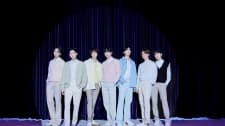
BTS is moving into the center of football's biggest broadcast moment.
The group is listed among the performers for the first FIFA World Cup Final Halftime Show, scheduled for July 19, 2026 at New York New Jersey Stadium. Justin Bieber, Madonna, Shakira, Burna Boy, Gustavo Dudamel, the PS22 Chorus featuring Coldplay, and Sesame Street and Muppets characters are also part of the lineup, with Coldplay's Chris Martin curating the show. The news matters because BTS is not simply joining a concert bill; the group is entering a new kind of sports-entertainment format where global fandom, live television, social video, and cause marketing are being designed as one product.
That is the angle to watch. FIFA and Global Citizen are using the final not only to crown a champion, but to test whether the World Cup can create a Super Bowl-style entertainment window without losing the rhythm of football. BTS gives that experiment a powerful K-pop engine: a fandom able to translate a short appearance into real-time engagement, international press, and replay value long after the match ends.
But the headline lineup only explains part of the story.
From Opening Ceremonies to a Halftime Economy
Football has long had music around it, from tournament songs to opening ceremonies. What is different here is placement. A halftime show sits inside the final itself, between the two halves of the sport's most watched match, and that changes the commercial logic. Viewers are not being asked to tune in early or stay late. They are being asked to keep watching during the pause.
Global Citizen describes the event as the first halftime show in World Cup history and says it supports the FIFA Global Citizen Education Fund, an initiative targeting USD 100 million for children's access to education and football. Al Jazeera, citing organizers, reported that the performance is planned for 11 minutes and that FIFA expects a couple of billion viewers. Those figures are important because they show the scale of ambition. This is not a decorative music slot; it is a planned global attention product.
For BTS, the setting also carries a different symbolic weight from a music awards stage. The group has already crossed into American stadiums, global charts, and diplomatic cultural events. The World Cup final adds another layer: K-pop becomes part of a live sports ritual watched by people who may not follow K-pop at all. That exposure is brief, but it is unusually broad.
The tension is in the clock.
Why Eleven Minutes Can Reshape the Conversation
FIFA's challenge is simple to describe and difficult to execute. The laws of football set halftime at no more than 15 minutes, while Al Jazeera noted that last year's Club World Cup final halftime trial at MetLife Stadium stretched the full break to just over 24 minutes. That comparison explains why the 11-minute performance length has become a story of its own. The show must feel large enough for global pop stars, but contained enough not to look like football has been bent around television spectacle.
The chart shows why BTS's presence is not just a music story. An 11-minute performance leaves almost no margin for wasted movement. Every artist must be instantly recognizable, every transition has to be broadcast-ready, and every fanbase must understand when to mobilize. BTS is uniquely useful in that environment because the group brings both mainstream recognition and a highly organized digital audience.
So what changes? K-pop's value in global media is no longer limited to ticket sales or album charts. It is increasingly measured by whether a fandom can turn a short, shared broadcast moment into a worldwide conversation. In that sense, BTS is functioning as infrastructure for attention.
There is also a strategic contrast in the lineup.
A Lineup Built for Generations and Regions
Madonna represents pop history, Shakira brings one of the strongest World Cup music associations, Bieber gives the show North American pop reach, and Burna Boy connects the stage to Afrobeats' global rise. BTS occupies a different lane: the group represents a fandom model that was built for cross-border coordination. That makes the lineup less like a normal festival bill and more like a map of global music markets.
The Korean source article framed BTS standing beside Madonna, Shakira, and Bieber as a moment that blurs sports and entertainment coverage. That reading is persuasive. For Korean media and fans, the significance is not only that BTS appears at the World Cup final. It is that BTS appears there as a peer in a lineup of artists associated with different eras and regions of pop dominance.
Global Citizen's FAQ adds another layer by naming a 50,000-person Central Park watch party around the final and halftime show. That detail matters because it turns the event into something larger than the stadium. A halftime show can generate simultaneous physical gatherings, digital clips, charity messaging, and national media coverage. BTS gives the Korean and global fan communities a reason to enter all of those channels at once.
The structure also shows how the World Cup is borrowing from the logic of platform-era pop. Each performer carries a different audience graph. Madonna brings legacy pop recognition and news value across older demographics. Shakira brings football memory, especially because her World Cup associations remain unusually durable for a pop artist. Bieber brings North American celebrity scale at a tournament hosted across the United States, Canada, and Mexico. Burna Boy brings the African music market into a final that wants to present itself as genuinely global. BTS brings the most organized fandom infrastructure of the lineup.
That infrastructure is not abstract. BTS fans have years of practice coordinating streaming parties, hashtag timing, translation threads, voting campaigns, charity drives, and archival projects. When the group appears in a compressed broadcast window, the response does not depend only on casual viewers noticing a performance. A distributed fan network immediately turns the appearance into multilingual clips, explainers, edits, and reaction posts. For a television event trying to live beyond television, that kind of fan behavior is valuable.
So the lineup is doing two jobs at once. It offers familiarity to the broadest possible live audience, and it recruits digital communities that will keep circulating the moment after the final whistle. BTS is central to the second job. That is why their role should be read as more than a symbolic K-pop milestone.
The broadcast plan also has a cause-marketing layer.
The Education Fund Makes the Show More Than Promotion
Global Citizen says the halftime show supports the FIFA Global Citizen Education Fund, which aims to raise USD 100 million for education and football access for children worldwide. The amount is not incidental. A nine-figure target gives the halftime show an impact narrative that can travel alongside performer announcements, sponsor messaging, and social campaigns. It also gives the event a defense against the criticism that the World Cup final is becoming too commercialized.
BTS fits that framing because the group has often been associated with social messaging, youth culture, and large-scale fan philanthropy. That does not mean the halftime show should be treated as a charity event first; it remains a high-value broadcast spectacle. But the education fund gives fans and institutions a shared language for why the spectacle exists. In practical terms, it lets the show ask for attention and action at the same time.
The connection between music and global causes is not new. What is new is the venue. A World Cup final halftime show places that message inside a sports match that reaches audiences far outside the usual concert-campaign ecosystem. If the fund messaging is handled clearly, the performance could make the education campaign visible to viewers who would never seek out a Global Citizen event on its own.
For K-pop, this is also a test of soft-power positioning. BTS has long been used as shorthand for Korea's global cultural reach, but the halftime show places that reach inside a multinational institutional project rather than a Korea-led promotional event. That difference matters. It suggests K-pop is no longer only exporting Korean culture outward; it is being recruited by global organizations to help structure their own events.
That recruitment has consequences for the industry.
What This Means for K-Pop's Next Global Stage
The K-pop industry has spent the past decade proving it can sell albums, fill arenas, and dominate social platforms outside Korea. The next frontier is different. It is not just about Korean acts headlining their own events; it is about Korean acts becoming part of the architecture of global events that were not built around K-pop. BTS at the World Cup final is a clear example of that shift.
That distinction matters for agencies, sponsors, and broadcasters. A solo tour measures demand among people already willing to buy a ticket. A World Cup final halftime appearance measures something broader: whether an artist can hold attention in a mixed audience where many viewers came for another reason. If BTS succeeds in that environment, other K-pop acts will have a stronger case for placement in sports finals, global charity broadcasts, Olympic-adjacent programming, and multinational brand campaigns.
There is a limit, though. BTS is not a normal benchmark. The group's scale, catalog recognition, and fandom maturity are difficult to replicate. Treating the appearance as proof that any K-pop act can step into a World Cup-level broadcast would be a mistake. The more useful lesson is narrower: the largest K-pop fandoms can now operate as global attention partners for institutions that need reach, speed, and cultural flexibility.
That creates an opportunity and a risk. The opportunity is that K-pop artists can appear in settings once reserved for Western pop stars or tournament-specific performers. The risk is that institutions may want fandom reach without understanding fandom culture, leading to awkward staging, tokenistic billing, or schedules that ask too much from fans across time zones. BTS's appearance will be watched partly for how well FIFA understands that balance.
The key question is whether FIFA can expand the World Cup final's entertainment value without making the match feel secondary.
That question will shape the reaction.
Impact, Fan Response, and the Risk of Overreach
Fan response is likely to be immediate because BTS events still operate as synchronized online moments. ARMY accounts will clip, translate, trend, and archive the performance within minutes. For FIFA and Global Citizen, that is the upside: a halftime show with built-in international distribution through fandom labor.
There is also a predictable counterargument. Some football fans see halftime spectacle as an Americanized intrusion into a sport that traditionally protects match flow. Al Jazeera's timing discussion shows that concern is not imaginary. If the break runs long, criticism will shift from the artists to FIFA's event design.
That makes execution more important than lineup prestige. A sharp 11-minute show could give the World Cup final a new media asset without overwhelming the game. A bloated break would invite a different narrative, especially if players or coaches suggest the delay affected performance.
Still, the broader direction is clear.
What Comes Next
If the July 19 show lands smoothly, FIFA will have a template for future finals, and BTS will have another proof point that K-pop's global power extends beyond music-industry stages. The group does not need a full concert to make the point. Eleven minutes may be enough.
The larger implication is that K-pop is becoming part of how global institutions design attention. BTS's role in the World Cup final halftime show shows why. The group brings music, fandom, cultural symbolism, and online momentum into one compressed broadcast slot. For FIFA, that is strategy. For K-pop, it is a new frontier.
How do you feel about this article?
저작권자 © KEnterHub 무단전재 및 재배포 금지
Entertainment Journalist · KEnterHub
Entertainment journalist focused on Korean music, film, and the global K-Wave. Reports on industry trends, celebrity profiles, and the intersection of Korean pop culture and international audiences.
Comments
Please log in to comment