BTS Just Made FIFA History — And Changed K-pop Forever
How K-pop's biggest act landed the first-ever FIFA World Cup Final halftime show stage alongside Madonna and Shakira
 By Jang Hojin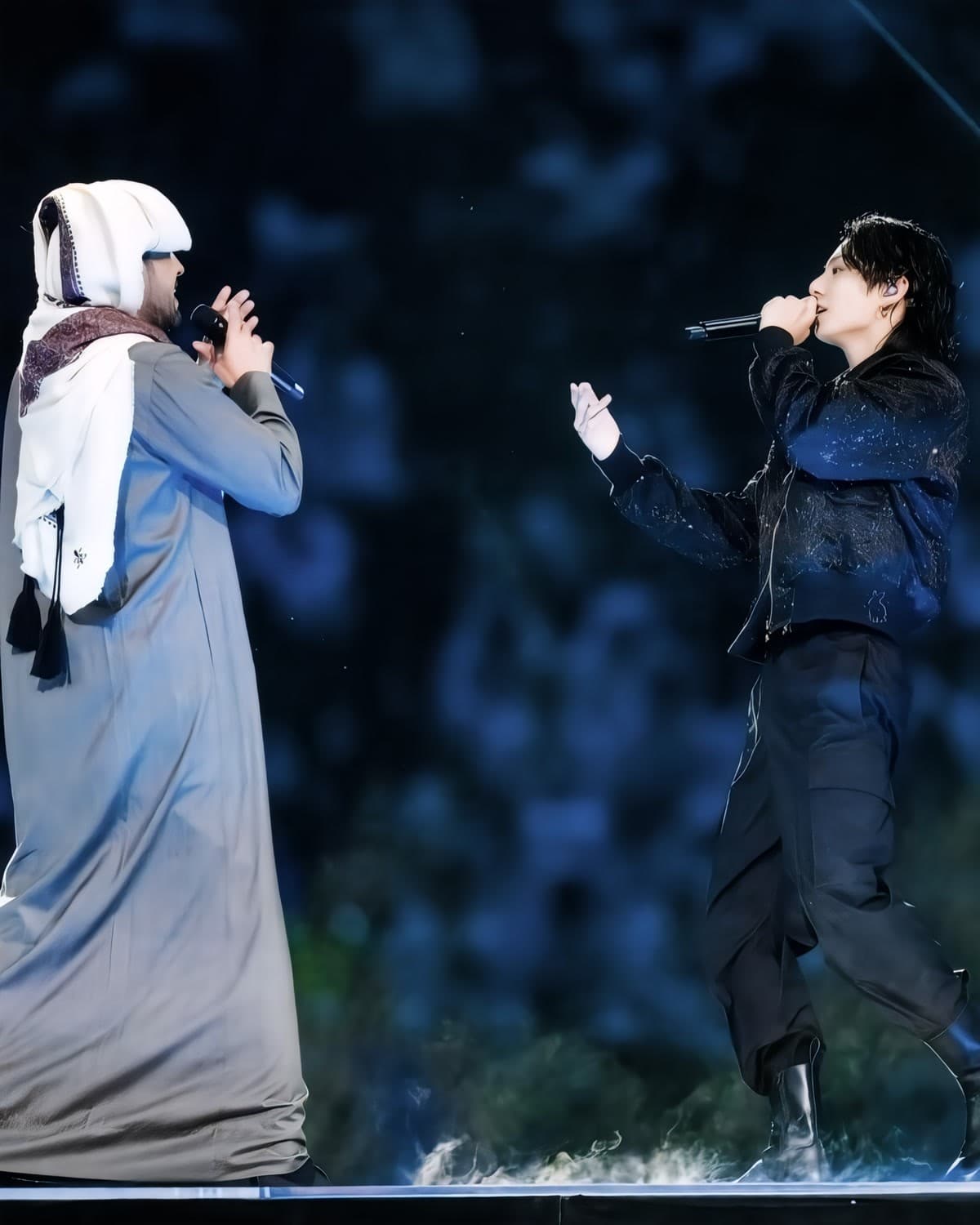
On July 19, 2026, BTS will take the stage at MetLife Stadium in East Rutherford, New Jersey — not as a tour stop, but as co-headliners of the first-ever halftime show in FIFA World Cup Final history. Performing alongside Madonna and Shakira, the seven-member South Korean group will anchor an 11-minute spectacle that FIFA and Global Citizen confirmed on May 14, curated by Coldplay frontman Chris Martin. Sesame Street and Muppets characters round out the lineup, signaling that the show is designed to reach every corner of the global audience tuned in for the Final.
The announcement places BTS in a bracket that no K-pop act has ever occupied. This is not a Grammy nomination, a chart record, or a Wembley sold-out — it is the single most-watched live entertainment event on the planet, and BTS are the headliner. What this moment means for the group, and for Korean pop music as a cultural force, runs much deeper than a single performance date on a calendar.
From Wembley to the World Cup: Building a Résumé Unlike Any Other
BTS did not arrive at this moment by accident. The group has spent more than a decade constructing the kind of global credibility that makes a booking like this inevitable rather than surprising.
In 2019, BTS became the first non-English-speaking Asian act to sell out Wembley Stadium, filling the 90,000-capacity London venue across two nights on their Speak Yourself world tour. The following years added UN General Assembly appearances — multiple addresses on youth identity, mental health, and global solidarity — and five Grammy nominations that included "Dynamite," "Butter," and their collaboration with Coldplay, "My Universe." By 2022, BTS held more Billboard Music Award wins than any other group in the award's history, with a streak of consecutive Top Social Artist wins dating back to 2017.
But BTS's specific relationship with FIFA runs deeper than most observers realized before this announcement. In November 2022, member Jung Kook performed "Dreamers" at the Qatar World Cup opening ceremony, becoming the first Korean and the first Asian artist to deliver a solo World Cup opening performance. The moment went globally viral, and Jung Kook was later featured in the official 2026 FIFA World Cup poster alongside Lionel Messi and Cristiano Ronaldo — the only non-footballer on that poster. That was the prologue. The World Cup Final halftime show is the main event.
The timing adds another layer of context. BTS is currently mid-tour: the group is performing three sold-out dates at Stanford Stadium on May 17, 18, and 20 as part of their BTS World Tour ARIRANG, a reunion tour following the members' completion of mandatory South Korean military service. The World Cup Final on July 19 drops directly into a year in which BTS are already re-establishing themselves as the defining live act of their generation.
The First-Ever Halftime Show in World Cup Final History
To understand how significant this is, it helps to know what it is replacing. For the 94-year history of the FIFA World Cup Final, there has been no halftime show. The break between 45-minute halves has been exactly that — a break. What FIFA is introducing in 2026 is something it has never attempted at its most prestigious event, and the model it is borrowing from is unmistakably American.
The Super Bowl halftime show has followed an arc that took decades to complete. The first Super Bowl halftime show, in 1967, featured marching bands and a display of 300 pigeons. It was not until Michael Jackson took the stage in 1993 — drawing 133.4 million viewers and generating more attention than the game itself — that the halftime show became a cultural institution. That transformation took 26 years. FIFA is making the equivalent leap in a single decision, and the act they have chosen to anchor the moment is a South Korean group.
The choice of BTS alongside Madonna and Shakira is not incidental. Madonna has been arguably the defining solo artist in Western pop for four decades. Shakira is the best-selling female Latin artist of all time and the performer most associated with the World Cup itself, thanks to her official song for South Africa 2010. Placing BTS in equal billing with both artists communicates something precise: K-pop is not a supporting act in global entertainment. It is the main event.
What the Numbers Tell Us About K-pop's Global Rise
The commercial infrastructure that brought BTS to MetLife Stadium is substantial and growing. The global K-pop events market was valued at $14.27 billion in 2025, according to Allied Market Research, growing at 7.5% annually — a figure that encompasses live performances, merchandise, and the ecosystem of fan experiences that K-pop has built across six continents. The broader K-pop production market stands at $10 billion, with projected 8% annual growth through 2033. These are not niche figures. They represent an industry that, within a generation, has moved from regional phenomenon to global economic force.
What distinguishes BTS within that industry is that they have not merely participated in its growth — they have driven it. Their 2021 digital single "Butter" debuted at number one on the Billboard Hot 100 and reportedly held the position for 10 consecutive weeks. Their collaborations with Western artists — Coldplay on "My Universe," Halsey on "Boy With Luv" — crossed audiences in ways that were previously unthinkable for a group singing primarily in Korean. And through it all, BTS never abandoned the Korean language or the cultural identity that makes K-pop what it is.
This is where the World Cup halftime show carries its deepest significance. The show is not a concession to Western tastes — BTS is not performing because they sound like a Western act. They are performing because they are the most globally recognized K-pop group in history, and because FIFA has made a deliberate decision that this stage should reflect what global music looks like in 2026. Global music, in 2026, has a Korean accent.
What July 19 Will Mean for the Genre
The performance on July 19 will be broadcast to hundreds of millions of viewers who may have never encountered BTS, or K-pop, before. For that audience, the halftime show will not be a K-pop concert — it will simply be the entertainment at the biggest sporting event in the world. And in that framing lies the final piece of what this moment represents.
K-pop has spent years building the argument that it deserves a seat at the global table. BTS addressed the UN. They sold out Wembley. They earned Grammy nominations. Each of those milestones added weight to the argument. But the World Cup Final does something different: it removes the argument entirely. When you are headlining the most-watched live entertainment event on Earth, you do not need to make the case for your own relevance. The case has been made.
For every K-pop group currently navigating their own path toward global recognition — and there are dozens — the image of BTS on that stage in New Jersey will function as proof of what is possible. Not just possible eventually, or possible under specific conditions, but possible in the lifetime of a generation that grew up with these artists. The ceiling that once defined the outer limit of Korean pop's global ambitions no longer exists. BTS walked through it on May 14, when the announcement went out. On July 19, the whole world will watch.
How do you feel about this article?
저작권자 © KEnterHub 무단전재 및 재배포 금지
Entertainment Journalist · KEnterHub
Entertainment journalist specializing in K-Pop, K-Drama, and Korean celebrity news. Covers artist comebacks, drama premieres, award shows, and fan culture with in-depth reporting and analysis.
Comments
Please log in to comment