BTS WORLD TOUR 'ARIRANG': 79 Shows, 34 Cities, and K-Pop's Biggest Tour Ever Explained
 By Jang Hojin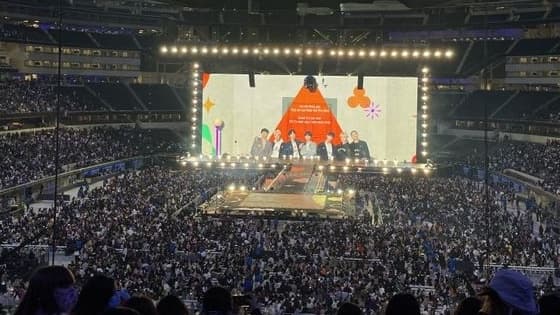
BTS has confirmed the ARIRANG World Tour — 79 shows, 34 cities, K-pop's most dates on a single tour — starting April 9, 2026, in Goyang.
The BTS WORLD TOUR 'ARIRANG' announcement, made via Weverse on January 14 at midnight KST, pairs with the March 20 release of the group's fifth studio album of the same name. It is the first full-group tour since their "Permission to Dance on Stage" run concluded in Las Vegas in 2022 — a gap of nearly four years that has transformed anticipation into an industry event of rare scale.
The Numbers That Define a Record-Breaking Run
Seventy-nine confirmed shows across 34 cities is not just a K-pop record; it is one of the largest single tour announcements in contemporary global music. Additional Japanese and Middle Eastern dates are still to be confirmed, which means the final count will exceed 82 dates across 23 countries. North America alone accounts for 28 of those shows, spread across 12 cities.
The North American run is where the records accumulate in specific, verifiable ways. BTS will perform at Stanford Stadium, AT&T Stadium in Arlington, and M&T Bank Stadium in Baltimore — venues that have never previously hosted a Korean act in a headline capacity. At El Paso's Sun Bowl Stadium and Foxborough's Gillette Stadium, the shows will mark the largest K-pop concerts those cities have seen. The scale of the venues is not incidental; it is the architectural statement of the tour.
The European leg runs June through July, with five cities and ten shows. Madrid and Brussels will host BTS's first-ever solo concerts in those cities — a meaningful expansion of the group's European footprint beyond the major capitals they have played before. London and Paris anchor the run alongside those debuts. The South American extension adds São Paulo, Buenos Aires, and three additional cities, with Middle Eastern dates completing the global scope.
The Economic Arithmetic of Eighty Stadiums
BBC's analysis of the tour projects approximately one billion US dollars in revenue from the 79 confirmed shows alone — roughly four times the $246 million that the "Permission to Dance" tour generated. That per-show efficiency gain reflects multiple factors: larger venues selected from an established track record, pricing power built through years of demonstrated demand, and the premium that attaches to a first return after an extended absence.
Bloomberg and Billboard analyses, which factor in merchandise, streaming uplift, licensing, and the multiplier effects of fan travel, place total economic impact potential above the one billion dollar threshold even before counting the projected domestic Korean effects. For a single tour cycle by a single act, these are figures that reframe the category conversation entirely.
The comparison to the Permission to Dance tour is useful as a baseline, but the circumstances are not equivalent. PTD On Stage was planned and executed during a period when live music infrastructure was still recovering from pandemic-era disruptions. The ARIRANG tour operates in a normalized market where stadium shows have rebounded, ticketing platforms are fully functional, and the global concert economy has returned to a growth trajectory. Tickets for the Korean, North American, and European dates sold out within hours of the pre-sale opening — the kind of velocity that makes the revenue projections conservative rather than aspirational.
The Goyang opener on April 9 alone is expected to draw substantial international fan travel. The Busan dates on June 12 and 13 carry additional significance: June 13 is the group's debut anniversary, making it a concert date with cultural meaning that extends beyond the setlist.
Four Years in the Market: What the Absence Built
Understanding the scale of the return requires understanding what the absence produced. Between 2022 and 2026, BTS did not disappear from the market — they restructured within it. Each member pursued solo work of varying commercial and critical scope. RM released art-forward studio albums. Jin completed his service and performed a homecoming concert. J-Hope toured globally as a solo act. Jimin and Jung Kook produced solo singles that individually charted at levels most full groups cannot reach. Suga released music and toured before a service complication required an earlier return.
The solo period kept seven distinct BTS narratives active simultaneously, which means the fanbase never had a reason to disengage. The ARMY — BTS's organized global fan community — is not simply waiting to see the group again; they are returning with the full context of four years of individual stories that now converge in a single album and tour cycle. The combined surface area of those individual investments makes the group's return more narratively rich than any single comeback could be.
The 360-Degree Stage and What It Signals
The tour will use a 360-degree stage configuration across stadium venues — a production choice that speaks to both the scale of the demand and the group's approach to equitable concert experience. Traditional stage setups create significant viewing disparities between floor sections and upper-level seating. A 360-degree configuration distributes the performance across the full seating bowl, maximizing the share of the audience with a direct sightline to the performers.
For a group that has historically emphasized the relationship with their audience as a defining element of their identity, the 360-degree stage is a values statement as much as a production decision. It will also require the setlist and staging choreography to be designed for omnidirectional performance — a creative constraint that, for a group of BTS's caliber, tends to produce innovation rather than limitation. In the months ahead, the ARIRANG era will demonstrate whether four years of individual growth has sharpened the group's collective instincts or simply added to them.
How do you feel about this article?
저작권자 © KEnterHub 무단전재 및 재배포 금지
Entertainment Journalist · KEnterHub
Entertainment journalist specializing in K-Pop, K-Drama, and Korean celebrity news. Covers artist comebacks, drama premieres, award shows, and fan culture with in-depth reporting and analysis.
Comments
Please log in to comment