Chae Jung-an’s Beauty Talk Has Fans Listening
 By Seung Jung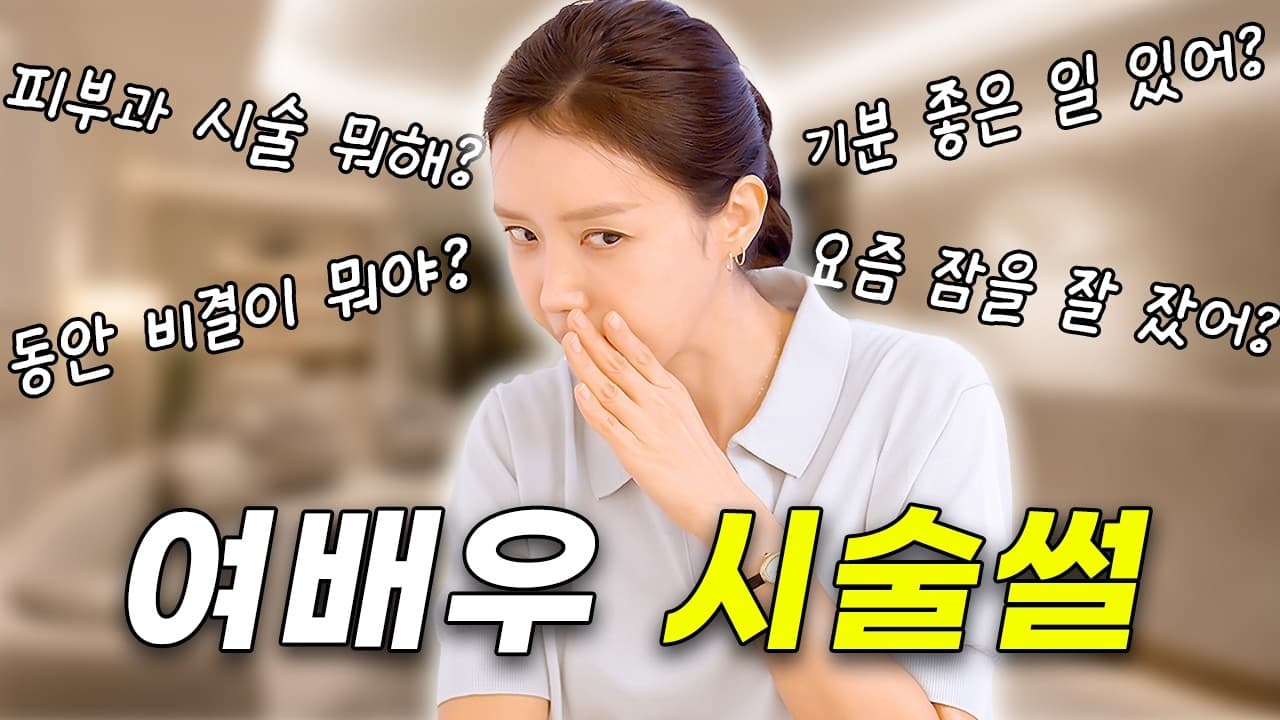
Chae Jung-an has turned a six-minute beauty conversation on her official YouTube channel into a wider discussion about how Korean entertainers talk about aging, camera-ready skin and the line between subtle care and obvious intervention. In a new upload on Chae Jung-an TV, the actress spoke candidly about the skin treatments she has heard about from people around her and tried herself, framing the subject less as a dramatic makeover than as a practical part of preparing for work, travel and public appearances.
According to Chae Jung-an TV's official YouTube channel, the video was uploaded on July 16 under a title that asked what actresses are quietly getting done these days. The clip centers on two procedures that Chae said have become common topics in her circle, Re2O and Sculptra, while also touching on broader habits such as home care, realistic scheduling and knowing when a treatment is not suitable for a particular skin type. The result was not a promotional transformation story so much as a frank, conversational guide to how an established actress evaluates beauty trends without losing sight of personal limits.
For international fans who know Chae through Korean dramas, variety appearances and her long-running public image as a stylish, self-aware star, the video landed because it sounded unusually grounded. Rather than promising instant youth, Chae described the kind of change she prefers as the one that makes people wonder whether someone has been sleeping well or feeling happy. That understated standard became the backbone of the discussion and gave the upload its news value beyond the beauty category.
A practical view of beauty maintenance
Chae began from a familiar entertainment-industry reality: faces are constantly read by cameras, staff members, viewers and even friends. She said that people around her who once relied mainly on inner beauty supplements, water, sleep and basic wellness habits have started adding dermatology appointments as they move through their mid-forties. Her point was not that those fundamentals no longer matter, but that the body changes and the face can begin to show fatigue more quickly than before.
The actress connected that observation to her own working rhythm. She explained that she tends to consider gentle lifting or skin-supporting care before specific events, such as entering a project or attending fashion week, rather than chasing an aggressive one-day result. Her preferred timeline is slower and more strategic: a procedure with enough lead time for swelling, texture and facial lines to settle before a camera-facing schedule. That detail matters because it presents beauty maintenance as planning, not panic.
One of the strongest points in the video came when Chae used her own skin type as a warning. She described herself as someone with very thin skin, the kind where veins are visible, and said that people with similar conditions should be careful about procedures that pull the face too forcefully. In the Korean article cycle that followed, this became the headline quote because it showed Chae speaking against the assumption that more dramatic work is always better. In the video, the broader lesson was that a healthy-looking skin base is more important than a tightly altered face.
That cautious tone is part of why the clip fits the current mood around K-entertainment beauty content. Fans remain curious about the routines of actors and idols, but they are also increasingly skeptical of unrealistic standards and heavily filtered advice. Chae's explanation acknowledged the pressure to look rested while also refusing to flatten every viewer into one ideal face or one universal solution. It was beauty content, but it also functioned as media literacy about celebrity appearance.
Why Re2O and Sculptra became the focus
The most specific part of the upload involved Re2O, which Chae described as a treatment that appeared to give the skin more strength, density and bounce. She said the effect she noticed was not a sudden change in facial identity, but a smoother, more luminous surface that made her complexion look better even during a busy week. She connected that to the feeling of waking up and noticing that the face looks unexpectedly fresh, a small private confirmation rather than a public reveal.
Chae also made clear that the experience was not painless. Her account included enough humor and discomfort to keep the segment from sounding like a polished advertisement. She said she was able to tolerate it partly because she had previously experienced other skin booster treatments, and she framed her willingness to try it again as a personal reaction to the result, not a blanket recommendation for everyone. That distinction is important because the video repeatedly returned to individual consultation, personal skin condition and realistic expectations.
Sculptra entered the conversation from a different angle. Chae talked about facial asymmetry and hollow areas that can look more noticeable in photos, especially when the face has natural differences between the left and right sides. Instead of describing it as filler-like instant volume, she presented it as a slower process that can help create a softer balance over time. She said the physician's skill matters because each face requires different placement rather than identical amounts on both sides.
Her explanation also reflected a larger trend in Korean celebrity beauty talk: the move away from conspicuous alteration toward incremental, almost invisible support. Chae contrasted the older desire for a treatment to look obvious with a newer preference in her own circle for results that do not announce how much money was spent. In her words, the ideal response from others is not shock but curiosity about why someone looks well. That idea has become a key theme in how many Korean stars now discuss skincare, styling and procedures in public-facing content.
The actress also stressed home care and timing
The video did not stop at clinic-based care. Chae emphasized that procedures are not a substitute for daily habits and that maintenance at home helps results last longer and look more natural. She relayed the idea that some people visit a clinic, receive an intensive round of treatment and then become careless afterward, which weakens the overall effect. Her advice was closer to an integrated routine: use professional treatments as support, but keep the basics steady.
Timing was another recurring point. When the conversation shifted to major life events such as weddings or important photo shoots, Chae suggested that people should think weeks ahead rather than trying to solve everything immediately before the event. The same principle applies to actors preparing for a drama, film, press conference or fashion event. Faces need time to recover, and subtle treatments often reveal their full effect gradually. That practical calendar-based advice gives the video value for viewers who may never follow celebrity procedure trends but still understand the stress of wanting to look their best for a fixed date.
Because Chae is speaking from an actress's perspective, the remarks also reveal how beauty decisions are shaped by the camera. A procedure that looks fine in a mirror may read differently under studio lights, in close-up photography or during a long production day. Chae's standard of a face that appears rested, balanced and healthy is therefore also a professional standard. It is about how the face performs under scrutiny, not simply how it looks in a casual selfie.
Why fans are likely to respond
Chae Jung-an's public appeal has long rested on a combination of style, candor and self-deprecating humor, and this upload leaned into all three. She spoke openly about pain, aging, pillow marks, fatigue and the awkwardness of trying to preserve a natural look in an industry built around appearances. That honesty makes the video more accessible than a conventional beauty tutorial. Viewers are not simply being told what to buy or book; they are watching a celebrity negotiate the same contradictions many people feel about aging gracefully.
For K-entertainment coverage, the story is not only that Chae named specific procedures. The larger story is that a veteran actress used her platform to normalize a more cautious and personalized conversation about beauty maintenance. She did not reject professional care, but she also did not romanticize overcorrection. The headline takeaway is a balanced one: subtle change can be part of an entertainer's routine, but knowing one's face, timing and limits matters just as much as following the latest trend.
As the video circulates, it is likely to draw attention from viewers interested in celebrity beauty, middle-age skincare and the behind-the-scenes preparation that surrounds Korean entertainment work. It may also strengthen Chae Jung-an TV's identity as a channel where polished lifestyle content is paired with the kind of plainspoken commentary fans rarely hear in official promotional settings. For Chae, the upload reinforces a public image that feels aspirational without being unreachable: stylish, informed, funny and aware that looking natural often takes the most careful planning of all.
How do you feel about this article?
저작권자 © KEnterHub 무단전재 및 재배포 금지
Senior Entertainment Correspondent · KEnterHub
Senior entertainment correspondent with a wide-angle view of Korean show business. Seung Jung covers celebrity news, variety television and award season, and writes the interviews and features that connect individual stories to the larger currents of Korean entertainment.
Comments
Please log in to comment