Choi Baekho Said He'd Never Stop. 50 Years Later, Here's the Proof.
The veteran Korean ballad icon releases his 50th anniversary album 'Baksu' with eight composers from CJ ENM's O'PEN Music program
 By Im Garam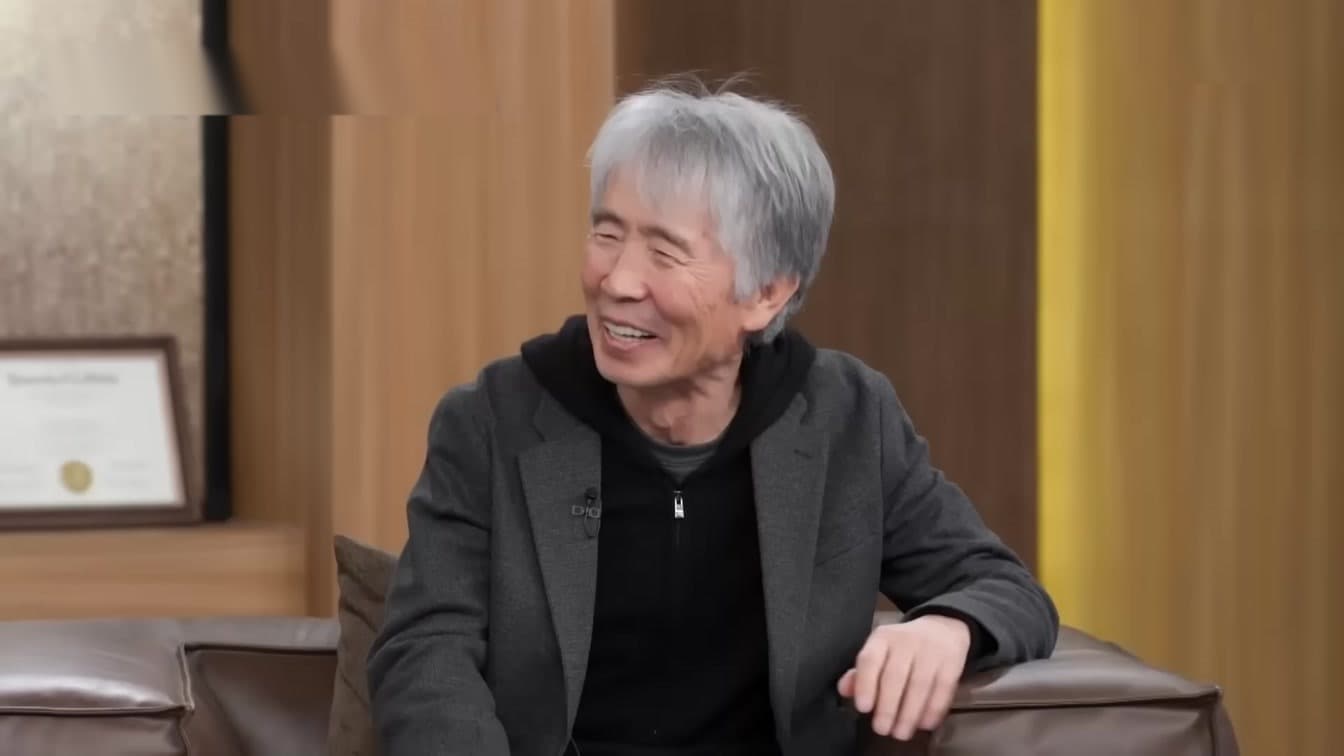
"I remember all 50 years," Choi Baekho said in January, sitting in a Seoul interview room with white hair and a quieter kind of certainty. "There were times of grief. Awards never came easily. Many regrets. There were moments when I felt I had to quit — but if I went back, I think I would still choose music. There is no other choice." On July 24, 2026, his 50th anniversary album Baksu (박수) dropped — and with it, a question worth asking: what does five decades of uninterrupted dedication to Korean popular music actually look like?
The answer, it turns out, looks like eight tracks co-written with composers who were not yet born when Choi first stepped onto a stage. Baksu was produced in collaboration with CJ ENM's O'PEN Music program, which connects established mentors with emerging songwriters. Eight O'PEN Music alumni — JAYINS, Moon Jeong-uk, Lee Yeon, SAMIN, Cody J, JUHWAN, and All Day On — contributed songs to the album. It is the second time Choi and O'PEN Music have joined forces, following a first collaboration in 2022. The arrangement is not a contract in the commercial sense. It is, as Choi himself framed it, a mentorship that turned into music.
Fifty Years of a Voice That Refused to Stay Still
Choi Baekho debuted in 1976, when Korean popular music occupied a very different world. The ballad genre he helped define — wistful, melodic, deeply rooted in the textures of longing and memory — dominated for nearly two decades before the landscape shifted. By the mid-1990s, with the arrival of artists like Seo Taiji and a wave of dance and rap acts, the classically structured ballad found itself crowded out of the mainstream. Many artists from Choi's era faded. He did not.
Instead, he adapted. He enrolled at Berklee College of Music in Boston and earned his degree in 2000, returning to Seoul with new tools for the same voice. He began blending jazz phrasing and classical textures into live performances, finding an audience that had grown up on his ballads and was ready to hear what happened when he pushed them further. That willingness to evolve — without abandoning the emotional core of the work — is what turned "낭만에 대하여" (About Romance), one of his signature songs, into a track that new listeners still discover decades after its recording. The album includes a new version, "낭만에 대하여 (50th Anniversary)," that acknowledges this continuity directly.
At 76, Choi wakes up every morning at 6 AM to write and practice. That is not an anecdote from a profile. That is the answer he gave when asked how he has been spending his time. For a half-century, the discipline has not stopped.
What O'PEN Music Represents — and Why the Partnership Makes Sense
CJ ENM launched O'PEN Music in 2016 as part of a broader initiative to invest in emerging creators across drama, film, and music. A decade later, it has graduated 115 composers and helped release more than 600 songs, with alumni working across K-pop, television soundtracks, and independent releases. The 8th cohort of O'PEN Music opened applications in early 2026, continuing a model that pairs new songwriters with industry mentors for intensive training in composition, mixing, recording, and professional development.
Choi has been O'PEN Music's representative mentor for nine of those ten years. That relationship — the veteran who kept writing at six in the morning, guiding younger composers who were still figuring out their voice — is the actual substance behind the album. When a track on Baksu was composed by someone named SAMIN or Cody J, it was not the result of a label executive matchmaking session. It came from nine years of regular contact between a 76-year-old Korean ballad icon and a generation of writers who had grown up listening to the songs he made.
Bar chart showing O'PEN Music program statistics: 115 composers graduated, 600+ songs released, 8 composers contributed to Choi Baekho's Baksu album, 10 years of program operation CJ ENM O'PEN Music: 10 Years by the Numbers (2016–2026) Composers Graduated 115 Songs Released 600+ Years of Operation 10 yrs Composers on 박수 Album 8 (from 115 total graduates)
The double title tracks — "박수" (Applause/Clap) and "여광" (Afterglow) — anchor an album that frames the entire catalogue as something worth celebrating rather than mourning. The word "박수" in Korean carries both the literal meaning of applause and a deeper cultural sense of acknowledgment, of seeing someone and saying: this mattered. The album's closing track, the 50th anniversary re-recording of "낭만에 대하여," does something rarer still: it places the artist's most famous song inside the same album as the work of people who may one day write the songs that define the next fifty years of Korean music.
The Industry Angle: Why Veteran-Newcomer Collaborations Are Growing
The Baksu collaboration reflects a broader pattern in the Korean music industry, where the distance between legacy artists and emerging creators has been shrinking in productive ways. K-pop's global rise has created enormous commercial infrastructure for new acts, but it has also made the industry increasingly focused on short cycles — debut, hit, next. The mentorship economy that programs like O'PEN Music represent offers a counterweight: a slower, more sustained form of development that prioritizes craft over virality.
For the eight O'PEN Music composers who contributed to Baksu, the project offered something that most industry opportunities cannot: the chance to write for a singer with five decades of interpretive experience. A song changes when a 76-year-old voice, shaped by fifty years of performing it live, decides to inhabit it. That is not something a streaming algorithm can replicate, and it is not the kind of knowledge that transfers through a chart or a data dashboard. It transfers through exactly the kind of long relationship that Choi and O'PEN Music built over nine years of contact.
The 50th anniversary concert tour — beginning at Seoul's Sejong Center for the Performing Arts on July 24 and moving to Jeju, Gyeonggi, Daejeon, and Gyeongnam — carries the same logic as the album. The concert subtitle is "낭만의 50년, 시간의 흔적을 노래하다," roughly: "50 Years of Romance, Singing the Traces of Time." The traces are real. And this week, on the day the album dropped, they were once again audible.
Fifty Years in Korean Pop Culture: The Songs That Defined an Era
To understand what makes Choi Baekho's 50-year milestone significant, it helps to understand what Korean popular music looked like when he began. The 1970s Korean music scene operated under significant constraints — political censorship, limited radio access, and an industry infrastructure that bore little resemblance to what the modern K-pop machine would eventually build. Into that environment, Choi arrived as a balladeer: a singer who believed that the clearest emotional communication happened in the space between a single voice and an attentive audience.
His early career built its reputation on exactly that clarity. Songs like "낭만에 대하여" — literally "About Romance," though the word "낭만" carries a specific Korean emotional weight, closer to a wistful idealism than simple romance — became anthems not just for the generation that heard them first but for the generations that rediscovered them later. The track's staying power is partly explained by its construction: a melody simple enough to remember after one listen, lyrics that speak to a feeling most listeners recognize but rarely name. Korean ballads of this era often worked this way — they reached for the universal through the specific, and the ones that survived did so because the emotion they captured remained accurate across decades.
What "낭만에 대하여 (50th Anniversary)" does on the new album is interesting. It does not try to modernize the original. It re-records it with a voice that has fifty years more experience, which is a different kind of update — not a sonic renovation but a deepening. The listener is invited to hear both versions simultaneously: the original and its echo, the young voice and the one that has been singing every morning at 6 AM for half a century. That layering of time is what distinguishes a 50th anniversary recording from a simple re-release.
The Broader Significance: Intergenerational Knowledge Transfer in Korean Music
The O'PEN Music collaboration would matter even without the album. The fact that a figure of Choi Baekho's standing committed nine years to mentoring composers who were, in many cases, young enough to be his grandchildren represents a choice about what knowledge is worth passing on and how. Korean music's institutional memory — the technical vocabulary of ballad composition, the craft of writing melodies that age well, the practice habits that make a voice sustainable over decades — is not automatically preserved by streaming platforms or music curricula. It is preserved by the people who show up and teach it.
CJ ENM's decision to formalize this through O'PEN Music reflects an understanding that the Korean entertainment industry's future depends not just on producing the next generation of performers, but on ensuring those performers have access to the full depth of what came before them. The 115 composers who have graduated from the program are not just songwriters — they are, in a sense, carriers of a tradition that extends back through Choi Baekho's era and further. When one of those composers contributes a track to Baksu and hears how Choi interprets it, they receive a form of education that no classroom can fully replicate.
The album's title — "박수," which means applause — lands differently in this context. An artist asking for applause after 50 years would feel like vanity. An artist offering applause to the fans, the collaborators, and the next generation of creators who helped keep the work alive — which is the framing Choi has consistently used — lands as something more generous and more interesting. The concert title confirms this reading: "낭만의 50년, 시간의 흔적을 노래하다." Singing the traces of time is not the same as celebrating yourself. It is an act of witness, directed outward.
The album releases on the same day the tour begins at Seoul's Sejong Center for the Performing Arts — one of the country's most prestigious performance venues — before moving to Jeju Island, Gyeonggi, Daejeon, and South Gyeongsang Province. A five-city tour for a 76-year-old artist whose first hit was released before many of his audience members were born is, by any measure, a remarkable fact. The audience that fills those venues will include people who heard "낭만에 대하여" on radio in the 1980s and people who discovered it through a streaming algorithm last year. That range — that breadth of audience across time — is the real proof of the 50 years.
Verdict: What a Half-Century of Dedication Actually Means
In an industry that measures careers in album cycles and streaming peaks, Choi Baekho's 50th anniversary is an outlier that deserves to be examined rather than simply celebrated. The Baksu album is not a retrospective. It is a working record — eight original songs written with emerging composers, a re-recording of one classic, and a double title track that opens a new chapter rather than closing an old one. That choice, at 76, to keep writing and mentoring and performing, says something about the nature of the work itself.
Korean music's global moment is built largely on acts that have been active for less than a decade. The infrastructure — the training systems, the global distribution, the fan engagement mechanisms — is extraordinarily sophisticated. What it does not yet have, because it cannot have it, is the depth of catalogue that comes from fifty uninterrupted years of craft. Choi Baekho represents that depth, and what the O'PEN Music partnership does is create a mechanism for transmitting it rather than simply archiving it. The difference matters: archived music becomes history, transmitted craft becomes influence.
Whether Baksu charts widely, reaches streaming milestones, or receives major industry award recognition is a separate question from whether it is a significant album. The significance is already established in its construction: a 76-year-old Korean balladeer, nine years into mentoring the next generation of composers, releasing new music on the same day he begins a five-city anniversary concert tour. For anyone paying attention to where Korean popular music came from and where it is going, that combination of facts is a more interesting data point than any chart position.
How do you feel about this article?
저작권자 © KEnterHub 무단전재 및 재배포 금지
Music Charts & Data Analyst · KEnterHub
Music data analyst turned journalist. Im Garam covers K-pop through the numbers — chart performance, album sales, streaming milestones and touring economics — and writes the deep-dive reviews and industry analyses that put those numbers in context.
Comments
Please log in to comment