Choi Hwa-jeong Shared Getting Lost in Seoul as a Child — and Her Toddler Composure Is Peak Her
Korea's legendary 29-year radio host revisits her Jongno birthplace on YouTube and reveals the charming childhood story her fans will love
 By Park Chulwon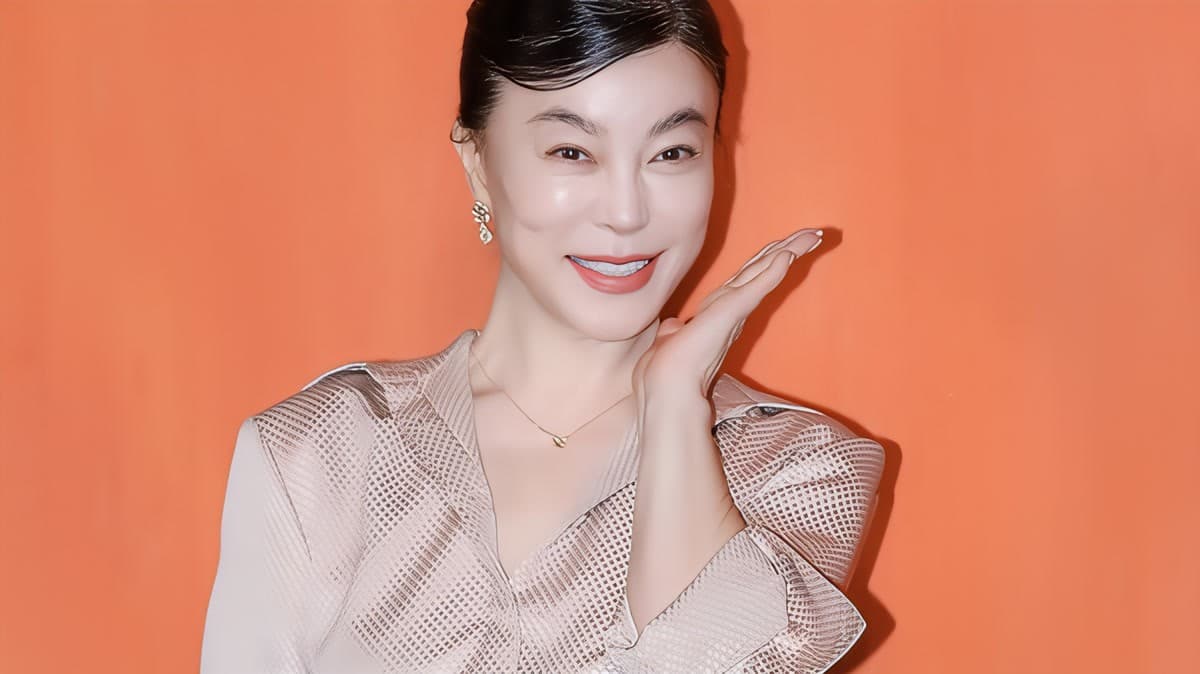
Most people who get lost as small children remember the experience as terrifying. Choi Hwa-jeong remembers it differently. When Korea's beloved broadcaster revisited her childhood neighborhood of Jongno, Seoul, in a recent YouTube video, she recalled being separated from her father on a crowded street — and confessed that even as a toddler, she had been composed enough to pretend she was more distressed than she actually was.
The story became an instant highlight of the April 2026 video on her channel "안녕하세요 최화정이에요" (Hello, I'm Choi Hwa-jeong), where she toured the Jongno neighborhood she was born in, visiting longtime favorite restaurants and going hanbok shopping in the Bukchon area. In an industry where authenticity is rare and often performed, Choi's instinct to acknowledge her own composed self-awareness — even as a lost toddler — struck fans as exactly the kind of detail that has made her irreplaceable in Korean entertainment for nearly five decades.
The Childhood Incident That Charmed a Generation
Choi Hwa-jeong was born in Bukchon, the historic neighborhood in Jongno-gu, Seoul, in 1961. In the video, she walked through the streets where she grew up, noting how much the area had changed — and how much it hadn't. The food, the alleyways, the particular texture of the neighborhood still felt like home.
At a fusion Korean restaurant in the area, she recalled the incident. She was very young — before school age — when her father told her to wait while he crossed the street near the Danseongsa and Piccadilly theaters, which once stood facing each other in Jongno. Those theaters no longer exist, and Choi paused to note their absence before continuing the story.
The road seemed enormously wide to a small child. The sidewalks were crowded with people. When she tried to follow her father, she lost sight of him entirely in the crowd. A young man nearby — she described him as an older-brother type, likely a university student — spotted her and carried her on his back to the nearest police box.
A crowd gathered. Adults hovered around her with concern. Her family eventually came to collect her. And through it all, Choi recalled, she was essentially fine — small, calm, and taking stock of the situation with the kind of composure that, in retrospect, seems entirely in character for someone who would go on to host live radio for nearly three decades.
The punchline, delivered with her characteristic self-deprecating wit, was the confession that she had tried to look more upset than she was — because the emotional expectations of the adults around her seemed to demand it. "아빠가 나를 잃어버린 적이 있다" ("My father once lost me"), she said, framing the incident from her father's perspective, a small storytelling detail that drew laughter from viewers who recognized the warm generosity of that framing.
The Legend Behind the Story
For international K-entertainment fans who may not know Choi Hwa-jeong, the biographical context matters. She is not simply a popular broadcaster — she is one of the foundational figures of Korean radio and variety entertainment, active for over four decades.
Choi made her debut in 1979 through TBC's 21st open recruitment talent audition, at a time when the Korean entertainment industry was just beginning to take shape. She built her career across television, theater, and radio, earning the Dong-A Theater Award for Best Actress in 1993 for her lead role in the stage production of Educating Rita.
But it was radio that defined her legacy. From November 1996 until June 2024 — a span of nearly 29 years — she hosted "Choi Hwa-jeong's Power Time" on SBS Power FM. The show became a fixture of Korean mornings, a constant presence across multiple generations of listeners. When she finally stepped down in 2024, after nearly three decades, the farewell was treated as a genuine cultural moment.
Alongside her radio career, Choi appeared in dramas including "Hotelier," "High Kick!," and "The Greatest Love," and developed a second career in home shopping television. In 2017 alone, she set a record selling 1.8 billion Korean won worth of product in a single 32-minute broadcast — a testament to the trust and warmth she projects across any screen or microphone she inhabits.
YouTube Queen at 65 — and Still Just Getting Started
When Choi Hwa-jeong launched her YouTube channel "안녕하세요 최화정이에요" in 2024, the question in some corners of the industry was whether the format would suit her. Radio is intimate; YouTube is performative. Radio demands presence; YouTube rewards visual charisma.
The answer came quickly. The channel hit 500,000 subscribers within approximately one month of launch — a number that would be remarkable for any new creator, let alone one entering the platform for the first time at age 65. The milestone confirmed what her existing audience already knew: Choi's appeal is not tied to a medium. It is tied to her.
The channel has since hosted an eclectic mix of content — travel, food, lifestyle, personal stories, and celebrity guests. In December 2024, actor Song Joong-ki, one of the most prominent Korean stars internationally following "Vincenzo" and "Reborn Rich," appeared as a guest, a pairing that introduced Choi's channel to a global audience.
The Jongno video, published on April 2, 2026, is characteristic of what makes the channel work. Choi does not perform nostalgia — she inhabits it. Walking through the streets where she was born, recommending restaurants she has visited for decades, sharing memories that are genuinely hers rather than crafted for an audience: the intimacy feels earned because it is.
Why She Resonates Beyond Generation and Genre
What the childhood story reveals about Choi Hwa-jeong is something fans of Korean variety and radio have understood for a long time: she is constitutionally incapable of performing emotion she does not feel. Even as a toddler lost in the crowds of Jongno, surrounded by concerned adults, her instinct was not to cry on cue but to assess the situation and decide, pragmatically, what the moment seemed to require.
That combination of emotional intelligence and dry self-awareness is the quality that sustained a radio career spanning nearly three decades, and it is the quality that translates so naturally to YouTube. Audiences — in Korea and increasingly beyond — are drawn to creators whose relationship with the camera feels unmediated, who appear to be genuinely themselves rather than a constructed version of themselves.
At 65, in an industry that frequently discards older performers for younger models, Choi Hwa-jeong is not merely surviving. She is thriving on a platform built for the chronically young, reaching new audiences who were not alive when she started her radio career, and doing so without changing the fundamental thing about her that has always worked.
The Jongno video ends, as the best YouTube content tends to, with something that feels small and true: a broadcaster walking through the streets where she grew up, remembering a day she was lost and carried home on a stranger's back, and laughing about the fact that even then, she was already herself. Some things, it seems, do not change with the decades — and for Choi Hwa-jeong, that is entirely the point.
How do you feel about this article?
저작권자 © KEnterHub 무단전재 및 재배포 금지
Entertainment Journalist · KEnterHub
Entertainment journalist focused on Korean music, film, and the global K-Wave. Reports on industry trends, celebrity profiles, and the intersection of Korean pop culture and international audiences.
Comments
Please log in to comment