Choi Min-sik Reveals the Envy Behind His Netflix Role
 By Jang Hojin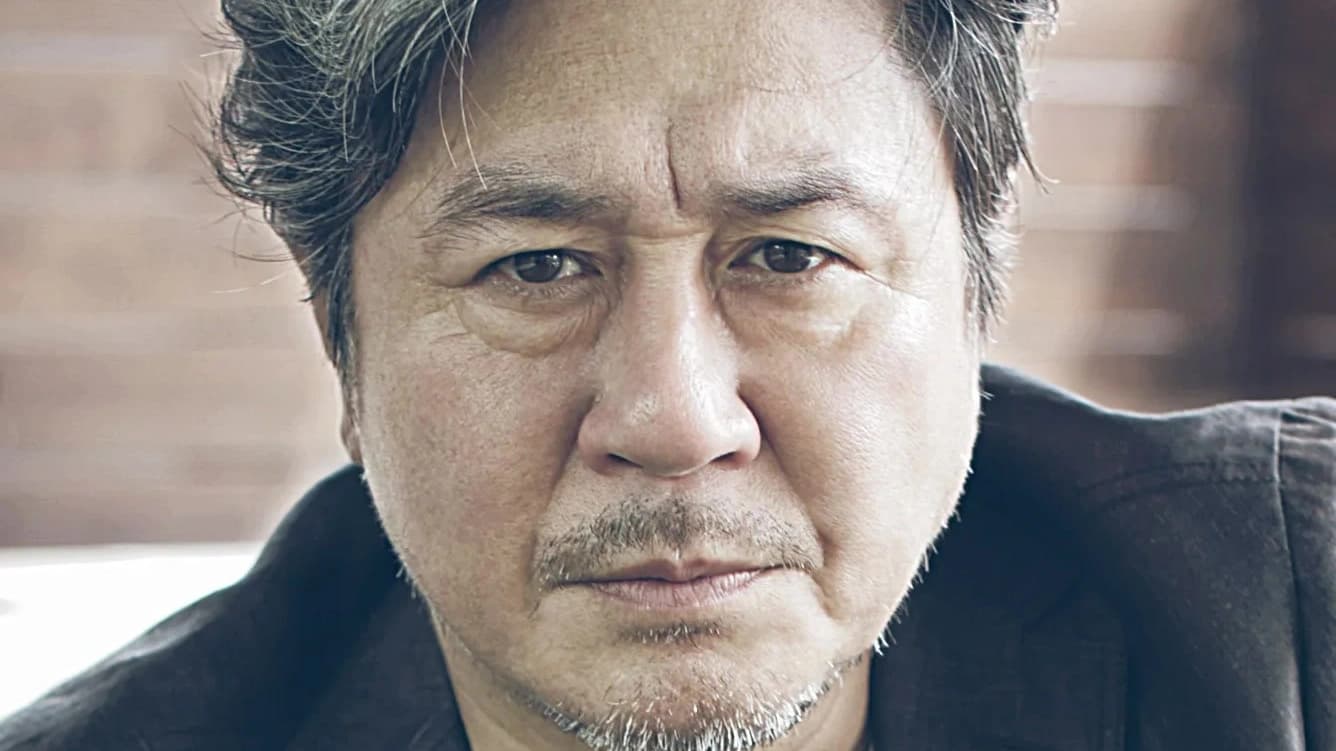
Choi Min-sik is turning a passing joke about envy into a serious reason to watch Netflix's next Korean suspense drama. At a press conference in Seoul on June 24, the veteran actor described how his own private feelings of insecurity helped him understand Heo Moon-oh, the frustrated professor at the center of The Boy in the Last Row.
The six-part Netflix original is scheduled to premiere on June 26 at 5 p.m. KST, giving Korean drama viewers a compact psychological story built around literature, obsession, and the uncomfortable thrill of recognizing talent in someone else. For international fans who know Choi through films such as Oldboy or through his recent series work, the new project places him in a quieter but potentially more unsettling role: a man who teaches writing, but can no longer produce the kind of work he once believed he was capable of creating.
A confession that explains the character
During the production presentation at a hotel in Mapo, Seoul, Choi spoke about the emotional weakness beneath Heo Moon-oh's sharp exterior. The character is a Korean literature professor and failed novelist who published only one novel two decades earlier. In class, he is known as a difficult, irritable teacher, but his composure begins to crack after he reads the work of Lee Kang, a mysterious engineering student who always sits in the back row.
Rather than presenting Heo as a simple villain or a bitter academic stereotype, Choi connected him to a feeling many people try to hide. He said people often carry envy, embarrassment, or a sense of inferiority that they do not reveal to others, and that Heo's version of that feeling is unusually severe. The comment gave the press event its most human angle: Choi was not selling the character as a puzzle to be solved, but as someone whose uglier impulses may feel familiar to viewers.
That is also where his unexpected mention of Elon Musk entered the conversation. Asked who makes him feel a kind of inferiority or envy, Choi answered playfully that he finds himself curious about, and even envious of, the Tesla chief executive's unusual public behavior and distinctive presence. The answer drew attention because it was humorous, but it also matched the larger theme of the drama: admiration can be unstable when it mixes with comparison.
For a series about a professor who becomes fixated on a student's brilliance, that distinction matters. Heo does not simply notice Lee Kang's talent; he begins to organize his attention around it. The premise turns a classroom relationship into a psychological suspense story, asking what happens when a teacher's recognition of a student's gift becomes less about mentorship and more about his own wounded pride.
What Netflix's new suspense drama is about
The Boy in the Last Row follows Heo Moon-oh after he discovers Lee Kang's unusual writing ability and offers him private literature lessons. Lee, played by Choi Hyun-wook, is described as a student with exceptional skill in composition and an unreadable expression. He sits at the back of the lecture hall, keeps his distance, and becomes the trigger for Heo's growing fascination.
The setup is adapted from the play of the same title by Spanish writer Juan Mayorga. That theatrical origin is important because the story is not built only on external incident. It depends on shifts in perspective, the tension between teacher and student, and the uncomfortable question of who is using whom. Choi said the script felt literary to him and that he had been drawn to work with room for reflection, not only immediate entertainment.
Director Kim Kyu-tae is also a key part of the pitch. Korean viewers know Kim for works that examine complicated emotional lives, including Netflix's The Trunk, tvN's Our Blues, and SBS's It's Okay, That's Love. In this new series, that interest in interior pressure appears to move into suspense territory, with the drama tracking how creative admiration can slide into possession.
Choi emphasized that the script gave him a strong foundation. He said the writing was solid, and that reading it carefully while discussing the whole work and the character with Kim allowed the performance to develop naturally. He also credited the director's quiet charisma with guiding the set, framing the role not as a solo showcase but as the result of a close reading of text, character, and tone.
The June 26 release date gives the show a clear launch window just two days after the press conference. With only six episodes, it is positioned as a concentrated suspense drama rather than a long weekly saga. That format may help the series reach viewers who prefer Korean thrillers with a defined arc and a strong central conflict.
Choi Min-sik and Choi Hyun-wook's tense pairing
The drama's most important relationship is the one between Choi Min-sik's Heo Moon-oh and Choi Hyun-wook's Lee Kang. On paper, the pairing brings together one of Korea's most respected screen actors and a younger performer whose role requires restraint, mystery, and precision. At the press event, Choi Min-sik made clear that he saw that contrast as more than a casting fact.
He praised Choi Hyun-wook's focus, gaze, and detail as an actor, saying the younger performer made him wonder whether he himself had possessed that level of concentration at the same age. The remark was generous, but it also echoed Heo's relationship with Lee Kang in a useful way. In the series, the professor is drawn to the student's gifts; in real life, the senior actor openly acknowledged the intensity he saw across from him.
That parallel could become one of the reasons the drama lands with viewers. Stories about creative jealousy often work best when the audience understands both sides: the insecurity of the older figure and the danger of treating a younger person's talent as an object to control. If the series uses that tension well, Heo's personal collapse will not need melodramatic exaggeration. It can come from watching him mistake recognition for ownership.
Choi Hyun-wook's character is described as an engineering student rather than a literature major, a detail that adds another layer to Heo's reaction. Lee Kang is not simply a protege following the expected path. His writing talent emerges from outside the professor's world, making the discovery more disruptive. For a man already haunted by his own stalled career, that kind of talent can feel like a provocation.
The professor's background sharpens the stakes. Heo is not a beginner who failed to enter the literary world; he is someone who once published and then stopped. The gap between a past achievement and a present block can be more painful than total obscurity. Choi's comments suggest he is playing Heo as a man who knows exactly enough about art to recognize brilliance, and exactly enough about himself to resent it.
Why the role fits Choi now
Choi also pushed back against the idea that acting is a contest. Although entertainment coverage often frames major projects as acting battles, he said the performers are not fighting each other and that each actor has to follow a separate path. That philosophy gives additional context to his praise for Choi Hyun-wook. He can admire a younger actor without turning the work into rivalry, even while playing a character who struggles to do the same.
His description of the role also suggests a performance built from self-examination rather than distance. Choi did not claim to stand outside Heo's weakness. Instead, he acknowledged that he has his own shabby or petty sides, and that many people understand the private discomfort of comparison. For a suspense drama, that may be more effective than a purely menacing interpretation. The fear comes from how ordinary the impulse is before it becomes destructive.
That is why Choi's lighthearted Elon Musk answer became more than a viral line. It showed the actor locating Heo's problem in a recognizable human reflex: looking at someone else and wondering why they seem freer, stranger, more gifted, or more powerful. In Heo's case, that reflex is aimed at a student whose writing opens a wound the professor has spent years covering.
When The Boy in the Last Row premieres on Netflix on June 26, the draw will not be only Choi Min-sik's name or the adaptation's stage pedigree. It will be the chance to watch a great actor turn one of the most ordinary feelings, envy, into the engine of a suspense story about art, pride, and the dangerous need to possess another person's talent.
How do you feel about this article?
저작권자 © KEnterHub 무단전재 및 재배포 금지
Entertainment Journalist · KEnterHub
Entertainment journalist specializing in K-Pop, K-Drama, and Korean celebrity news. Covers artist comebacks, drama premieres, award shows, and fan culture with in-depth reporting and analysis.
Comments
Please log in to comment