Choi Won-young’s Quiet Move Changes Mojamusa
 By Jang Hojin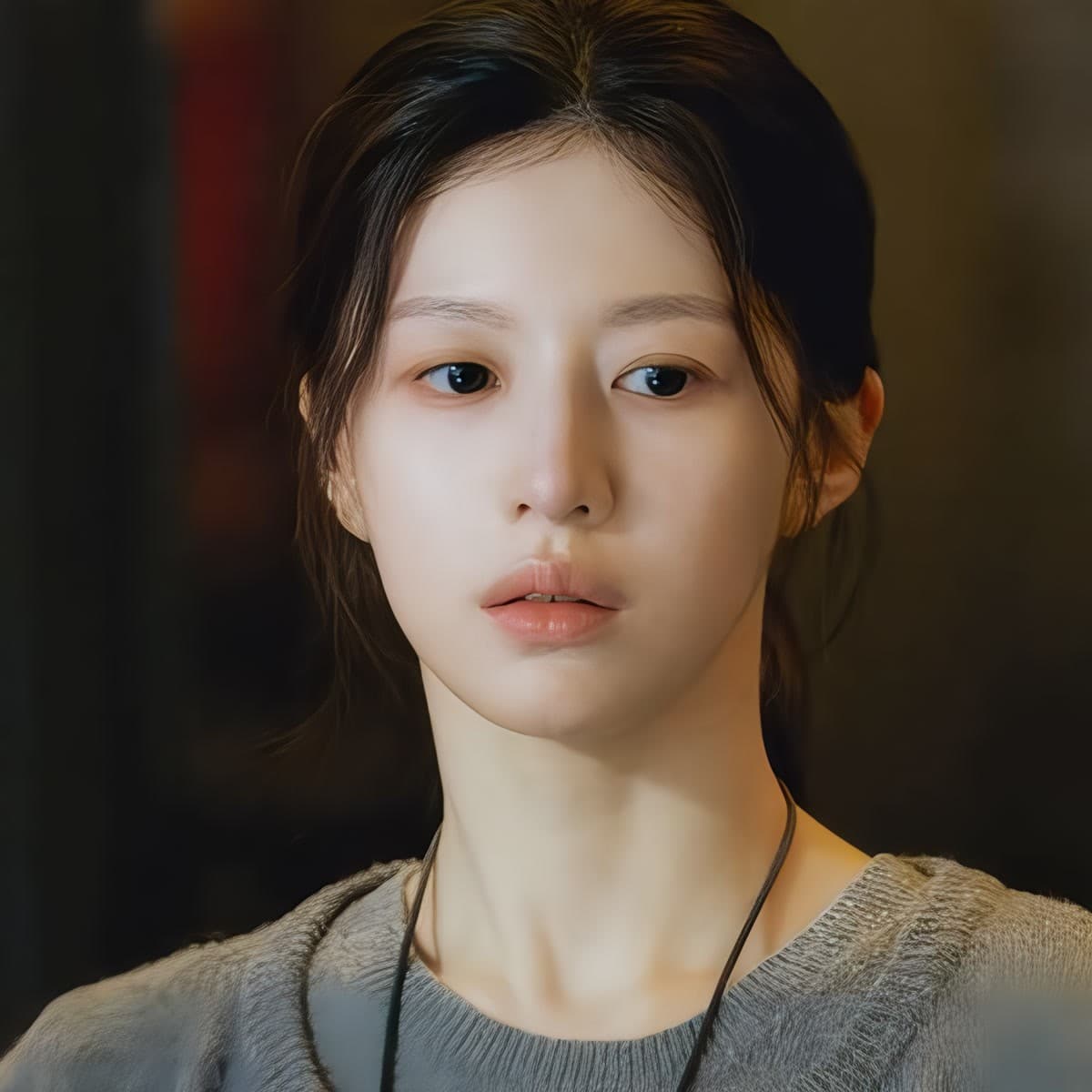
Choi Won-young has turned one quiet line in We Are All Trying Here into one of the finale week's most revealing moments. As JTBC's drama trends in Korea under the nickname Mojamusa, attention is shifting from the headline secrets to the people trying to control what those secrets are worth.
In the latest episode stretch, Choi's character Choi Dong-hyun learns that Byeon Eun-a, played by Go Youn-jung, is the hidden writer Young-sil behind Nak Nak Nak. His reaction is not a loud confrontation. It is a careful attempt to contain the truth, including the suggestion that only the two of them should know who Young-sil really is. For a drama about people fighting the feeling that they have no value, that small act of management says a great deal.
The line has become a useful lens for the finale because Dong-hyun is not a simple villain. He is a workplace survivor, a producer, a negotiator, and a man who understands how quickly a production can collapse when the wrong information reaches the wrong person. Choi Won-young plays him with that practical intelligence on the surface, while letting the audience see the self-interest underneath.
Why Choi Dong-hyun's Reaction Matters
Dong-hyun's first instinct after discovering Young-sil's identity is to calculate. Reports around episode 11 describe him as someone who notices that director Ma Jae-young is trying to hide the presence of a co-writer. Dong-hyun quickly understands that Young-sil's work is central to the project, but he also understands that revealing the truth could complicate casting, contracts, egos, and authority.
That is why his private pressure on Eun-a carries more weight than a typical plot device. He is not only asking her to keep a secret. He is asking her to let other people continue arranging the value of her writing. The drama has already shown that Eun-a was once known as a sharp producer with a strong eye for scripts, only to be diminished by workplace contempt and emotional pressure. Dong-hyun's move risks turning her talent into another asset that someone else can quietly file away.
Choi Won-young's performance makes the scene work because he avoids making Dong-hyun cartoonishly cruel. The character can flatter, persuade, and retreat when necessary. He uses social skill as a survival tool. When he speaks to people he considers weaker, his manner hardens; when he needs something, his posture changes. That flexibility is exactly what makes him dangerous in the story. He does not always need to shout to take control of a room.
The drama's Korean coverage has highlighted Choi's ability to give everyday moments a pulse. Raised eyebrows, a shift in breathing, or a sudden change from anger to embarrassment can reveal how quickly Dong-hyun recalculates. In a series filled with wounded dreamers, he represents a different kind of anxiety: the fear of losing position inside an industry where information is power.
Young-sil's Secret Is Also A Workplace Story
Much of the finale-week conversation has focused on Eun-a's emotional breakthrough and her hidden identity as Young-sil. That is understandable. Go Youn-jung's character carries the most visible wound, and the mother-daughter confrontation with Oh Jung-hee, played by Bae Jong-ok, gives the drama its strongest emotional charge before the finale.
But Dong-hyun's response shows that Young-sil's reveal is not only a family or identity twist. It is also a workplace story. Eun-a's writing exists inside a production system that immediately asks who can use it, who can claim it, who can sell it, and who needs to be kept calm. The question is not simply whether Eun-a will admit she is Young-sil. The question is whether admitting it will actually give her control.
That distinction is important because Mojamusa has never treated work as a neutral background. Dong-man wants to become a film director after years of being stalled by comparison and insecurity. Ma Jae-young and Dong-hyun maneuver around creative credit and production risk. Actors such as Oh Jung-hee and No Kang-sik bring their own reputations and demands into the project. Everyone is fighting for a place in the story, both literally and professionally.
In that environment, Eun-a's pen name is fragile. A secret can protect her, but it can also erase her. Dong-hyun recognizes the usefulness of the secret before he recognizes the person behind it. That is what makes his line sting.
A Subtle Antagonist For A Drama About Worth
We Are All Trying Here is built around people who feel smaller than the lives they wanted. Its Korean title points directly to that struggle, and the drama follows characters who are embarrassed by envy, professional delay, family damage, and the fear that their best years have already passed. Dong-hyun belongs in that world because he has also learned to survive through status games.
What separates him from some of the drama's more openly broken characters is that he turns insecurity outward. When he senses a weakness, he uses it. When he sees an opening, he moves. When a person becomes inconvenient, he tries to manage the person rather than understand the wound underneath. That does not make him unbelievable. It makes him painfully familiar inside the show's workplace ecosystem.
Choi Won-young's acting keeps that familiarity intact. Dong-hyun can be funny in his shamelessness, tense in his calculation, and oddly human in the panic that crosses his face when a situation outruns him. The episode 10-to-11 transition, in which he learns the truth and then tries to regain control, gives Choi a compact showcase: surprise, anger, adjustment, persuasion, and self-protection all arrive without needing a grand speech.
That is why his character deserves attention in the finale conversation. The biggest emotional scenes may belong to Eun-a, Dong-man, and Jung-hee, but Dong-hyun is one of the people who determines whether those emotions can become action. He is the person asking everyone to be practical at the exact moment when practicality may mean another erasure.
How This Raises The Finale Stakes
The final episode now has to answer what happens when private truth meets public production. If Eun-a remains hidden, Nak Nak Nak may move forward more smoothly, but the cost is her authorship. If her identity becomes openly acknowledged, the film may face new conflict, but the story can finally stop treating her as a shadow. Dong-hyun's role sits directly between those outcomes.
The stakes are wider than one credit. Korean reports on the finale stretch have also pointed to Dong-man's attempt to complete his film with major actor No Kang-sik, the unresolved tension between Dong-man and Park Kyung-se, and the painful relationship between Eun-a and Jung-hee. Episode 11 drew 4.1 percent nationwide among paid households, according to Nielsen Korea figures cited by local media, keeping the drama in the stronger ratings range it reached late in its run.
Those numbers matter because the series began at 2.2 percent and built attention as its secrets became emotionally clearer. The final episode is arriving with enough viewer investment for even a supporting character's strategy to feel consequential. Dong-hyun's decision is not the whole ending, but it can tilt the ending toward honesty or concealment.
For Choi Won-young, the role is a reminder of how much a drama can gain from an actor who treats a secondary character as a complete person. Dong-hyun's line about keeping Young-sil's identity between two people could have been only a plot bridge. Instead, it exposes the exact pressure point of Mojamusa: the difference between being useful and being recognized.
If the finale allows Eun-a to stand openly as Young-sil, Dong-hyun's attempted containment may become the last obstacle she outgrows. If the story chooses a messier ending, his calculation may show how difficult it is to protect one's value inside a system built to bargain with it. Either way, Choi Won-young has made sure that one quiet move will echo into the drama's final hour.
How do you feel about this article?
저작권자 © KEnterHub 무단전재 및 재배포 금지
Entertainment Journalist · KEnterHub
Entertainment journalist specializing in K-Pop, K-Drama, and Korean celebrity news. Covers artist comebacks, drama premieres, award shows, and fan culture with in-depth reporting and analysis.
Comments
Please log in to comment