Chungyoon Drops NICOTINE MV With C′SA
 By Ricky Joo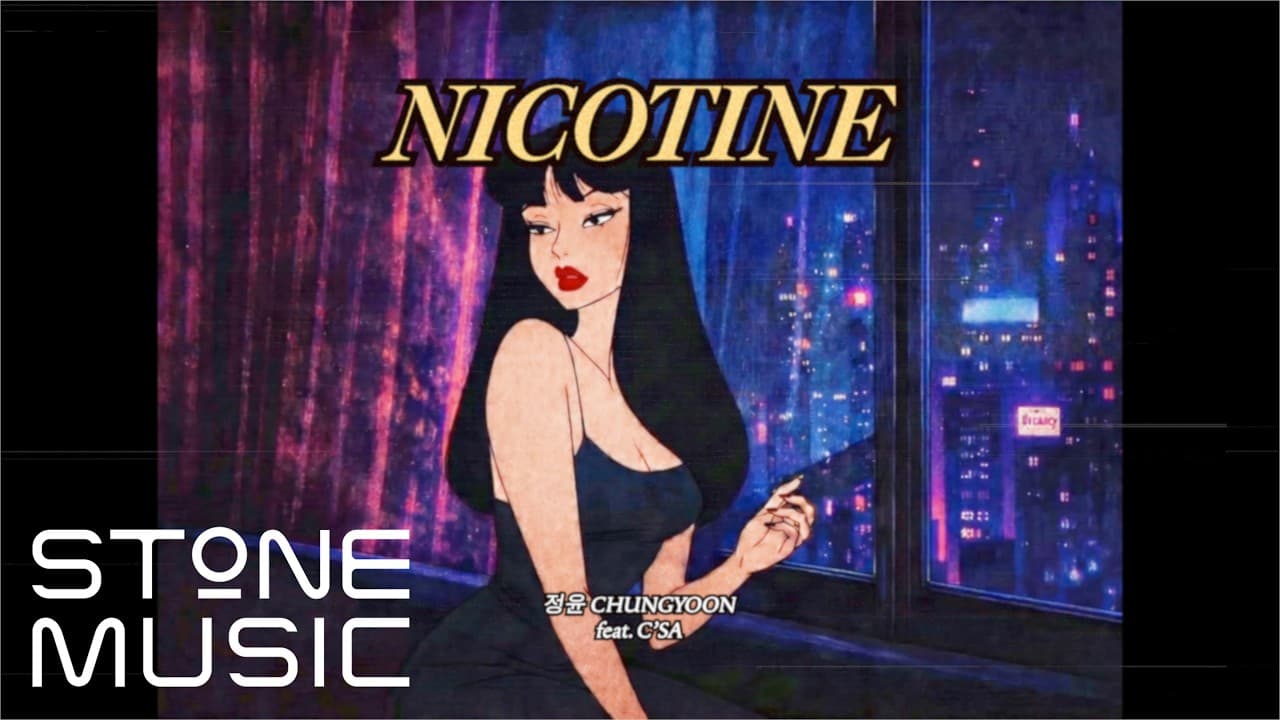
Chungyoon has released the official music video for NICOTINE, a compact new track featuring C′SA that frames late-night anxiety as a habit the narrator knows is harmful but cannot easily quit. Featured on Stone Music Entertainment's official YouTube channel, the video arrives with a detailed credit list that positions Chungyoon not only as the lead voice but as the project's central maker: producer, lyricist, composer, arranger, visual artist and mixing engineer.
The official description gives the song its emotional key. It describes a narrator who imagines the worst every night, turns regret over repeatedly, blames the self, and recognizes the pattern as a bad habit. That premise makes the title more than a simple metaphor. NICOTINE appears to use addiction language to describe a mental loop: the repeated return to thoughts that damage the person experiencing them, even when they understand the cost.
C′SA's feature expands that interior world. The credits list C′SA on vocals and composition, which suggests the collaboration is not a surface-level guest appearance but part of the song's musical foundation. For independent-leaning Korean releases, that distinction matters. A feature can be a marketing device, but it can also be a way to split emotional perspective, thicken a chorus, or give a solitary confession another voice. NICOTINE appears closer to the second lane.
A Self-Produced Release With A Clear Emotional Premise
The most striking part of the release is the concentration of creative roles. Chungyoon is credited with producing the track, writing lyrics, composing with C′SA, arranging the music, handling all instruments, creating the visualizer and artwork, and mixing the record. That level of authorship gives the music video a specific appeal. Viewers are not only watching a singer perform a finished single; they are encountering a small, self-contained creative world built by the artist.
That matters because the Korean music market is crowded with polished releases from large teams. A smaller self-produced project has to compete differently. It may not win on scale, but it can win on coherence. When the same artist shapes the sound, words and visual presentation, the result can feel less like a product moving through departments and more like a single emotional statement. NICOTINE is being presented in exactly that way.
The song's premise also benefits from that coherence. Anxiety, regret and self-blame are familiar themes in pop, but they can become vague if the production does not match the writing. By tying the track to a concrete habit metaphor, Chungyoon gives listeners an entry point. The title tells them what kind of repetition to expect. The description tells them the repetition is emotional rather than literal. The music video then becomes the space where that idea can take visual form.
Stone Music Entertainment's role gives the release broader visibility. The channel often functions as a discovery platform for Korean music outside the biggest idol-company pipelines. For listeners who use YouTube as a release radar, a Stone Music upload can signal that a track deserves attention even when the artist is not yet a household name. That discovery function is especially important for songs like NICOTINE, which depend on mood and authorship rather than spectacle.
How C′SA's Feature Shapes The Song's Identity
C′SA's presence gives NICOTINE a collaborative center. The description credits C′SA not only as a featured vocalist but also as a co-composer, while Chungyoon handles production, lyrics and arrangement. That division suggests a track formed through both personal confession and musical exchange. In songs built around inner turmoil, a second voice can change the emotional geometry. It can echo the narrator, challenge the narrator or create the feeling of a conversation that exists inside the same mind.
The feature also helps position the track for listeners who value vocal texture. Korean digital releases often travel through snippets first, especially when the hook or chorus carries a distinct voice. A collaboration gives the song more sonic contrast and more potential points of attachment. Listeners may arrive for Chungyoon's authorship and stay for the way C′SA's voice colors the refrain or shifts the emotional temperature.
That balance is important for a song with a heavy title. NICOTINE could easily become one-note if it relied only on darkness. The collaboration gives the release room to move between confession and atmosphere. It lets the track express dependency without trapping the listener in a single vocal shade. The official credits do not spell out the arrangement in detail, but they make clear that the song is designed as a partnership rather than an afterthought.
For emerging and independent artists, collaborations also help build networks of discovery. Fans of C′SA can encounter Chungyoon's production style, while Chungyoon's listeners can follow C′SA's vocal identity into other work. That is a quieter version of the cross-fandom effect often discussed in idol music, but it is just as meaningful in smaller release ecosystems. Each credit becomes a path to another artist.
Why The Visual Credits Matter
The official description notes that the visualizer and artwork are by Chungyoon. That detail is worth highlighting because a music video thumbnail and visual identity often decide whether a new listener clicks at all. In a streaming environment where thousands of songs arrive every day, visual coherence can be the difference between a track being heard and being ignored. By taking responsibility for the artwork, Chungyoon extends the self-produced identity beyond the audio file.
That does not mean every artist needs to control every part of a release. Large collaborative teams can produce extraordinary work. But for a track like NICOTINE, the self-made visual layer reinforces the central metaphor. A song about repetitive, private mental habits benefits from a presentation that feels intimate and authored. The image does not have to overwhelm the music; it has to create a mood that prepares the listener for the confession inside the song.
The technical credits point in the same direction. Chungyoon is listed as mixing the track, while mastering is credited to Kwon Namwoo at 821 Sound Mastering, one of the recognizable names in Korea's mastering landscape. That combination suggests a release built from a personal studio process and then finished with professional polish. For listeners, the practical result is a track that can carry an intimate creative identity without sounding unfinished.
Those details are useful because they help readers understand the release as craft, not only content. A music video headline can say that a new song has dropped, but the richer story is how the song was assembled: who wrote it, who shaped the instruments, who added vocals, who created the image and who finalized the sound. NICOTINE offers unusually clear answers to those questions.
A Release Positioned For Mood-Driven Discovery
NICOTINE arrives at a time when mood-driven Korean tracks can find audiences outside traditional promotional cycles. Not every release needs a music-show campaign or a large-scale teaser rollout. Some songs travel because listeners recognize a feeling and share it. The description's language of sleepless worst-case thinking, regret and self-blame gives the track a direct emotional pitch. It tells listeners what kind of night the song belongs to.
That pitch could work well on YouTube because official music videos still serve as the first complete encounter for many listeners. Streaming platforms reduce songs to audio and metadata, but YouTube allows artwork, pacing and visual atmosphere to shape the first impression. For an artist-producer like Chungyoon, that matters. The video is not just promotional material; it is part of the release's argument for why the song should be heard as a full mood piece.
The challenge will be reach. A self-produced single can be creatively strong and still struggle for visibility in a market dominated by idol comebacks, OST releases and algorithmically amplified catalog hits. Stone Music's channel helps lower that barrier, but the track will still depend on listener sharing, playlist placement and the ability of the title and thumbnail to cut through crowded feeds. The clarity of the concept gives it a useful starting point.
The release also shows why smaller Korean music videos remain important to cover. They reveal the ecosystem beneath headline comebacks: artists writing, producing, arranging and visualizing their own work; featured vocalists contributing to emotional shape; engineers finishing tracks for digital circulation; and official channels providing a bridge to new listeners. That ecosystem is where many distinctive sounds develop before wider recognition follows.
For Chungyoon, NICOTINE is therefore more than a single upload. It is a statement of authorship. The track presents a clear emotional metaphor, a collaboration with C′SA, and a credit list that makes the artist's hand visible at nearly every stage. If the song connects, it will likely be because listeners hear that unity: the uneasy loop of the lyric, the mood of the visual presentation and the sense that the person describing the habit also built the world around it.
How do you feel about this article?
저작권자 © KEnterHub 무단전재 및 재배포 금지
New Music & Comebacks Reporter · KEnterHub
New-music reporter covering K-pop comebacks as they drop. Ricky Joo tracks official channel premieres, music video releases and debut showcases, breaking down what each comeback signals about an artist's next chapter — often within hours of release.
Comments
Please log in to comment