Coldplay's Chris Martin Performs Taeyang's 'Yeorobun' Meme at Seoul Concert — TWICE's Jihyo Was Behind It
 By Park Chulwon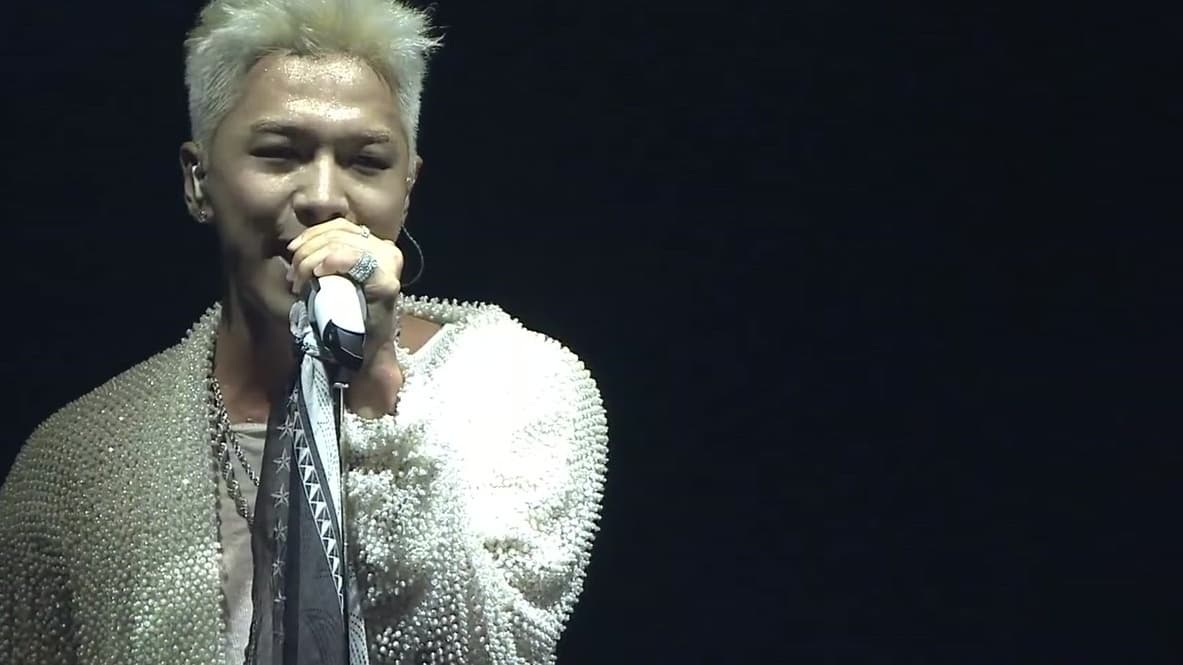
During Coldplay's April 2025 concert run at Goyang Stadium in Seoul, BIGBANG's Taeyang was in the audience when something unexpected happened. Chris Martin performed an impromptu recreation of one of K-pop's most beloved concert greeting moments. Martin took to his piano and reproduced Taeyang's iconic "여러분" opener — the theatrical, melodically exaggerated greeting Taeyang had debuted at BIGBANG's Made era concerts in 2014, in which he sang "여러분, 너무 보고싶었어요" (Everyone, I missed you so much) with a dramatic vocal flourish that had become one of K-pop's most recognizable and affectionately mocked fan-facing moments. The person who had arranged this cross-cultural recreation, it emerged afterward, was TWICE's leader Jihyo, who admitted to coaching Martin on the phrase and its delivery.
The moment's layered quality — a British rock act performing a Korean idol's fan greeting while the idol himself watched from the audience, orchestrated by a third K-pop artist who had established a relationship with the band during their promotional interactions — encapsulates something specific about the state of K-pop's relationship with Western pop's most prominent touring acts in 2025. It is not simply that Korean artists and Western artists were appearing on the same stages or releasing collaboration tracks. It is that the cultural material of K-pop — its inside references, its fan-facing performance conventions, its specific memes — had become part of the shared conversational vocabulary of the global pop ecosystem in a way that enabled these spontaneous, authentically playful interactions to occur and to land meaningfully with audiences on both sides.
The "여러분" Meme and Its Cultural Life
Taeyang's "여러분" greeting originated in 2014 during BIGBANG's Made era concerts, when he took the microphone and addressed the audience with an extended, theatrical vocal line that took the simple Korean word for "everyone" (여러분) and turned it into a multi-note melodic statement. The exaggerated sincerity of the delivery — earnest but too perfectly executed to be entirely artless — caught in the fan community's collective affection in exactly the way K-pop fan culture captures these moments: as a gesture that was both a genuine expression of care and a performance of that expression, which is precisely the register in which K-pop's artist-fan communication most often operates. Over the following decade, the "여러분" clip circulated as a reference point for Korean pop music's distinctive performance conventions, accumulating new audiences through social media platforms and eventually crossing into the broader internet's vocabulary for discussing K-pop fan culture.
By 2025, the "여러분" meme had reached the kind of cross-cultural recognition where TWICE's Jihyo could assume that teaching it to Chris Martin — and that Martin performing it during a Seoul concert with Taeyang in the audience — would be legible to the Korean audience as an affectionate reference rather than a puzzling non sequitur. That assumption proved correct: the clip's circulation was immediate, and the reaction from both K-pop fans and general audience observers reflected exactly the combination of genuine delight and meta-awareness that the most successful cross-cultural pop moments tend to generate.
Jihyo, the Cultural Broker
The detail that makes the Coldplay × Taeyang moment more than a simple viral concert clip is Jihyo's role in arranging it. TWICE's leader, who had established a documented relationship with Coldplay through the band's promotional activities in Korea — which had included learning Korean phrases from various K-pop artists during their multiple Seoul tour stops — had accumulated enough backstage credibility with Chris Martin's circle to make the "여러분" coaching session feel like a natural extension of their ongoing interaction rather than a one-off PR stunt. The deliberateness of the arrangement (teaching Martin the exact phrase, presumably rehearsing the melodic line, timing the performance for a night when Taeyang would be in the audience) reflected K-pop's characteristic capacity to turn genuine personal connections between artists into public moments that serve multiple purposes simultaneously: they're authentic, they're entertaining, and they generate exactly the kind of social media documentation that extends the reach of both parties' promotional activities.
Jihyo's position as a cultural broker between Korean pop and Coldplay's touring infrastructure is itself a signal of how the relationship between K-pop and Western pop's most prominent institutional players has evolved. In earlier periods of K-pop's international expansion, the interaction between Korean and Western artists was primarily formal: guest verses on tracks, red carpet encounters, interview mentions. The Coldplay Korea concerts generated something more organic: a network of personal relationships between artists from different industries, operating through the same shared geography and the same sustained cultural moment, that produced spontaneous interactions with a quality of genuine mutual interest that formal promotion does not reliably generate.
What the Moment Signals About 2025's Pop Landscape
The Coldplay "여러분" moment, and the broader network of K-pop artist attendance and backstage interaction that the band's Korea concerts generated, provides a snapshot of where K-pop's integration into the global pop ecosystem stood in 2025. It is not merely that Korean artists were collaborating formally with Western acts — though that was happening with increasing frequency and sophistication, as demonstrated by the Maroon 5 × LISA pairing announced in the same period. It is that the cultural material of K-pop had achieved sufficient global distribution that a British band's performance of a decade-old Korean idol fan greeting could be not only recognized but celebrated in real time by an international audience that understood exactly what the gesture meant and why it was funny and touching and significant simultaneously.
Taeyang, watching from the audience at Goyang Stadium, was present at the completion of a cultural circuit that the 2014 concert moment he had created had set in motion. That a random act of theatrical sincerity toward his fans — a melodic "everyone, I missed you so much" delivered with the particular earnestness that K-pop's performance conventions both require and gently parody — had traveled far enough into the global pop imagination to be reproduced by Chris Martin eleven years later, in front of Taeyang himself, is the kind of outcome that nobody involved in that original 2014 moment could have planned for. And yet in 2025's pop landscape, it felt not only possible but somehow inevitable.
How do you feel about this article?
저작권자 © KEnterHub 무단전재 및 재배포 금지
Entertainment Journalist · KEnterHub
Entertainment journalist focused on Korean music, film, and the global K-Wave. Reports on industry trends, celebrity profiles, and the intersection of Korean pop culture and international audiences.
Comments
Please log in to comment