Colony Hits 1 Million Faster Than Korea’s 2026 Champ
 By Jang Hojin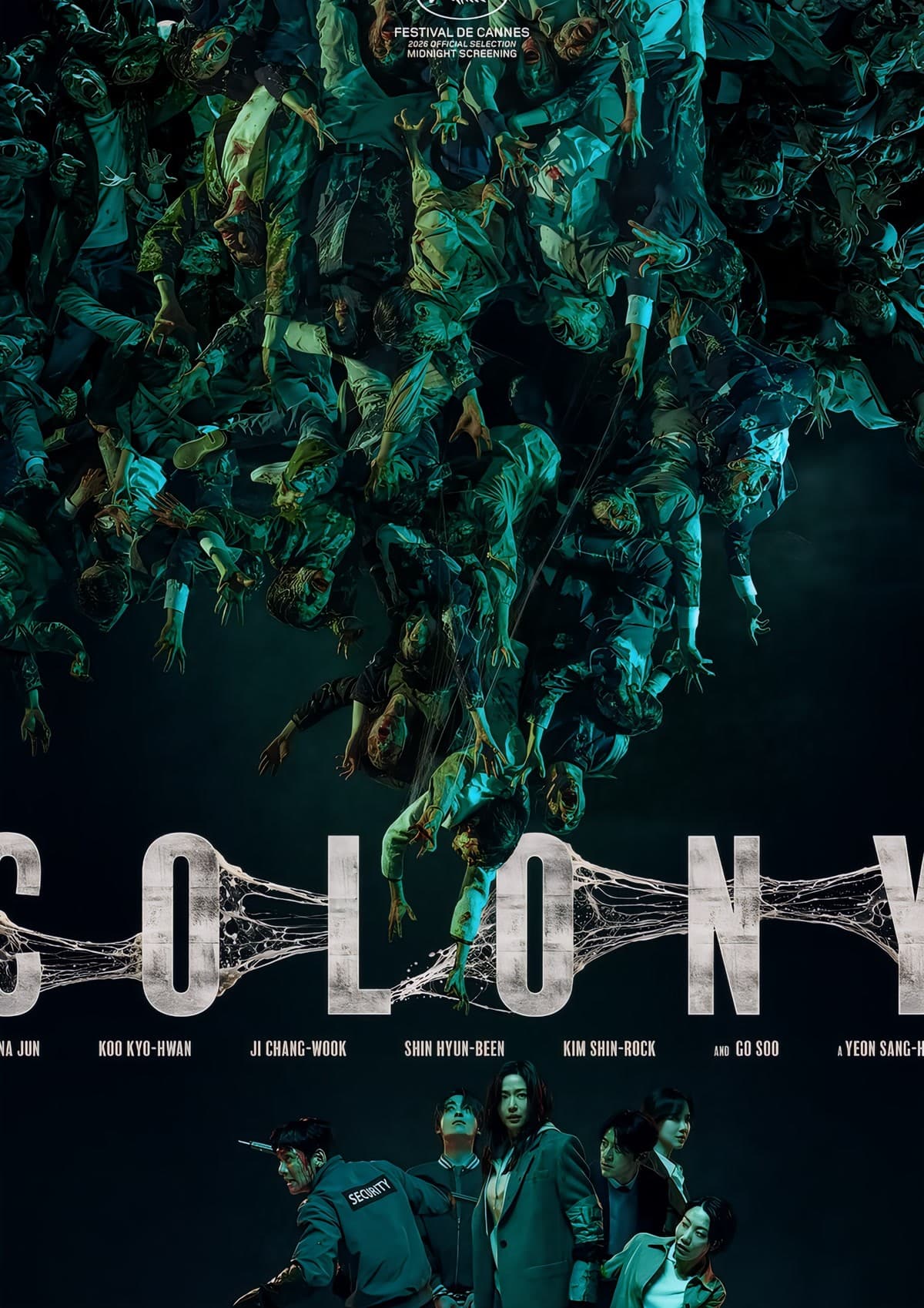
South Korea’s box office has a new speed marker, and it belongs to Colony. The Yeon Sang-ho zombie thriller, released in Korea under the title Gun-che, crossed 1 million admissions on the morning of May 24, only four days after opening on May 21.
The milestone matters because it arrived faster than The Man Who Became King, the year’s biggest local hit so far with about 16.85 million admissions. That film needed five days to reach the same 1 million line, while Colony reached it a day earlier, giving Korean theaters a new breakout story just as summer moviegoing begins to build momentum.
The number also explains why the film’s title was suddenly visible in Korean search trends. A Cannes-tested zombie film from the director of Train to Busan, led by Jun Ji-hyun, Koo Kyo-hwan, Ji Chang-wook, Shin Hyun-been, Kim Shin-rock and Go Soo, had already carried strong pre-release curiosity. The 1 million mark turns that curiosity into a measurable domestic box-office surge.
A Four-Day Record With Cannes Momentum Behind It
According to the Korean Film Council’s integrated ticketing data cited by Korean outlets, Colony had drawn 1,089,996 admissions by the morning of May 24. Distributor Showbox described the pace as the fastest among films released in Korea this year. Several Korean reports also noted that the achievement came after a strong opening score of around 200,000 admissions, a sign that early awareness translated quickly into weekend ticket sales.
The comparison with The Man Who Became King gives the achievement its headline weight. That earlier release remains the dominant Korean box-office phenomenon of 2026, with roughly 16.85 million admissions, but its first-million pace was slightly slower. A one-day difference may sound small, yet in theatrical distribution it signals a powerful first wave: advance interest, opening-day turnout, social conversation and repeat attention all converging before the first weekend has fully cooled.
Colony entered theaters with unusually visible international credentials. The official Cannes listing places the film in the 2026 Official Selection, Out of Competition, in the Midnight Screenings section. The festival synopsis describes a mysterious contamination spreading inside a high-rise in central Seoul, leaving the building sealed and its occupants trapped as infected people evolve from crawling bodies into a more dangerous collective threat.
That premise fits the lane Yeon Sang-ho helped globalize. His 2016 film Train to Busan became one of the defining modern Korean genre exports, while Peninsula and series work such as Hellbound kept his name tied to high-concept survival stories. With Colony, the director returns to infection horror, but the marketing has emphasized a different fear: not just speed or gore, but the idea of a crowd becoming a single, evolving organism.
Why The Cast Became Part Of The Event
The film’s ensemble is another reason the 1 million figure traveled quickly. Jun Ji-hyun plays Kwon Se-jung, a biotechnology professor who becomes central to the survival effort inside the sealed building. For many viewers, the role is also framed as a major big-screen return for an actress whose Hallyu profile spans My Sassy Girl, My Love from the Star, Assassination and other defining Korean entertainment hits.
Koo Kyo-hwan plays Seo Young-chul, a brilliant but deeply warped biologist connected to the outbreak. Korean coverage highlighted a line from the film’s preview, in which his character positions himself as the only “vaccine” capable of stopping the disaster, as one of the early hooks that shaped audience curiosity. Koo’s recent film and streaming work has made him a reliable presence for characters who are unpredictable, tense and difficult to reduce to a simple villain label.
Ji Chang-wook appears as Choi Hyun-seok, a security worker caught inside the building, while Kim Shin-rock plays his older sister Choi Hyun-hee. Shin Hyun-been plays Gong Seol-hee, a figure tied to clues behind the incident. Go Soo is also listed among the main cast. The combination gives the movie a wide fan base across K-drama, film and genre audiences rather than relying only on horror fans.
That mix was visible even before the Korean release. English-language coverage of the Cannes premiere reported strong attention around the screening, with the director and cast attending the event. Aju Press reported that the film topped domestic pre-sales before release, with a 28.1 percent reservation rate and 94,743 tickets sold as of the morning of May 17. The same report said the Cannes screening drew a full 2,300-seat theater and ended with an extended standing ovation.
The Story Turns A Building Into A Pressure Cooker
At story level, Colony begins with an infection in a downtown Seoul high-rise. The building is sealed, outside access disappears, and the survivors must make decisions under pressure as the infected begin changing. Korean reports describe the early infected as moving on all fours like animals before gradually evolving, standing, identifying people and attacking as a coordinated swarm.
That detail is crucial to the movie’s identity. The Korean word gunche points to a colony, cluster or collective body, and the English title Colony keeps the same idea. Rather than treating zombies as isolated monsters, the film suggests a group intelligence that grows more organized over time. It gives the familiar infection setup a new shape and makes the sealed building feel less like a backdrop than a laboratory for escalation.
Early Korean audience comments cited by local coverage leaned into that difference. Viewers described the film as more intense than expected, praised the sense of tension, and warned others not to approach it as a simple repeat of Train to Busan. That reaction is valuable for a genre film because it points to both familiarity and novelty: audiences recognize Yeon’s survival-horror language, but they are also responding to the film’s upgraded creature logic and ensemble stakes.
The Cannes connection adds another layer for international fans. On the official festival page, GUN-CHE is listed as a 123-minute South Korean production directed by Yeon Sang-ho, with screenplay credits for Yeon and Choi Gyu-seok. The listed cast includes Gianna Jun, Koo Kyo-hwan, Ji Chang-wook, Shin Hyun-been, Kim Shin-rock and Go Soo. For a Korean commercial genre film, that festival placement gives the domestic box-office run an extra prestige frame.
What The 1 Million Milestone Means Next
The immediate question is whether Colony can convert its explosive first four days into a long run. Crossing 1 million admissions quickly does not guarantee a record total by itself, but it gives the film a stronger base than most releases receive. It also places the movie in direct conversation with the year’s most successful Korean title, which is exactly the kind of comparison that keeps casual moviegoers aware of a film after opening weekend.
For Jun Ji-hyun and Ji Chang-wook fans, the run offers a rare big-screen event built around large-scale genre spectacle. For Yeon Sang-ho followers, it is a test of whether his infection-world instincts can still surprise an audience that now knows Korean zombie storytelling well. For Korean cinemas, it is a welcome sign that a local genre film can still produce urgent turnout when the concept, cast and timing align.
The film’s next benchmarks will be watched closely: weekday retention after the first weekend, second-weekend drop, premium-screen demand and whether social conversation remains centered on the evolved infected concept rather than only the cast. If those pieces hold, Colony could become more than the fastest film of the year to 1 million. It could become the movie that reopens the scale of ambition for Korean theatrical genre releases in 2026.
How do you feel about this article?
저작권자 © KEnterHub 무단전재 및 재배포 금지
Entertainment Journalist · KEnterHub
Entertainment journalist specializing in K-Pop, K-Drama, and Korean celebrity news. Covers artist comebacks, drama premieres, award shows, and fan culture with in-depth reporting and analysis.
Comments
Please log in to comment