Crush and Sung Si-kyung Turn KBS Clip Into Event
KBS Kpop's official uploads spotlight a duet of Happy Me and a live-band Rush Hour performance from The Seasons.
 By Park Chulwon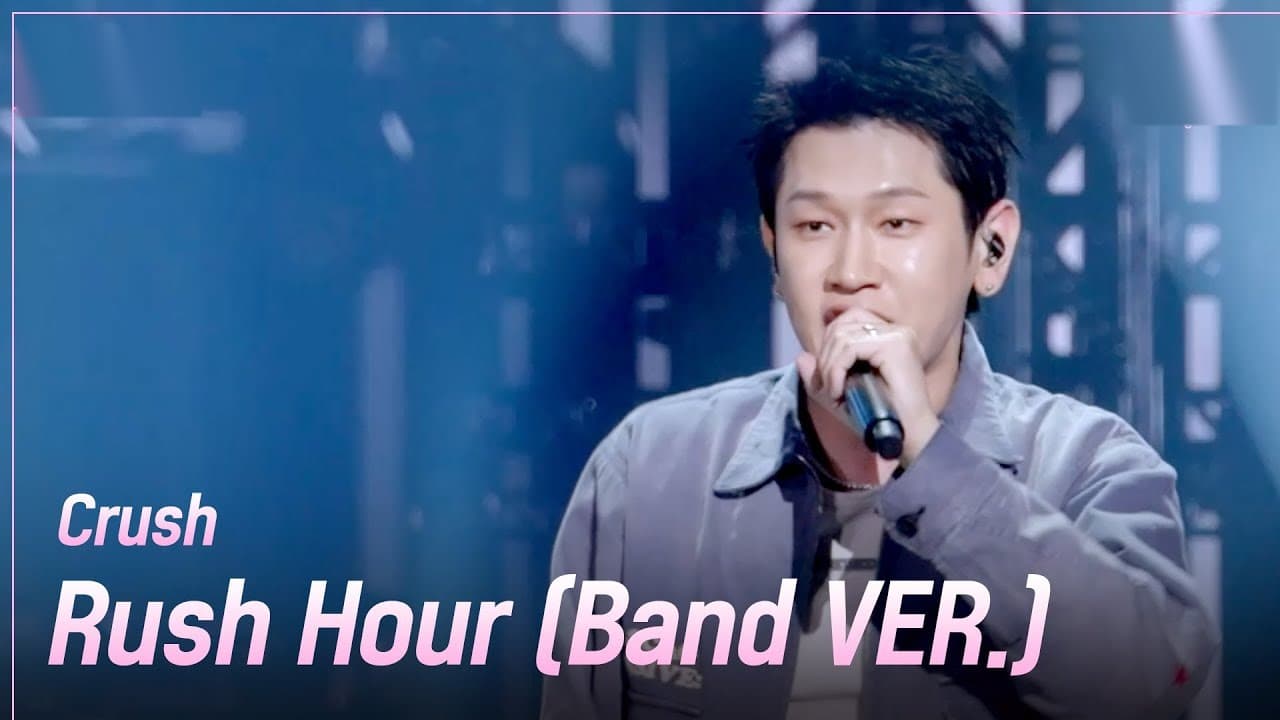
KBS Kpop has put Crush back in the center of a live-band conversation with a new set of official clips from The Seasons: Sung Si-kyung's Good-Night Boyfriend, pairing the R&B vocalist with host Sung Si-kyung for a duet version of "Happy Me" and a separate band arrangement of "Rush Hour." The clips, uploaded through the broadcaster's official YouTube channel for the July 17, 2026 broadcast, give viewers a compact but telling look at why music-program stages remain valuable even in an era dominated by short-form performance edits and comeback teasers.
The official uploads are not framed as a conventional comeback announcement. Instead, they work as performance documents: one clip focuses on Crush during the duet, another on Sung Si-kyung, and a third presents Crush's "Rush Hour" in a band version. Together, the three videos turn a televised guest appearance into a multi-angle digital package, allowing fans to revisit the chemistry of the stage from different visual perspectives while keeping the source rooted in KBS's broadcast context.
Featured on KBS Kpop's official YouTube channel, the performance package also underlines the particular appeal of The Seasons as a platform for vocalists. The program has long leaned on live arrangements, host-led musical conversation and guest performances rather than purely promotional choreography. For Crush, whose public identity is built around tone, groove and collaboration, that environment gives the songs room to breathe beyond the original studio versions.
A Duet That Puts Vocal Texture First
The "Happy Me" duet is the emotional anchor of the new uploads. The song itself, familiar to Korean listeners as a sentimental ballad standard, is a natural fit for a program hosted by Sung Si-kyung, one of Korea's defining ballad voices. Bringing Crush into that frame changes the color of the performance. Sung's strength lies in clean phrasing and a controlled, conversational warmth, while Crush tends to shade lines with a lighter R&B touch, placing small rhythmic details inside a melody without overwhelming it.
That contrast is precisely why the duet format works. The official clips divide attention between the two performers, giving each singer a dedicated angle while preserving the sense of a shared stage. In the Crush-focused version, the viewer can follow how he settles into the ballad setting without abandoning the relaxed vocal personality that made him a standout in Korean R&B. In the Sung-focused version, the host's response becomes part of the performance, turning the duet into a measured exchange rather than a simple guest feature.
The format also suits the way audiences now consume live television music. A single broadcast performance can be watched once during the show, but official YouTube cuts extend its shelf life and let fans revisit a particular vocal line, reaction or arrangement. In this case, KBS is not merely reposting a clip; it is packaging the duet for close listening, which is especially important for a song whose appeal comes from balance and tone rather than spectacle.
For international fans who may not know the full broadcast structure, the uploads provide a clear entry point. The title identifies the program, the host and the song, while the channel metadata establishes the broadcaster source. That matters because performance clips can circulate quickly outside their original context. Official uploads preserve that context and give fans a reliable version to share without relying on secondary edits or unauthorized reuploads.
"Rush Hour" Finds A Different Drive With The Band
If "Happy Me" shows Crush working inside the emotional language of a duet ballad, the band version of "Rush Hour" points to the other side of his appeal. The song is already known for its bounce and confident momentum, and a live-band setting emphasizes the rhythmic foundation beneath the track. Instead of presenting the song only as a polished digital single, the KBS clip highlights how it can move as a stage performance.
The "Band VER." label is important. It signals that viewers are not simply watching the familiar arrangement repeated for camera, but a version tailored to the program's musical setting. Live drums, bass accents and onstage interplay can shift the feel of a song that many fans first experienced through streaming platforms or music-video choreography. For an artist like Crush, whose catalog often sits between R&B, pop and hip-hop, that kind of arrangement makes his musical identity easier to hear.
The clip also gives KBS Kpop a strong bridge between variety television and music discovery. Viewers who arrive for Sung Si-kyung's program may be reminded of Crush's versatility, while existing Crush fans get a performance that is distinct from the original promotional cycle. That dual audience is one reason broadcast music programs continue to matter: they can reactivate songs by giving them a new performance context, especially when the arrangement changes enough to make the clip feel fresh.
There is also a practical digital strategy behind the upload set. Posting the duet perspectives and the band performance separately gives each clip a clear identity. Fans searching for the duet can find the "Happy Me" versions, while listeners looking for an upbeat Crush performance can go directly to "Rush Hour." The segmentation may look simple, but it helps each performance travel according to its own audience behavior.
Why Official Broadcast Clips Still Carry Weight
The new KBS uploads arrive at a time when official channel strategy has become central to Korean entertainment coverage. Agencies, broadcasters and music platforms now treat YouTube not only as an archive but as a primary distribution channel. A performance that once lived mainly within a single television episode can now become a searchable, shareable piece of content within minutes of broadcast.
That shift is particularly useful for artists with strong live reputations. Crush does not depend solely on visual concept or choreography to communicate a release cycle. His performances often gain traction through vocal delivery, phrasing and how he adapts songs to collaborators. Sung Si-kyung, meanwhile, brings a host's authority and a vocalist's credibility, which makes the pairing feel more like a musical conversation than a routine guest slot.
The official nature of the clips is also part of the story. Because they come from KBS Kpop, the uploads carry the broadcaster's program branding, copyright notice and links back to the show. That keeps the performance tied to The Seasons ecosystem, including the show's official homepage, Wavve presence and social channels. For fans, it means the clips are a legitimate way to engage with the broadcast. For the program, it means each upload can function as a promotional asset long after the episode airs.
The July 17 broadcast date gives the package a timely quality as well. Rather than resurfacing an old performance, KBS is extending the life of a fresh episode with clips that can be consumed independently. That is now a standard but powerful rhythm for music television: broadcast first, official clip next, fan discussion after that. The sequence keeps the program visible across platforms and gives artists a second wave of attention.
Fan Conversation Is Likely To Center On Chemistry
The most immediate fan response is likely to focus on the chemistry between Crush and Sung Si-kyung. Their vocal styles are different enough to create contrast, but not so far apart that the duet feels forced. "Happy Me" benefits from that middle ground. It allows Sung to remain in the ballad lane that audiences associate with him, while Crush adds a softer R&B contour that makes the performance feel less like a cover and more like a meeting of two musical languages.
For Crush's audience, the "Rush Hour" band version may become the replay clip. It captures the energetic side of his performance identity and provides a version that can stand apart from the original track. Live-band edits often appeal to fans because they reveal details that are less obvious in studio recordings: how a singer rides the groove, how the band responds to vocal timing, and how a familiar hook changes when the arrangement is less compressed.
For Sung Si-kyung's audience, the duet perspective reinforces the host's role as more than an interviewer. The Seasons has often used the host's musical presence as part of the show's identity, and these clips continue that pattern. Sung is not simply introducing a guest; he is sharing the song, shaping the tone of the stage and giving viewers a reason to watch the performance as a live collaboration.
The result is a set of clips that can serve several audiences at once. Casual viewers get a clean official upload from a recognizable broadcaster. Crush fans get both a sentimental duet and a band-driven performance. Sung Si-kyung fans get another example of the host's ability to meet a guest inside the music rather than only around it. That combination is why the package feels broader than a routine upload.
What The Performance Signals Next
These KBS Kpop clips do not announce a new album campaign by themselves, but they do keep Crush highly visible in a performance-first setting. For a singer whose value often increases through live stages, that visibility matters. It reminds listeners that his catalog can be reinterpreted, that his collaborations remain a strength and that television music shows still provide a stage where vocal character can lead the story.
The clips also point to the continued usefulness of official broadcaster channels for K-pop and Korean R&B coverage. Music videos and teaser films may dominate comeback cycles, but program uploads like this create a different kind of discovery. They allow older songs, guest appearances and live arrangements to circulate beside new releases, widening the way audiences encounter an artist.
For The Seasons: Sung Si-kyung's Good-Night Boyfriend, the uploads strengthen the program's identity as a place where guest performances can become standalone digital moments. The show benefits when a duet or band version has enough shape to travel on its own, and Crush's appearance offers exactly that. The official clips are concise, but their combined effect is bigger: they present a vocalist, a host and a broadcast format all working toward the same musical payoff.
As the videos continue to circulate, the strongest signal is not simply that Crush performed on KBS. It is that the performance was packaged in a way that rewards repeat viewing. The "Happy Me" duet invites close attention to vocal exchange, while "Rush Hour" brings momentum through a band arrangement. Together, they make the July 17 episode feel like an event for fans who value live musicianship as much as release headlines.
How do you feel about this article?
저작권자 © KEnterHub 무단전재 및 재배포 금지
Entertainment Journalist · KEnterHub
Entertainment journalist focused on Korean music, film, and the global K-Wave. Reports on industry trends, celebrity profiles, and the intersection of Korean pop culture and international audiences.
Comments
Please log in to comment