Dae Jang Geum Queen’s 20-Year Pivot Stuns Korea
Park Jung-sook’s post-drama career has gone viral in Korea after fans rediscovered her path from actor to global health and public-service leader.
 By Park Chulwon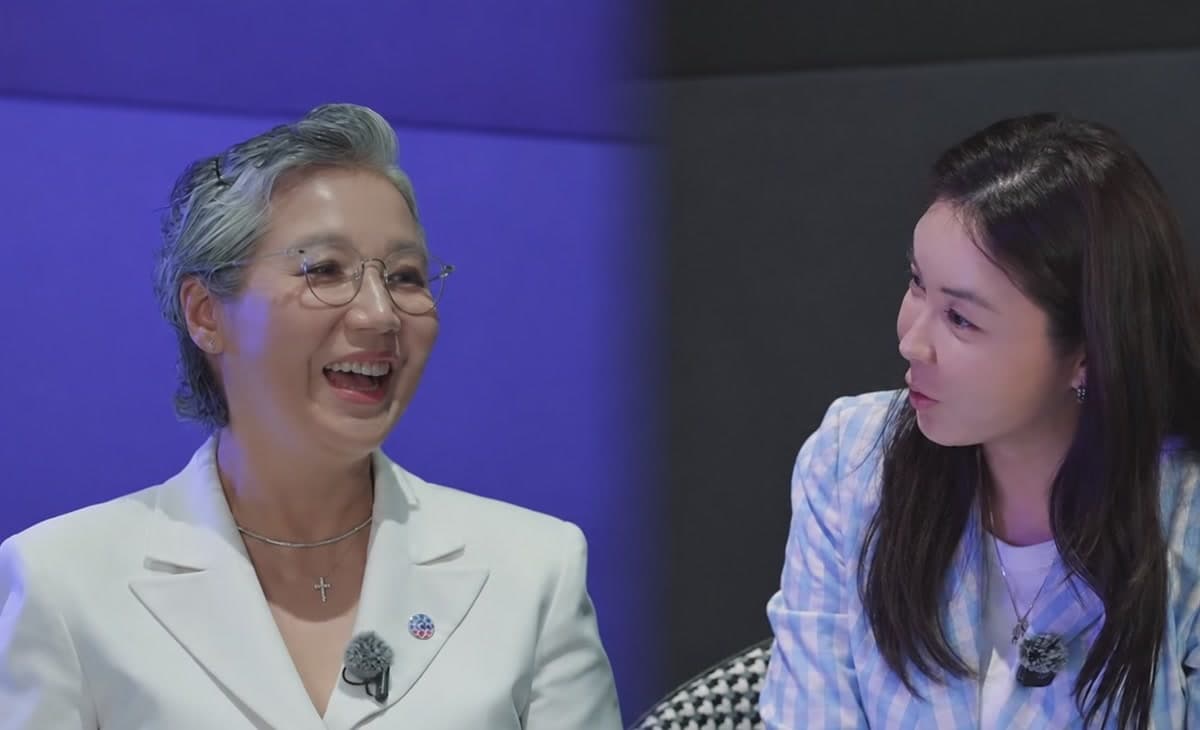
Park Jung-sook is trending in Korea again, but not because of a comeback drama, a reunion special, or a nostalgia clip from the golden age of Korean historical television. The name that many viewers still associate with Queen Munjeong in MBC's global hit Dae Jang Geum has resurfaced for a very different reason: her life after leaving entertainment has turned out to be far more unexpected than a simple "where is she now" update.
According to Korean entertainment reports published on July 8, Park appeared in a recent interview on the YouTube channel Jo Eun-ju's Q, where she looked back on the path that took her from broadcaster and actor to international policy work and public service. The surprise for many readers was not only that she had stepped away from screens after the 2003 drama. It was that the move led her into Columbia University, United Nations circles, the Global Alliance for Vaccines and Immunization, smart city work, and eventually the Seoul Foundation of Women and Family.
The timing explains why the story broke through Google Trends Korea. It has the exact mix that Korean entertainment audiences often respond to: a familiar face, a long gap from public memory, a visual transformation, and a career turn that changes the meaning of an old role. Park is not being rediscovered as a celebrity who disappeared. She is being rediscovered as a public figure whose entertainment career became a bridge into diplomacy, global health, and city policy.
The Queen From Dae Jang Geum Became A Public-Service Figure
Park's public image was built in an era when daily television still created national-scale familiarity. She worked as a broadcaster through the 1990s and early 2000s, then became widely remembered for playing Queen Munjeong in Dae Jang Geum. The drama, led by Lee Young-ae, became one of the defining Korean Wave exports of its generation, finding audiences across Asia, the Middle East, Latin America, and beyond.
That global reach appears to have shaped Park's next chapter. In the new interview, she described the strange experience of trying to step away from the drama only to find that overseas audiences recognized the character even more strongly. What could have remained a single acting credit instead became evidence of how Korean culture was beginning to function as a kind of public diplomacy.
Reports from the interview say Park framed her career in three large blocks: about 10 years in media, about 10 years in academia and international work, and another long stretch in public service. That framing matters because it changes the usual celebrity-retirement narrative. Park did not simply stop acting. She redirected the visibility and communication skills she had gained in broadcasting toward institutions that dealt with Korea's image, global cooperation, and social policy.
After Dae Jang Geum, Park studied public policy and international relations, including graduate work at Columbia University. During that period, she reportedly became connected to events around the United Nations, where Ban Ki-moon was serving as UN secretary-general. Korean reports also noted that her identity as the "queen from Dae Jang Geum" followed her into those rooms, creating openings that were unusual for a former entertainer entering policy circles.
The GAVI Detail Is What Made The Story Go Viral
The most viral detail in the Korean coverage was Park's link to GAVI, the global vaccine alliance associated with Bill Gates and international immunization programs. In the interview, Park said she was initially asked to recommend suitable people when the organization was looking toward a Korean office. The story then took a turn: instead of merely introducing candidates, she was encouraged to take on the role herself.
Korean outlets reported that Park served as Korea representative for the vaccine alliance for roughly a decade. That single fact is why the headlines felt so startling to readers who remembered her primarily through a palace drama. The distance between "Queen Munjeong in Dae Jang Geum" and "Korea representative for a global vaccine organization" is unusually wide, and the contrast created the information gap that Discover-style entertainment stories often need.
There is also a deeper reason the detail resonates. Dae Jang Geum itself was a story about skill, service, and a woman navigating an institution that was not designed around her. Park's later work, while entirely separate from the drama, gives fans a real-life echo of those themes. The appeal is not that fiction predicted reality. It is that the person attached to one of Korean television's most enduring court characters built a second career around international service and public systems.
Park later moved through smart city work as well, serving in a leadership role connected to the World Smart Sustainable Cities Organization, commonly known as WeGO. Older radio interview transcripts show that she had already been speaking publicly about digital access, social inequality, multicultural families, and the public consequences of technology. That context makes the new trend less like a sudden revelation and more like a rediscovery of a path that had been visible outside entertainment spaces for years.
A 20-Year Gap Changed How Fans See Her
Part of the reaction also comes from time. Dae Jang Geum aired in 2003, meaning more than two decades have passed since Park's role became fixed in viewers' memories. For many fans, the image of the character remained frozen in an early-2000s cultural moment. Seeing Park now, speaking as a leader in public service rather than as an actor recalling a hit drama, collapses those 20 years into a single surprise.
Korean reports highlighted that Park herself joked about the change in how viewers might see her today. She has continued to be remembered by the drama role even though she spent far longer outside broadcasting than inside it. That tension is common for actors attached to landmark works, but Park's case is sharper because the second act was not another branch of entertainment. It was a move into institutions where credibility had to be built again from the ground up.
She also spoke about the pressure of entering new fields. Reports paraphrased her as saying that when someone moves into a space where others have built long careers, people naturally ask why that person belongs there. Her response was to work harder and prove results within a few years, a habit she acknowledged could become intense. That honesty gives the story a more human shape than a simple list of credentials.
The personal side also appeared in the coverage. Park married Lee Jae-young in 2012 and has a son. She has described marrying later than many expected during a period when women in broadcasting often felt pressure to choose between career and family. She also reflected on what it meant to become the spouse of a political figure, saying that public dislike could attach itself to a person for reasons unrelated to their own work. Those comments add another layer to the public's renewed interest because they show how many identity changes she absorbed after leaving celebrity life.
Why This Trend Fits Korean Entertainment Now
The Park Jung-sook trend is not a standard comeback story, and that is exactly why it traveled. Korean entertainment audiences have become highly responsive to second-act stories, especially when they reveal a celebrity's hidden influence outside the industry. The most clickable part is the shock: a remembered drama queen became a vaccine-alliance representative. The part that keeps readers engaged is the structure underneath it: Hallyu exposure, education, institutional work, public policy, family, and a return to media through an interview rather than a performance.
It also arrives at a moment when old Korean dramas continue to live through streaming, clips, and algorithmic rediscovery. Dae Jang Geum remains one of the works that helped define early Hallyu for global audiences. Any update about a cast member carries built-in nostalgia, but Park's update adds an unusually strong real-world consequence. Her story suggests that the Korean Wave did not only create stars. For some people, it created a platform from which they could enter cultural diplomacy and public leadership.
For Google Discover, the story has several strong signals. It has a famous title, a recognisable face, a 20-year time jump, a number-backed career arc, and a contrast between screen memory and present reality. It is not driven by scandal or conflict, which also makes it safer for a fan-focused entertainment site. The emotional hook is surprise rather than controversy.
The next question is whether Park's renewed visibility leads to more long-form interviews or television appearances. A full retrospective on Dae Jang Geum's global influence would now have a stronger reason to include her: not only as a cast member, but as someone whose post-drama path reflects the same international reach that made the series historic. For viewers who searched her name today, the answer is clear. The queen they remembered did not vanish. She moved into a much larger public stage.
How do you feel about this article?
저작권자 © KEnterHub 무단전재 및 재배포 금지
Entertainment Journalist · KEnterHub
Entertainment journalist focused on Korean music, film, and the global K-Wave. Reports on industry trends, celebrity profiles, and the intersection of Korean pop culture and international audiences.
Comments
Please log in to comment