Discover Why HYBE India’s New Audition Matters
 By Jang Hojin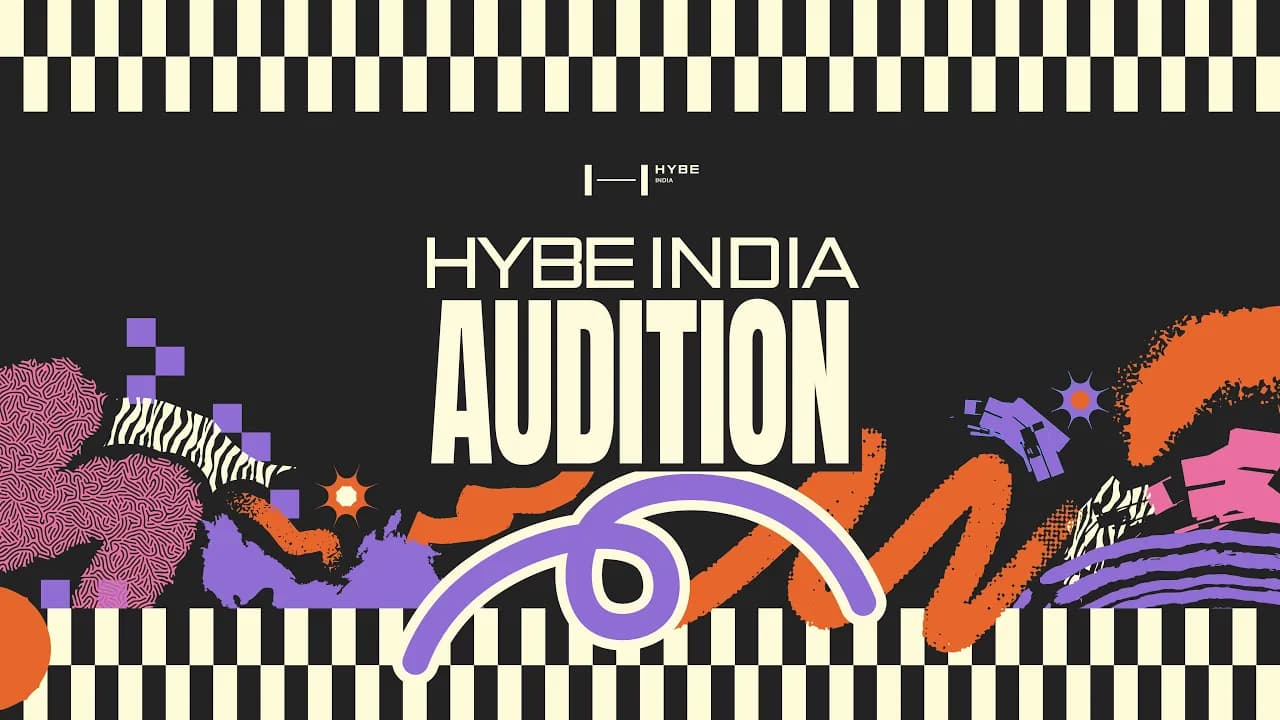
According to HYBE LABELS' official YouTube channel, HYBE India is preparing to open a large-scale talent search that could become one of the company's most consequential expansion moves outside its established East Asian base. The newly posted HYBE India Audition announcement does not overcomplicate the message. It presents the audition as the first such project for HYBE's Indian subsidiary and sets March 31, 2026 as the point when applications and the broader search begin. On its own, that already makes the video newsworthy. Once read alongside supplementary coverage released on March 24, the announcement becomes even more significant because it clarifies that HYBE is not merely running a symbolic campaign. It is building a real recruitment pipeline in one of the world's largest and youngest entertainment markets.
The short announcement focuses on invitation and ambition. It tells viewers that HYBE India is looking for a new generation of artists from India and frames the opportunity around talent, passion and growth potential. Supplementary reporting expands that picture by noting that the audition will be held both online and in person across major Indian cities, including Ahmedabad, Bengaluru and Delhi, with other local stops also referenced in Korean reports about the launch. Winners are expected to receive the chance to debut after going through HYBE's training system. In other words, this is not a brand awareness campaign dressed up as an audition. It is a concrete recruiting mechanism linked to the company's production infrastructure.
That distinction is what makes the announcement strategically important. HYBE has spent years proving that its artist-development model can scale globally through fandom, touring, digital content and multilingual reach. But building a new act ecosystem in India would move beyond exporting Korean acts into the market. It would mean developing talent within the market and then attempting to send that talent outward to regional and global audiences. The official announcement is therefore small in format but large in implication.
A New Phase in HYBE's Global Expansion
HYBE India has described the project as a search for young people in India and of Indian descent who can bring their own cultural identity to a global audience. That phrasing is notable because it hints at a localization strategy rather than a simple franchise copy. The company is not signaling that it wants to reproduce the Korean system in a culturally neutral vacuum. It is saying, at least in principle, that local identity will be part of the proposition. For HYBE, that is the smarter long-term route. Audiences tend to respond more strongly when expansion efforts feel additive and locally rooted instead of imposed from outside.
Supplementary reporting from March 24 underscores why India is attractive from a business perspective. The country has a population of more than 1.4 billion and a relatively young demographic profile, with an average age frequently cited around the late twenties. It also has a fast-growing digital music environment, a strong mobile-first consumption culture and multiple regional entertainment centers rather than a single dominant media city. All of those factors make India a difficult market to reduce to one formula, but they also make it a potentially powerful base for talent discovery. HYBE is effectively betting that a global training system paired with local expertise can turn that scale into a sustainable artist pipeline.
The official YouTube announcement matters here because of how it packages the idea. Instead of releasing a dry corporate memo, HYBE chose a promotional video that speaks directly to prospective applicants. That is a classic entertainment-industry move, but it is also practical. Recruitment in creator economies is partly about signaling aspiration. A concise, polished video can communicate seriousness, accessibility and momentum faster than a conventional press note. It also allows the company to speak simultaneously to potential trainees, fans, media and business partners.
Several reports tied to the launch mention that corporate and creative partners are involved in supporting the audition campaign. Even without overemphasizing sponsor value, that point helps show the company is treating this as a broad market entry initiative rather than a one-off social media activation. Building artist pipelines in new territories takes more than applications. It requires venue logic, digital distribution plans, training operations, local staffing and trust from the market. The rollout so far suggests HYBE is trying to create that ecosystem in stages.
Why the Audition Could Reshape K-Pop's Next Geography
The phrase "global K-pop" is often used loosely, but auditions like this test what the term really means. For years, global expansion usually meant exporting Korean groups, adding world tours, opening merchandise channels and building localized fan communication. HYBE India's audition points toward a different possibility: training artists locally while connecting them to a production model that has already proven it can generate transnational fandom. If that works, the geographic center of the next generation of pop acts becomes more distributed. Korea remains the system's anchor, but talent pipelines spread outward in more explicit ways.
That is why this announcement could have ripple effects beyond HYBE's own roster. Rival agencies will be watching whether the project can attract credible applicants, generate sustained local excitement and produce artists who feel neither too narrowly regional nor generically global. The balance is delicate. If a future act appears disconnected from Indian audiences, the expansion will look cosmetic. If it appears disconnected from the production standards and storytelling discipline associated with HYBE, the company's brand advantage will be diminished. The audition is the first public step in negotiating that balance.
There is also a symbolic dimension. India has long been one of the world's most powerful entertainment markets on its own terms, with multiple language industries, strong star systems and deeply rooted musical traditions. Entering that environment requires more than scale. It requires humility and adaptation. HYBE's statement about combining its global system with the creativity of local Indian experts is therefore not just corporate language. It points to the real challenge ahead. Success will depend on whether the company can collaborate rather than simply transplant.
From a fan and industry perspective, the audition opens several immediate questions. What kinds of genres or performance profiles will the company prioritize? How will language factor into training and eventual debut planning? Will the first wave of recruits be shaped toward the Korean idol system, a hybrid South Asian pop format, or something more novel? The announcement does not answer those questions yet, and that is understandable at this early stage. But it does create the expectation that HYBE will need to define its vision in more detail as the audition proceeds.
What to Watch After March 31
Once the audition officially begins on March 31, the first meaningful metric will be breadth. HYBE needs to show that the campaign can reach applicants across regions and not just concentrate attention in a handful of metros or within existing K-pop fandom circles. A second metric will be credibility. Prospective trainees and observers will be watching for evidence that the company has structured the process clearly, including how online and in-person stages connect and what the training path actually looks like for winners. Transparency will matter because global audition branding is easy; long-term trust is harder.
A third metric will be narrative control. The official announcement presents the initiative as a chance for Indian talent to step onto a bigger global platform while retaining cultural identity. That is a compelling message, but it needs to survive contact with real-world execution. If HYBE can demonstrate that it is listening to local expertise, adapting its methods and building a visible pathway from audition to artist development, the campaign could become a milestone in the globalization of the Korean entertainment business. If not, it may be remembered as an ambitious announcement that moved faster than its infrastructure.
For now, the YouTube video has done exactly what an opening signal should do. It has taken a large corporate strategy and translated it into a simple, urgent invitation with a date, a purpose and a clear market target. In doing so, HYBE LABELS has put one of the industry's most closely watched expansion experiments into motion. March 31 will mark the formal beginning of the audition, but March 24 may ultimately be remembered as the day HYBE publicly stated that its next major talent frontier lies in India.
How do you feel about this article?
저작권자 © KEnterHub 무단전재 및 재배포 금지
Entertainment Journalist · KEnterHub
Entertainment journalist specializing in K-Pop, K-Drama, and Korean celebrity news. Covers artist comebacks, drama premieres, award shows, and fan culture with in-depth reporting and analysis.
Comments
Please log in to comment