'Donggung' Review: Nam Joo-hyuk Is Back and He Means It
Netflix's Supernatural Sageuk Debuts at #1 in Korea — And Nam Joo-hyuk's Post-Military Performance Is the Reason
 By Im Garam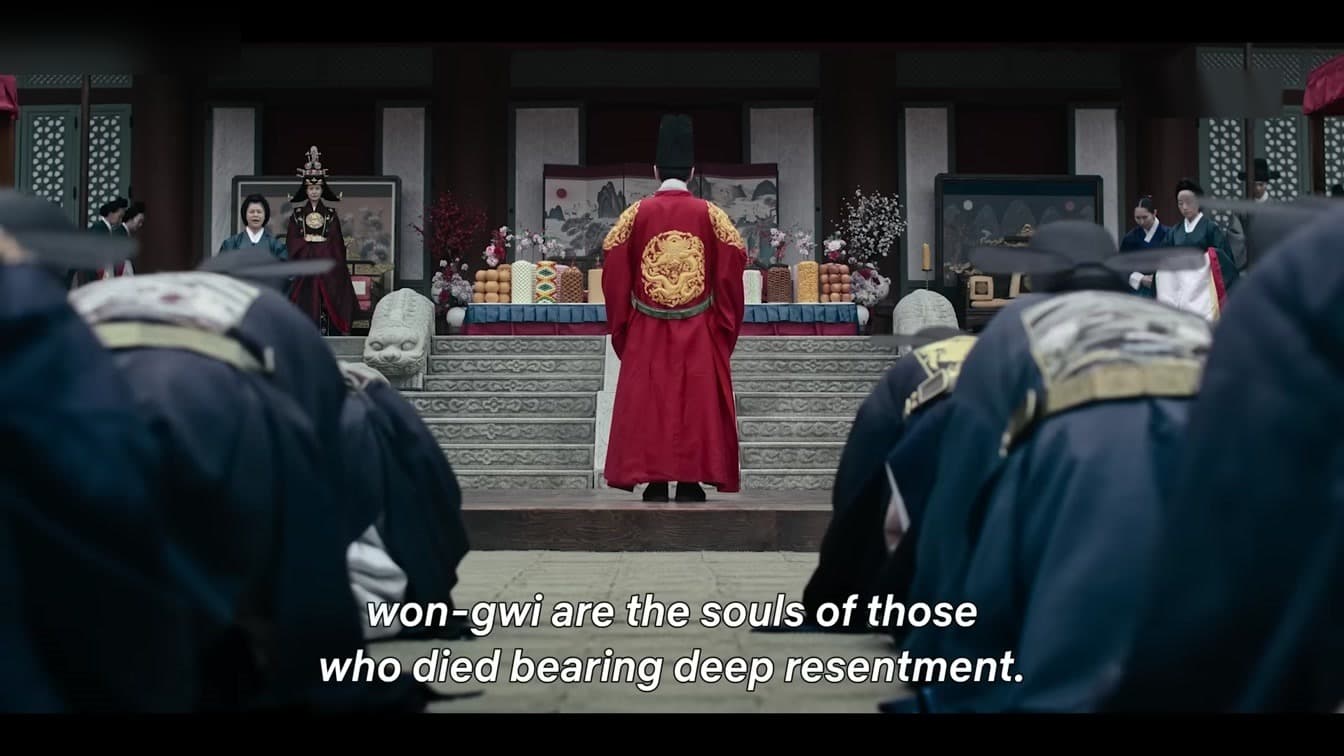
Nam Joo-hyuk's return to screens after eighteen months of mandatory military service was always going to attract attention. But Donggung, the eight-episode Netflix supernatural sageuk that dropped on July 17, 2026, didn't just capitalize on anticipation — it justified it. Within hours of release, the series had climbed to number one on Netflix Korea's daily Top 10 series chart, and the response from viewers who finished the premiere episode suggested the momentum was genuine rather than hype-driven.
What makes that opening performance meaningful isn't merely the celebrity firepower behind it. It's the specific kind of drama Donggung turns out to be: disciplined, atmospheric, and demanding of its lead in ways that physical preparation alone can't solve. Nam Joo-hyuk delivered on both counts.
The Comeback Nobody Was Going to Miss
Nam Joo-hyuk had spent the years before his enlistment building one of Korean drama's more interesting young filmographies — Weightlifting Fairy Kim Bok-joo, Start-Up, Twenty-Five Twenty-One — each role demonstrating a range that romantic comedy typecasting never quite captured. His final pre-military drama, Disney+'s Vigilante in 2022, signaled a clear intention to pursue darker, more physically demanding material. Donggung makes good on that signal.
The series pairs him with a creative team with a credible track record in exactly this register. Director Choi Jung-kyu previously helmed The Devil Judge and Children of Nobody — both genre dramas that succeed through atmosphere rather than spectacle. Writers Kwon So-ra and Seo Jae-won shaped Bulgasal: Immortal Souls and The Guest, two of the more ambitious Korean supernatural dramas of recent years. These credentials aren't decorative: Donggung reflects a production philosophy that treats Korean shamanism and ghost mythology not as window dressing but as genuinely dramatic systems with their own internal logic.
Jo Seung-woo's casting as the King is its own statement. His return to television three years after JTBC's Sacred Divorce brings exactly the kind of gravitational unpredictability a younger-skewing cast needs — present in every scene even when the camera isn't on him, and carrying an edge of ambiguity that the drama's mystery architecture uses well.
A Ghost System With Its Own Rules
The premise of Donggung is deceptively straightforward. Gu Cheon (Nam Joo-hyuk) can cross between the world of the living and the realm of won-gwi — the spirits of those who died bearing deep resentment. Court lady Saeng-gang (Noh Yoon-seo) can hear those same spirits. The King summons both to Donggung Palace to investigate a curse quietly threatening the royal family. What follows is equal parts supernatural procedural and historical mystery, structured with the episodic discipline that makes an eight-episode runtime feel earned rather than constrained.
What sets Donggung apart from simpler supernatural sageuks is the "bureaucratic ghost logic" embedded in its mythology — the idea that the spirit world operates according to rules as rigid as those governing the Joseon court above ground. When Gu Cheon negotiates with won-gwi, he navigates a parallel system of hierarchy and protocol. That layering gives the series unusual thematic density for a drama that must also deliver action set pieces and a slow-burn central chemistry.
The supporting cast amplifies both registers. Jang Young-nam as the Queen Mother delivers what early viewers have described as a career-best performance — navigating royal authority, maternal grief, and something darker with a precision that makes her the scene's gravitational center without ever overplaying her hand. Her restraint makes the moments she does unleash considerably more unsettling than anything the visual effects budget could manufacture.
What the Production Cost the Lead
Nam Joo-hyuk was discharged from military service with a body that had stabilized at 85 kilograms after eighteen months of military meals and structured physical training. By the end of Donggung production, he weighed 78. The seven-kilogram loss wasn't engineered through a targeted regimen — it was the byproduct of a shooting schedule that included extensive underwater sequences and near-constant action choreography across all eight episodes.
"When you read the script, you think you can handle everything," Nam told reporters on July 21, four days after the series' release. "But this isn't a film. It's an eight-episode drama where action appears in almost every episode. By the third episode, my body was already declining. I just started using that exhaustion as part of the performance." The approach reveals something about how Nam has developed as a performer: where a younger version might have worked around physical limitations, this version works with them deliberately.
The underwater sequences deserve particular mention. Nam has previously portrayed a competitive swimmer in a separate project, giving him a personal comparison point. Donggung required more time in water than that role did — across both hot and cold shooting conditions — to the point where he reportedly lost track of where physical sensation ended and performance began. That total immersion, literal and figurative, registers in the footage in ways that competent stunt coordination alone never could have replicated.
Reception and What It Signals for the Genre
Donggung landing at number one on Netflix Korea within hours of its premiere reflects anticipation as much as quality — Korean streaming audiences tend to front-load their viewing on premiere day. What carries more weight is the nature of the conversation that followed. Social commentary after the first episode was notably more substance-focused than is typical for star-driven premiere nights: viewers discussing the mythology as "genuinely interesting," the Gu Cheon and Saeng-gang chemistry as "earned rather than forced," and Jang Young-nam's performance as the reason they immediately watched a second episode.
For industry observers, Donggung also arrives at a meaningful moment in the K-shamanism genre's recent trajectory. The form has experienced a quiet but sustained expansion since The Guest and Bulgasal demonstrated that Korean ghost mythology could support prestige production values. Donggung doesn't break that mold so much as refine it — bringing tighter action choreography and faster pacing to a genre that can sometimes sprawl across too many episodes before finding its rhythm.
The Netflix global platform positions Donggung as the flagship Korean original of the second half of 2026, and early reaction from international K-drama communities suggests the series is drawing in viewers beyond Korea's domestic market. The combination of accessible supernatural premise, high production value, and cast recognition gives it a profile suited to the platform's global programming logic in a way that more domestically specific dramas sometimes don't.
Verdict: A Return That Earns Its Welcome
Comeback dramas carry an inherent expectation problem. Audiences want the performer they remember while simultaneously wanting evidence that time away changed something. Donggung navigates this by giving Nam Joo-hyuk a role that is physically extreme enough to demand visible change while emotionally calibrated enough to reward the subtler register he has developed over time. The result is a drama that works as genre entertainment — genuinely tense, occasionally spectacular, consistently atmospheric — and as a statement piece for an actor who spent eighteen months away and returned with something to prove.
The series is eight episodes. By the time viewers finish episode one, most will have decided they're watching all of them. Based on what that first episode establishes, that decision is going to be easy to make.
How do you feel about this article?
저작권자 © KEnterHub 무단전재 및 재배포 금지
Music Charts & Data Analyst · KEnterHub
Music data analyst turned journalist. Im Garam covers K-pop through the numbers — chart performance, album sales, streaming milestones and touring economics — and writes the deep-dive reviews and industry analyses that put those numbers in context.
Comments
Please log in to comment