EJAE's Golden Year Just Hit the World Cup
 By Jang Hojin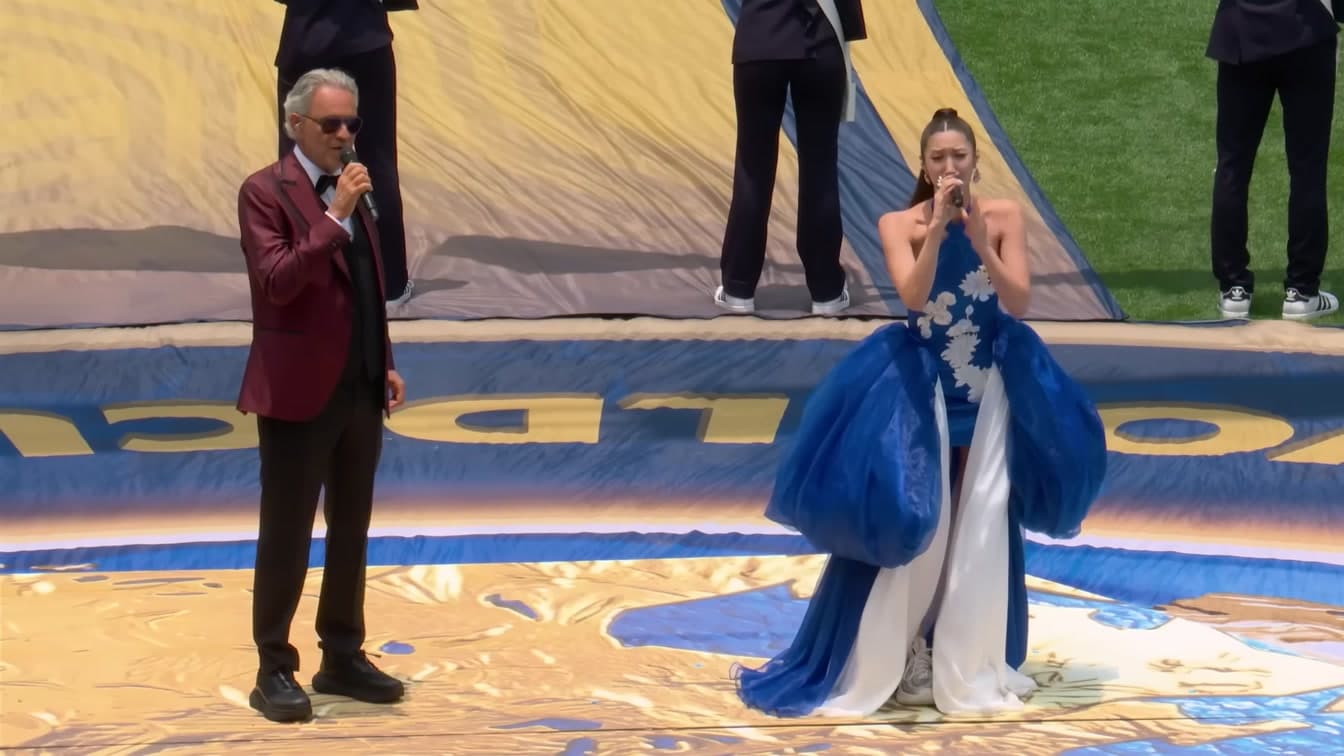
EJAE's breakout year is no longer just a streaming story. It has moved from Netflix playlists and awards-season headlines into the middle of the world's biggest sports stage, giving K-pop another unusually visible moment in front of a global audience.
The Korean-American singer, songwriter and composer, widely linked with the global success of K-pop Demon Hunters and its signature song "Golden," marked the animated film's first anniversary just days after performing at the 2026 FIFA World Cup opening festivities in Mexico City. Korean entertainment outlets reported that EJAE celebrated the anniversary on social media, while music and culture coverage in Korea connected the milestone to her recent performance of the official World Cup anthem "DNA" with Andrea Bocelli.
For fans who followed "Golden" from soundtrack favorite to chart phenomenon, the timing felt almost scripted. The project that pushed EJAE into a wider global spotlight has now reached its first-year marker, while the artist behind one of its defining musical moments is being introduced to football viewers who may not have known her name before the tournament began.
From "Golden" Breakout To Anniversary Milestone
K-pop Demon Hunters became one of the rare screen-and-soundtrack projects that broke through as both a pop-culture story and a music-industry story. Korean reports around the first anniversary noted that the Netflix animated film crossed 300 million cumulative views within 91 days of release, turning it into a major global phenomenon rather than a niche genre success.
The soundtrack gave that momentum an even clearer number. "Golden," performed by EJAE, was reported as the first K-pop genre song to reach No. 1 on both the Billboard Hot 100 and the United Kingdom's Official Singles Chart Top 100. The soundtrack album also reached No. 1 on the Billboard 200, a rare combination that made the film's music impossible to separate from the film's broader cultural impact.
Those numbers matter because they explain why the anniversary carried more weight than a routine social post. When EJAE shared a one-year celebration for the film, Korean outlets framed it as a reminder of how much had changed in a single cycle: a film release, a soundtrack surge, major awards attention, and a new solo profile for an artist who had already spent years working behind the scenes as a songwriter and composer.
The reports also highlighted the awards-season afterlife of the project. K-pop Demon Hunters was described as having won Academy Awards for animated feature and original song, while "Golden" was also tied to a Grammy win for Best Song Written for Visual Media. Whether readers discovered EJAE through the film, the soundtrack, or the award coverage, the result was the same: she became one of the clearest faces of a Korean pop-culture export built for international audiences.
That is why her first-anniversary message resonated. It was not only a nostalgic marker for fans of the film. It was a status check on a year in which a K-pop-coded animated universe produced real-world chart power and helped move a songwriter-vocalist into the center of the conversation.
Why The World Cup Stage Changed The Scale
The World Cup performance added a different kind of proof. Korean outlets reported that EJAE appeared at the 2026 FIFA World Cup opening event in Mexico City with Andrea Bocelli to perform "DNA," one of the tournament's official songs. The image of EJAE singing on a stadium stage alongside an internationally recognized tenor gave the moment a cross-generational, cross-genre quality that ordinary music-show promotion could not match.
What drew special attention in Korean coverage was the Korean-language lyric inside the song. Reports said EJAE sang a line meaning that even after falling again, she would rise again, and that the Korean part was written by EJAE herself. For Korean viewers, hearing the language inside a World Cup anthem was treated as a symbolic leap: not simply a Korean artist joining a global event, but Korean expression becoming part of the event's official sound.
The staging also gave EJAE a strong visual identity. Coverage described a look that evoked the lines and mood of hanbok, while a separate report noted that she chose sneakers with the stage outfit to reduce the risk of damaging the football pitch. That small detail turned into the kind of fan-friendly anecdote that travels well online: glamorous enough for a global ceremony, practical enough to read as respect for the field and the game.
The World Cup context widened the story beyond one artist. Korean commentary pointed to BLACKPINK's Lisa also appearing as part of the tournament's opening-stage music programming, while BTS was reported as a name connected to the final halftime-show concept. Taken together, the reports framed the 2026 tournament as another sign that K-pop is no longer an occasional guest at international events. It is increasingly treated as a reliable language for reaching younger global audiences.
That matters for Discover readers because the emotional hook is easy to understand even without deep K-pop knowledge. EJAE's route runs from training and songwriting work to a Netflix-backed global hit, then from a chart-topping soundtrack to a stadium performance for one of the most watched sports events on the planet. The story has a clean before-and-after shape, and fans can point to specific evidence rather than vague claims of popularity.
A Korean Pop Moment Built For Global Audiences
EJAE's current spotlight also shows how K-pop's global identity has changed. The most important artists in the ecosystem are not only idol-group members performing on weekly music shows. They can be composers, vocalists, animation soundtrack performers, multilingual creators and Korean diaspora figures whose careers move between Seoul, Los Angeles, streaming platforms and international stages.
That flexibility is part of why K-pop Demon Hunters connected so quickly. The film gave global viewers a story world built around K-pop aesthetics, but its success depended on songs that could live outside the screen. "Golden" did exactly that. Once it became a chart story, the film's fictional world and EJAE's real career began feeding each other: viewers returned to the music, music listeners discovered the film, and media coverage turned both into a larger example of the Korean Wave's range.
The World Cup stage then offered a public test of that range. A song with Korean-language lyrics did not appear at a specialist K-pop festival or a fan convention. It appeared in a football ceremony designed for a mass international audience. For Korean fans, that made the moment feel bigger than a performance credit. It suggested that Korean pop culture has become useful to global institutions that want emotional reach, digital conversation and youth attention at the same time.
There is also a personal dimension to the coverage. Korean reports noted EJAE's posts from Mexico City and her shared memories from the tournament setting, including moments with singer Sam Kim, whom reports have identified as her fiance. Those details gave the global-stage story a more human edge: the artist was not only working through a major professional milestone, but also recording it as a once-in-a-lifetime personal memory.
That combination is exactly why the trend has carried. Fans can celebrate the achievement, casual readers can understand the scale, and Korean entertainment media can place the moment inside a longer arc of K-pop crossing into spaces once dominated by Western pop, local host-country artists, or traditional ceremony performers.
What Comes After A Year Like This
The next challenge for EJAE is turning a remarkable year into a durable career chapter. A viral soundtrack moment can fade quickly if it is not followed by new material, a clear artistic identity and more stages that make sense beyond the initial hit. But the current signs give her more room than most breakout artists receive.
She now has several powerful reference points: a Netflix phenomenon, reported chart-topping records in the United States and the United Kingdom, major awards recognition tied to visual media, and a World Cup ceremony performance with an internationally known classical crossover figure. Those are not small resume lines. They give future releases a built-in narrative about an artist who can connect animation, pop songwriting, Korean identity and global live events.
For K-pop more broadly, the story points toward a future where global visibility is not limited to album promotions or arena tours. Soundtracks, sports ceremonies, streaming films, cultural festivals and international broadcasts are all becoming stages where Korean pop talent can appear in different forms. EJAE's "Golden" year shows how quickly those forms can stack on top of one another when the song, the story and the moment align.
That is why her anniversary post landed with more force than a simple celebration. It arrived as a reminder that one year ago, K-pop Demon Hunters was a new release hoping to find its audience. Now, EJAE is standing at the intersection of a record-setting soundtrack, a global fandom, and a World Cup moment that put Korean lyrics into a stadium-sized chorus. For fans, the feeling is not just pride in what happened. It is curiosity about where a year this unusual can possibly lead next.
How do you feel about this article?
저작권자 © KEnterHub 무단전재 및 재배포 금지
Entertainment Journalist · KEnterHub
Entertainment journalist specializing in K-Pop, K-Drama, and Korean celebrity news. Covers artist comebacks, drama premieres, award shows, and fan culture with in-depth reporting and analysis.
Comments
Please log in to comment