Elisabeth Returns to Korea: What Makes the 6th Season Different
 By Ricky Joo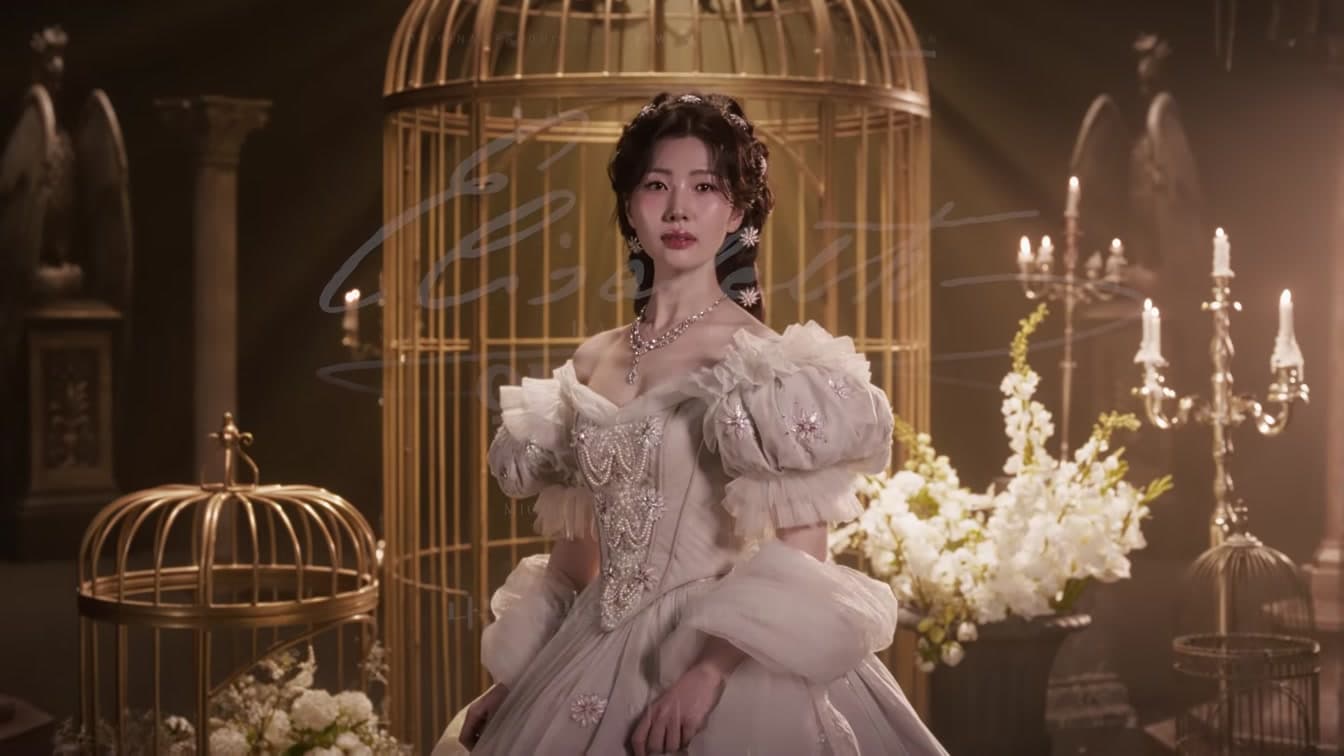
When the Austrian musical Elisabeth first arrived on Korean stages in 2012, it accomplished something that relatively few imported productions manage: it didn't just find an audience — it built one. Fourteen years and five successful seasons later, the show is returning for what its producers are calling the most extensively reworked version yet, opening August 16 at Seoul's Blue Square Woori Bank Hall for a three-month run through November 15.
EMK Musical Company released a set of moving promotional posters for the sixth season earlier this week — images that have been circulating widely among Korean musical theater fans and confirm that anticipation for this production runs unusually deep. The cast gathered for its first formal introduction and script reading this month, and by multiple accounts the session made clear this season will offer something genuinely new rather than a straightforward repeat of what came before.
A Show That Found Its Second Home in Korea
Elisabeth premiered in Vienna in 1992 and has spent the decades since becoming one of the most widely performed German-language musicals in history. The production dramatizes the life of Empress Elisabeth of the Austro-Hungarian Empire — specifically her lifelong conflict between the rigid expectations of court life and her fierce, ultimately tragic need for personal freedom. The show's most distinctive element is its central relationship: a personification of Death who pursues the empress throughout her life as something between an adversary and an obsession, drawn to her precisely because she refuses to surrender on anyone else's terms.
Since its Vienna premiere, the show has been staged in more than ten languages and has accumulated a cumulative global audience exceeding 12.5 million — a figure that places it among the most-seen productions in European musical theater history. But it found a particularly devoted following in East Asia, and in Korea above all, where the 2012 premiere caused what EMK Musical Company executive producer Eom Hong-hyeon recently described as "a sensation in the musical market." Five seasons confirmed that the initial response wasn't a fluke — it was the beginning of a sustained relationship between Korean audiences and a show that clearly speaks to something they value.
Korean musical theater has developed a particular affinity for large-scale European productions over the past two decades, and Elisabeth has become one of its defining touchstones. The Austro-Hungarian imperial setting, the operatic vocal demands, and the unusual romantic structure between an empress and the literal figure of Death give the show a combination of grandeur and psychological complexity that audiences here have responded to in a way that continues to surprise even the producers involved.
A New Version — and a Cast Ready to Make It Their Own
The sixth season is being marketed explicitly as a "new version," with significant changes to the stage design, costumes, and direction. Production company communications have emphasized visual transformation as the primary focus of the upgrade — a choice that makes sense given the audience for this show. Long-term Elisabeth fans in Korea are returning partly for the spectacle, and they will notice anything that feels recycled from seasons past. The updated staging signals that even a classic production has room to evolve.
The cast reflects a similar intention to refresh while honoring what has worked before. The three actresses taking on the demanding central role of Empress Elisabeth are Rina, Lee Ji-hye, and Lee Ji-soo — performers who bring distinct vocal and physical presences to what is widely considered one of the most technically demanding female roles in the Korean musical repertoire. The promotional posters released by EMK show each of them in character: expressions that move fluidly between defiance and grief, carrying the compressed interior tension of a woman who refuses to accept the life she was born into.
The role of Death (Der Tod) will be shared by Kai, Seo Kyung-soo, and Ko Eun-sung — the three performers responsible for giving one of musical theater's most unusual characters a body and a presence. Death in Elisabeth is not a villain in any conventional sense; he is fascinated by the empress, drawn to her because she is someone who understands, perhaps better than anyone else in her world, that life and death are not opposites but companions. The moving posters show all three in cold, high-contrast lighting, their postures suggesting something between restraint and barely controlled intensity.
The role of Luigi Lucheni — the anarchist assassin who serves as the show's sardonic narrator and shapes the audience's relationship to events — is played by Park Eun-tae, Kang Hong-suk, and No Yoon. Min Yeong-gi and Park Min-sung alternate as Emperor Franz Joseph, the man whose rigid devotion to duty and institution makes him both Elisabeth's captor and her husband in the most impossible of senses.
How the Season Began
The production's first formal event — the full-company introduction and initial script reading — took place earlier this month, and both cast and creative team were candid about the work ahead. In Korean musical productions of this scale, the first meeting sets the tone for the entire rehearsal process, and by accounts from those present, the atmosphere managed to be simultaneously focused and genuinely warm.
Returning performers and those joining the production for the first time found their footing quickly, building on a foundation of shared respect for both the show's history and the specific demands of their individual roles. Director and creative team shared their vision for the new version — what is being rethought, what is being preserved, what the updated staging is meant to accomplish that previous versions haven't quite managed.
Eom Hong-hyeon, speaking at the event, described the preparation process with unusual candor: "After the last season, the creative team went through countless discussions and deliberations to refine the work. Our hope is that it becomes a gift of a production — for audiences and for everyone involved in making it."
The Show That Keeps Coming Back
The sixth season of Elisabeth opens during what Korean theater critics are describing as an unusually competitive summer for large-scale musicals. Audiences in Seoul this season can choose between the Kim Kwang-seok jukebox show Those Days (running through August 23), the first Korean production of Disney's Frozen the Musical (opening August 13 at Sharlotte Theatre in Jamsil), and the locally created musical Yumi's Cells, based on the globally popular webtoon that has already accumulated over 3.5 billion views. The Alicia Keys-backed Broadway hit Hell's Kitchen arrived at GS Art Center on July 24.
In this company, Elisabeth arrives with an advantage that no new production can replicate: an audience that has already spent fourteen years building a relationship with this show. For many Korean theater fans, seeing each new season of Elisabeth is something close to an annual ritual — a reason to return and discover what different performers and a refreshed production reveal about a story they thought they knew.
For those attending for the first time, the show rewards patience with its structure. The first act establishes Elisabeth's world and the increasingly claustrophobic constraints of court life; the second moves into darker, stranger territory as Death's presence grows more insistent and Elisabeth's resistance becomes harder to sustain. The score, composed by Michael Kunze and Sylvester Levay, contains several numbers that have become embedded in Korean musical culture over five seasons — pieces that new cast members are inheriting and reinterpreting for audiences who will inevitably compare them to every previous version they have heard.
That combination of familiarity and renewal — the same notes, different hands — is precisely what keeps this show returning, and what gives each new season its own particular charge. Elisabeth runs August 16 through November 15 at Seoul's Blue Square Woori Bank Hall in Hannam-dong. Tickets are available for audiences aged 8 and above.
How do you feel about this article?
저작권자 © KEnterHub 무단전재 및 재배포 금지
New Music & Comebacks Reporter · KEnterHub
New-music reporter covering K-pop comebacks as they drop. Ricky Joo tracks official channel premieres, music video releases and debut showcases, breaking down what each comeback signals about an artist's next chapter — often within hours of release.
Comments
Please log in to comment