Fans Are Moved as We Are All Trying Here Hits 5.3%
JTBC’s human drama ended with its strongest rating and warm praise for Koo Kyo-hwan, Go Youn-jung and Oh Jung-se.
 By Park Chulwon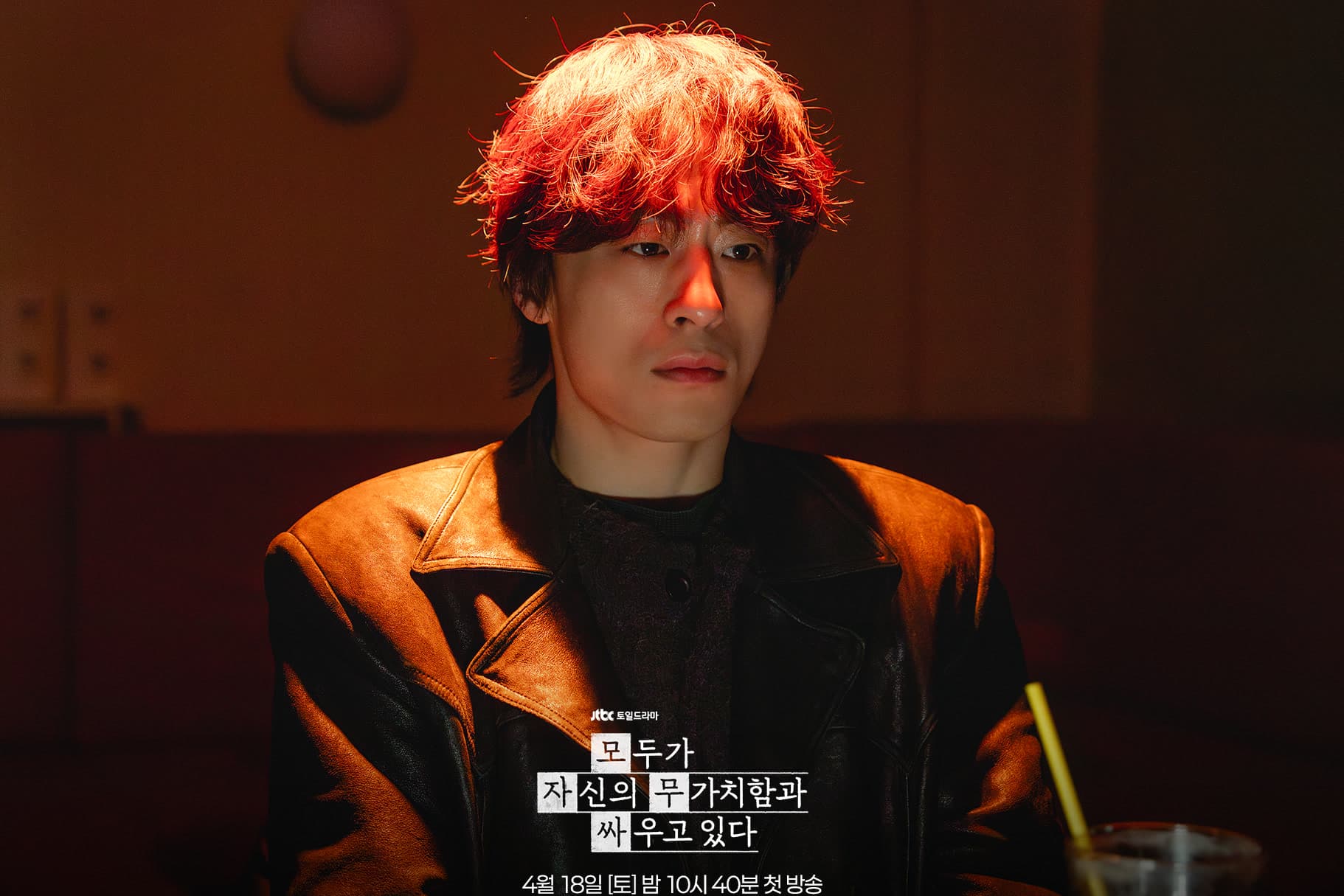
JTBC's We Are All Trying Here has ended on its strongest note yet, turning a quiet drama about insecurity into one of the season's most discussed K-drama finishes. The final episode aired on May 24 and reached 5.3 percent nationwide, its best rating of the run, according to Nielsen Korea figures cited by Korean outlets.
That number matters because the series did not chase easy noise. Led by Koo Kyo-hwan, Go Youn-jung and Oh Jung-se, the 12-episode drama built its audience through character work, emotional patience and a story about people trying to survive their own feelings of worthlessness. In a crowded weekend drama field, its finale suggested that viewers stayed for the comfort as much as the plot.
The drama, whose Korean title is Moduga Jashinui Mugachihamgwa Ssawoogoidda, follows people in and around the film industry as they wrestle with envy, failure and the fear that they are falling behind. AsianWiki lists the English title as We Are All Trying Here, with the series running from April 18 to May 24 on JTBC.
A Finale That Turned Growth Into a Ratings Peak
The final episode closed the stories of Hwang Dong-man, Byeon Eun-a and Park Gyeong-se by giving each character a different form of peace. Korean reports described the ending as a warm finish in which the characters did not suddenly become flawless. Instead, they learned how to name their pain, accept their limits and keep moving.
The clearest numerical sign of that response was the ratings jump. The finale recorded 5.3 percent nationwide and 6.0 percent in the Seoul metropolitan area among paid households, marking the drama's personal best. Star Today also noted that the show had opened at 2.2 percent and rose steadily, with the final figure landing 1.2 percentage points above episode 11's 4.1 percent.
For a human drama built around self-doubt rather than spectacle, that growth is meaningful. K-dramas often depend on a late-run surge when viewers hear that a story is landing its ending well. Here, the steady climb suggests the drama found an audience that trusted its emotional rhythm and returned for the payoff.
The final story centered on Dong-man, a longtime aspiring filmmaker played by Koo Kyo-hwan. After years of feeling stuck behind his peers, Dong-man reached the point he had imagined for himself: making his own film and finally being recognized as a director. Korean coverage highlighted the emotional weight of his awards-stage moment, which worked less as a fantasy of success than as a release after years of delayed self-belief.
Koo Kyo-hwan, Go Youn-jung and Oh Jung-se Carried the Heart
Koo's performance gave the drama its nervous pulse. Dong-man is not a conventional underdog who simply waits for a grand win. He talks too much, spirals, envies, apologizes and tries again. That messiness made his growth feel earned, especially in the finale, where he confronts Park Gyeong-se and chooses humility over another round of resentment.
The actor's closing remarks added to the emotional aftertaste. Through his agency, Koo reflected on reading reviews from viewers he had never met and sensing that part of himself existed in those responses. He also expressed the hope that people fighting their own sense of worthlessness could feel some calm while watching the drama.
Go Youn-jung's Byeon Eun-a offered a quieter but equally important arc. Eun-a works as a film producer and has a sharp professional image, but the story gradually revealed how much fear and old hurt sat beneath that control. In the finale, she begins to understand that past pain does not have to keep governing her present.
That shift gave Go room to show restraint instead of melodrama. Reports praised the way Eun-a's face and body language changed as she learned to recognize her emotions without being overwhelmed by them. For viewers who know Go from larger genre or romance projects, the role showed another side of her screen presence: still, focused and grounded.
Oh Jung-se rounded out the central trio as Park Gyeong-se, a director whose professional image hides deep insecurity. The character could have been played only for comedy or irritation, but Oh turned him into someone both frustrating and recognizably human. His late-story confession of jealousy gave the drama one of its sharper emotional turns, because it forced Dong-man and Gyeong-se to see each other beyond pride.
Oh also shared warm thoughts after the drama's close, saying through his agency that he felt excited to join the project, happy during filming and sorry to let it go. He described the collaboration as something that helped make his year feel valuable, a sentiment that matches the drama's larger idea that worth is built through connection as much as achievement.
Why the Drama Connected Beyond the Numbers
Part of the series' appeal came from its creative team. The drama was written by Park Hae-young, whose name carries weight with international K-drama fans because of My Mister and My Liberation Notes, two works known for intimate portraits of loneliness, exhaustion and ordinary survival. It was directed by Cha Young-hoon, whose credits include When the Camellia Blooms, another drama remembered for balancing warmth with pain.
That combination shaped We Are All Trying Here into a story about the film world that was not really limited to the film world. Dong-man's delayed debut, Eun-a's guarded professionalism and Gyeong-se's bruised ego are industry-specific on the surface. Underneath, they are familiar feelings: being late, being judged, being afraid that someone else's success proves your own failure.
The finale's warm response also fits a broader pattern in current K-drama viewing. Audiences continue to support high-concept romances, thrillers and fantasy titles, but there is still strong demand for dramas that give emotional language to ordinary anxiety. A 5.3 percent finish is not only a statistic; it is evidence that many viewers were willing to follow a slower, more interior story when the writing gave them a reason to care.
Korean outlets repeatedly used words such as comfort, peace and value when describing the ending. That matters for English-speaking viewers who may come to the show later through streaming or fan recommendations. The drama's title may sound heavy at first, but the finished story appears to have landed as something gentler: a reminder that self-worth can be rebuilt in small, imperfect steps.
What Comes Next for the Cast and the Drama's Afterlife
The cast's next moves will keep interest alive. Koo Kyo-hwan is already being watched closely in 2026, with Korean reports pointing to his busy slate, including film work. Because We Are All Trying Here gave him a character who was comic, wounded and deeply sincere, the finale may strengthen the perception that he can carry complex television roles as confidently as film parts.
Go Youn-jung also leaves the series with another performance that broadens her profile. She has been building a global audience through K-drama hits and streaming-era visibility, and Eun-a gave her a character defined less by glamour than by emotional precision. For fans, that kind of role can be more durable than a louder star turn because it shows range.
Oh Jung-se remains one of Korean drama's most reliable scene-stealers, and this finale reinforced why. He can make insecurity funny without making it shallow, then pivot into pain without breaking the tone. That skill helped keep Park Gyeong-se from becoming a simple obstacle in Dong-man's story.
For the drama itself, the finale gives it a strong afterlife. Shows about healing often depend on word of mouth after broadcast, because new viewers want to know whether the emotional journey is worth the investment. With its highest rating arriving at the end and its cast receiving praise for the closing stretch, We Are All Trying Here now has a clean recommendation hook: it is a patient drama that rewards viewers who stay to the final scene.
The result is a satisfying close for a series that began with people trapped inside the fear of being lesser than others. By the end, its characters had not escaped ambition, envy or doubt completely. They had simply learned how to keep living with more honesty, and that was enough to make viewers respond.
How do you feel about this article?
저작권자 © KEnterHub 무단전재 및 재배포 금지
Entertainment Journalist · KEnterHub
Entertainment journalist focused on Korean music, film, and the global K-Wave. Reports on industry trends, celebrity profiles, and the intersection of Korean pop culture and international audiences.
Comments
Please log in to comment