FIFA Hid EJAE's Korean Lyric In A Team Korea Post
The World Cup account turned six Hangul syllables into a rallying message before South Korea's final group match.
 By Jang Hojin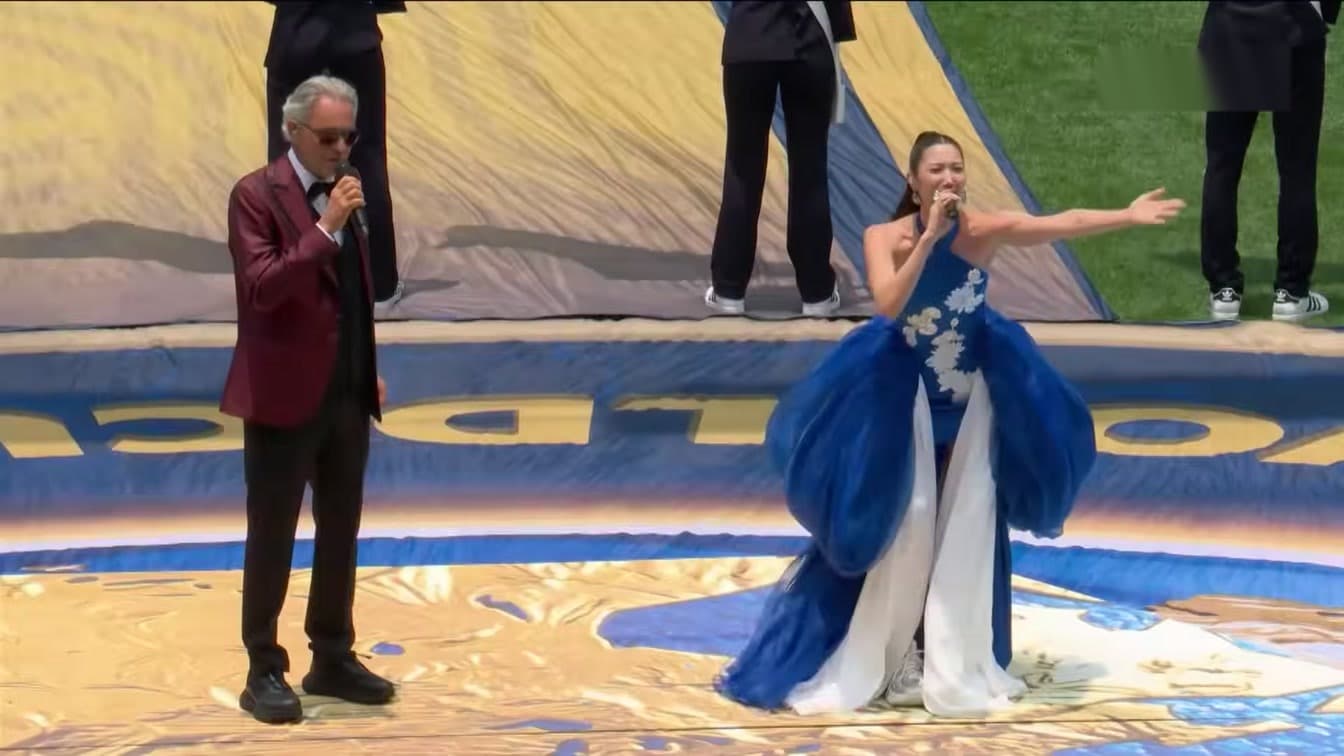
FIFA's Korean-language cheer for South Korea has turned a World Cup social post into a K-wave moment.
On June 22, the official FIFA World Cup Instagram account posted a set of images backing South Korea before its final Group A match. At first glance, the carousel looked like a standard tournament encouragement post, pairing national team players with a short message of support. The detail Korean fans quickly noticed was more deliberate: each player image carried one Korean syllable, and the sequence formed the phrase “넘어져도 다시”, meaning “even if you fall, again.”
The phrase immediately connected the football post to EJAE, the Korean-American singer-songwriter also known in Korean media as Lee Jae. EJAE appears on “DNA,” the official FIFA World Cup 2026 anthem performed with Andrea Bocelli, David Guetta and Megan Thee Stallion, and the song's Korean lyric about rising again after falling has become one of its most resonant lines for Korean audiences. What might have been a routine Instagram carousel instead became a small but potent cultural signal: FIFA was not only cheering for Korea in Korean, it was echoing a Korean lyric already embedded in the tournament's official sound.
The timing sharpened the emotion. South Korea opened its campaign by beating Czechia 2-1, then lost 0-1 to co-host Mexico, leaving the team needing a response in its final group match against South Africa on June 25 at 10 a.m. KST. In that setting, “even if you fall, again” reads less like decorative copy and more like a message built for the team's exact tournament situation.
A Hidden Korean Message With Stadium-Sized Context
The Korean reports that surfaced after the post focused on the playful structure of the carousel. FIFA featured players including Cho Gue-sung, Um Ji-sung, Lee Han-beom, Lee Kang-in, Hwang Hee-chan and Hwang In-beom, with one syllable placed above each image. Read in order, the six syllables completed the phrase “넘어져도 다시.” For Korean fans, the effect was simple and satisfying: a global sports institution had used Hangul not as background decoration, but as a puzzle designed for Korean readers to solve.
That matters because World Cup social media is usually built for maximum translation. Posts lean on flags, player faces, match scores and universal football language because they need to travel across dozens of countries at once. This one did something more specific. It targeted Korean supporters with a phrase that carried both emotional and musical meaning, then allowed the wider audience to encounter that specificity through fan sharing.
Sports World reported that the post drew roughly 3,500 likes within about 22 hours, alongside comments from domestic and international fans wishing the team well. The number is modest by global FIFA standards, but the reaction is more interesting than the raw count. The post was not viral because it announced a result. It circulated because fans recognized care in the localization. The six characters suggested that someone behind the campaign understood not only the Korean language, but also the anthem lyric Korean viewers had attached to EJAE's World Cup performance.
The phrase also landed because it suits football's emotional grammar. Group-stage narratives are built around recovery: a team wins, stumbles, adjusts and tries again. For South Korea, entering the South Africa match after a narrow defeat to Mexico, the line turned a pop lyric into a national-team motif. It told fans to read the next match not only as a fixture, but as a comeback scene.
Why EJAE's Korean Lyric Is Carrying The Moment
FIFA's official release for “DNA” framed the anthem around identity, unity and belonging. The song arrived as the musical centerpiece for the first World Cup staged across three countries, with Canada, Mexico and the United States hosting an expanded 48-team tournament across 16 host cities. The collaboration itself was designed to sound global: Bocelli brings classical grandeur, Guetta adds electronic scale, Megan Thee Stallion contributes contemporary pop-rap force, and EJAE supplies a Korean-American voice shaped by both K-pop songwriting and global pop performance.
EJAE's role is especially important for Korean listeners because she did not merely appear as a guest voice. In FIFA's own announcement, she described the anthem as meaningful because she was able to write Korean lyrics into the song and represent South Korea on the World Cup stage. She also connected the experience to one of her childhood memories: being in Seoul during the 2002 World Cup, when strangers celebrated together in the streets. That memory gives the lyric its emotional charge. It is not simply a line about resilience. It is a bridge between Korea's most famous football summer and a new tournament where Korean music is part of the official ceremony.
Korean coverage has also linked EJAE's current visibility to her earlier global breakthrough through the “K-Pop Demon Hunters” soundtrack, particularly the song “Golden.” That background makes the World Cup moment feel less like a sudden cameo and more like a continuation of a wider pattern: Korean and Korean-American creatives are increasingly appearing inside the main architecture of global entertainment events, not only in side campaigns or regional versions.
The opening ceremony performance in Mexico City made that shift visible. EJAE stood with Bocelli on a World Cup stage and delivered Korean language to an audience far beyond the usual K-pop circuit. When FIFA later used a Korean phrase from the anthem to cheer South Korea, it effectively looped that stage moment back into the national-team narrative. The lyric moved from song to ceremony, then from ceremony to social media, then from social media into Korean fan conversation.
From “Oh Pilseung Korea” To A New Kind Of World Cup Song
The Korean conversation around the post also sits inside a larger question: what happened to the national World Cup cheer song? The Hankyoreh's music coverage contrasted the continuing memory of YB's “Oh Pilseung Korea,” which became a national singalong during the 2002 Korea-Japan World Cup, with the more fragmented music environment surrounding the 2026 tournament. New songs still exist. TWS released the national team support song “Dream With Us” on June 11, while producer 250 and Hudson Mohawke released the unofficial cheer track “Victory” on June 19, sampling Koreana's 1988 Seoul Olympics theme “The Victory.”
Yet the old model is harder to recreate. In 2002, street cheering, broadcast saturation and the Red Devils' coordinated chants turned songs into public ritual. In 2026, viewing habits are split across homes, restaurants, online streams, short-form clips and fan communities. The same crowd can still feel intense emotion, but it does not always gather in one square singing one hook at the same time.
That is why EJAE's “DNA” lyric is notable. It does not need to become a traditional national cheer song to matter. Instead, it travels through the contemporary channels where global sports culture now lives: ceremony clips, official Instagram posts, YouTube performance videos, fan edits, comment sections and news screenshots. The line becomes recognizable through repetition across platforms rather than through one unified street chorus.
This is also where K-pop's role in World Cup culture has changed. BTS member Jungkook's “Dreamers” performance at the 2022 Qatar World Cup showed that Korean pop stars could stand at the center of FIFA's global music programming. In 2026, EJAE's presence on “DNA,” BLACKPINK Lisa's appearance at a Los Angeles opening event and BTS' scheduled final-stage halftime involvement point to a larger shift. K-pop is no longer only music played by Korean fans around World Cup matches. It is part of how FIFA packages the event for the world.
The Discover Appeal: A Small Post With A Big Emotional Hook
For entertainment readers, the appeal of the story is not only that FIFA used Korean. It is that the post turns several threads into one tidy emotional scene. A Korean-American singer writes a Korean lyric about getting back up. That lyric appears in the official anthem of the world's biggest football tournament. South Korea loses a difficult group match and faces a must-respond finale. FIFA then hides the lyric's key phrase in a Korean carousel for the national team. Fans notice, decode it and turn the detail into a story.
That structure is exactly why the post resonated beyond sports headlines. It gives fans something to feel and something to discover. The hidden syllables reward attention. The lyric gives the message emotional depth. EJAE's 2002 memory ties the present back to a foundational Korean football moment. The group-stage stakes give the phrase urgency. Even the visual language helps: player portraits, Hangul characters and stadium performance frames all point to an image-rich story that can move quickly on mobile feeds.
There is also a subtle shift in representation here. Global events have often used Korean culture as a sign of coolness or reach. This moment is more specific. The Korean phrase is not random. It belongs to a song with a Korean creator's own lyric. It is being used in relation to the Korean national team. It carries a message that Korean fans can immediately hear in their own language and connect to a global performance they have already watched.
That specificity is what makes the post feel less like localization and more like recognition. FIFA did not need a Korean lyric to post encouragement before South Korea's final group match. Choosing one gave the post emotional precision.
What Comes Next For South Korea And EJAE
The next test is on the pitch. South Korea's match against South Africa will decide whether the “fall and rise again” message becomes a neat social-media moment or the prelude to an actual tournament recovery. If the team advances, the FIFA carousel will likely be remembered as part of the emotional build-up to that rebound. If the campaign ends, the phrase will still have captured the mood of a fanbase trying to keep belief alive after a setback.
For EJAE, the moment extends a remarkable run of global visibility. “DNA” places her voice in the official soundtrack of a World Cup watched across continents, while the Korean lyric gives domestic audiences a clear reason to claim the song as more than a generic international anthem. It also shows why bilingual and bicultural artists are increasingly valuable in global pop events: they can carry local emotional meaning without narrowing the song's international reach.
The bigger takeaway is that World Cup music now moves differently. The next anthem may not become a single national chant heard in every street. It may instead become a network of moments: a ceremony performance, a lyric fans quote, a social post that hides a message, a clip that travels between football and entertainment communities. In that new pattern, EJAE's Korean line has already done its work. It gave South Korean fans a phrase to hold onto at the exact moment they needed one.
How do you feel about this article?
저작권자 © KEnterHub 무단전재 및 재배포 금지
Entertainment Journalist · KEnterHub
Entertainment journalist specializing in K-Pop, K-Drama, and Korean celebrity news. Covers artist comebacks, drama premieres, award shows, and fan culture with in-depth reporting and analysis.
Comments
Please log in to comment