Fifteen Years and Still Standing: How Apink's RE : LOVE Redefines K-pop Longevity
 By Park Chulwon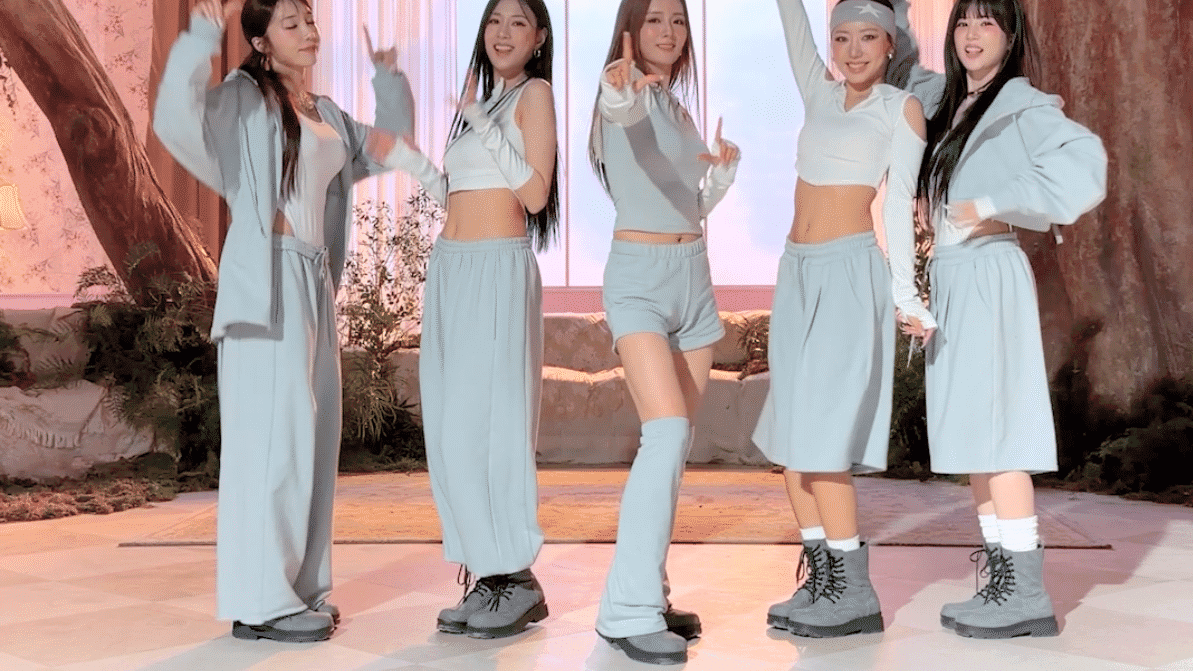
Fifteen years after their debut, Apink return with RE : LOVE — their 11th mini album and the most compelling argument yet for their improbable staying power in K-pop. Released on January 5, 2026, the six-member group from IST Entertainment dropped the album alongside title track "Love Me More," a song that layers the analog machine-synth warmth of early 1990s pop onto a polished contemporary frame. The timing is deliberate: the release lands months before the group's official 15th debut anniversary in April, positioning it as both celebration and declaration. Within hours of release, all five tracks on RE : LOVE charted simultaneously on Melon's new release chart — a notable feat for a group whose peers from the same generation disbanded years ago.
The comeback arrives after a gap of nearly three years, Apink's longest absence from Korean music since their 2011 debut. That silence made the return heavier with expectation. Long-tenured fans watched their promotional schedule fill up — music show appearances, choreography spoilers on Weverse, a performance showcase — with a quiet sense of vindication. RE : LOVE does not merely ask whether Apink still matters; it insists on answering.
The Last Active Survivors of Their Generation
Understanding why RE : LOVE lands differently from a standard K-pop comeback requires understanding what Apink represents in the industry's historical timeline. The group belongs to what critics and fans have termed the "2.5th generation" of K-pop — a cluster of girl groups that debuted in the years immediately following SNSD and 2NE1, alongside f(x), SISTAR, and miss A. Of that cohort, Apink stands alone. SISTAR disbanded in 2017. miss A dissolved in the same year. f(x) has remained inactive since 2019. Apink, by contrast, never stopped.
Their survival is not accidental. The group made a pivotal decision in 2018, at the seven-year mark that has historically served as a kind of expiration threshold for K-pop acts. Rather than stay locked into the pastel-innocent concept that had defined their early discography, Apink pivoted sharply with the seventh mini album One & Six and its title track "I'm So Sick" — a moody, minor-key synth-pop track that signaled a group willing to risk alienating their established fanbase in order to evolve. The gamble paid off. "I'm So Sick" drew new international attention to the group and extended their commercial runway well into the 2020s.
The 2022 full-length album HORN, featuring the synth-pop lead single "Dilemma," continued that trajectory. By the time RE : LOVE arrived in early 2026, Apink had assembled a discography that spans both the innocent-girl archetype of early second-generation K-pop and the self-possessed, maximalist sound of fourth-generation production. Few groups in the industry can claim the same breadth.
What RE : LOVE Sounds Like — and Why That Choice Is Deliberate
The album's five tracks map a consistent emotional territory: the warmth and ache of love remembered across time. That theme is not coincidental. RE : LOVE's concept, according to the group's promotional materials, tells the story of a woman living a glamorous present who looks back fifteen years and recognizes that love remains the incomparable emotion at the center of everything. The album narrative mirrors Apink's own career arc — a glance backward at fifteen years of music, filtered through a more experienced artistic lens.
Musically, "Love Me More" is the clearest statement of the record's intent. The production combines what Apink's team describes as "the modern, tinny sound of the EP" with the "analog machine synth sounds of the 90s" — a layering technique that places the song at the intersection of contemporary K-pop production and a nostalgic sonic palette that will resonate strongly with fans who have followed the group from the beginning. The effect is sentimental without being saccharine, and elegant while retaining the bright, longing quality that has always defined Apink's best work.
The four remaining tracks flesh out this emotional world. "Fizzy Soda" uses hip-hop sampling to evoke an old-school vibe, a choice that reflects the production risk-taking the group has embraced since 2018. "Birthday Cake" carries the message that someone beloved is as precious as a birthday gift — a simple sentiment delivered with vocal warmth that lets Jung Eunji and the group's other singers breathe naturally. "Sunshine" leans into band instrumentation and layered harmonics, showcasing the group's vocal capability in an unadorned arrangement. The album closes with "Hold My Hand," described as a traditional Apink ballad, a deliberate gesture toward the audience that has followed them through fifteen years of concept changes and personnel transitions.
The Numbers Behind the Comeback
Chart performance confirmed the comeback's commercial strength almost immediately. All five RE : LOVE tracks debuted on Melon's new release chart on release day, demonstrating that Apink's fanbase had remained both loyal and active through the nearly three-year gap. "Love Me More" entered Melon's Daily Chart at number 128 — a figure that, while not a top-ten position, represents a meaningful entry for a group releasing into a landscape dominated by fourth-generation acts with younger, larger streaming fanbases.
The more telling number came two weeks later. On January 15, 2026, Apink claimed first place on Mnet's M! Countdown with "Love Me More," accumulating 7,567 points in a competitive field. A music show win ten days into a comeback cycle is not guaranteed for any act, and for a group in their fifteenth year competing against groups that debuted within the last three years, the achievement carries particular weight. It suggests that the combination of loyal fan voting activity, physical album sales, and streaming performance remained strong enough to override the algorithmic and demographic advantages that favor newer artists in music show scoring systems.
Longevity as Strategy, Not Accident
Apink's continued presence in K-pop's mainstream conversation raises questions that go beyond any single comeback. How does a group maintain commercial relevance across fifteen years in an industry that typically cycles through new acts every two to three years? The group's trajectory offers a partial answer rooted in three decisions: the willingness to undergo conceptual reinvention when the original formula reached exhaustion, the maintenance of a stable core membership through the disruptions that have ended other groups' runs, and the cultivation of a multi-generational fanbase that values the emotional depth of established chemistry over the novelty of newer acts.
The decision to release RE : LOVE nearly three years after the previous Korean-language release also carries strategic logic. A longer gap increases audience anticipation and allows the cultural moment surrounding a comeback to feel genuinely significant rather than routine. When Apink returned in January 2026, the story the group could tell — a fifteen-year-old K-pop girl group releasing their eleventh mini album — was itself a form of content, generating interest not just from their existing fanbase but from industry observers and casual listeners curious about the mechanics of such rare longevity.
The months that followed RE : LOVE's release would offer further evidence of whether the comeback successfully extended the group's trajectory or represented a peak before a gradual fadeout. But the album itself — in its sonic choices, its thematic coherence, and its promotional success — offered a confident answer to the question of whether there was still a meaningful market for Apink's particular brand of emotionally resonant K-pop. Fifteen years in, the answer remained yes.
How do you feel about this article?
저작권자 © KEnterHub 무단전재 및 재배포 금지
Entertainment Journalist · KEnterHub
Entertainment journalist focused on Korean music, film, and the global K-Wave. Reports on industry trends, celebrity profiles, and the intersection of Korean pop culture and international audiences.
Comments
Please log in to comment