'Fins' Is the Korean Dystopian Film That Locarno Couldn't Ignore
 By Park Chulwon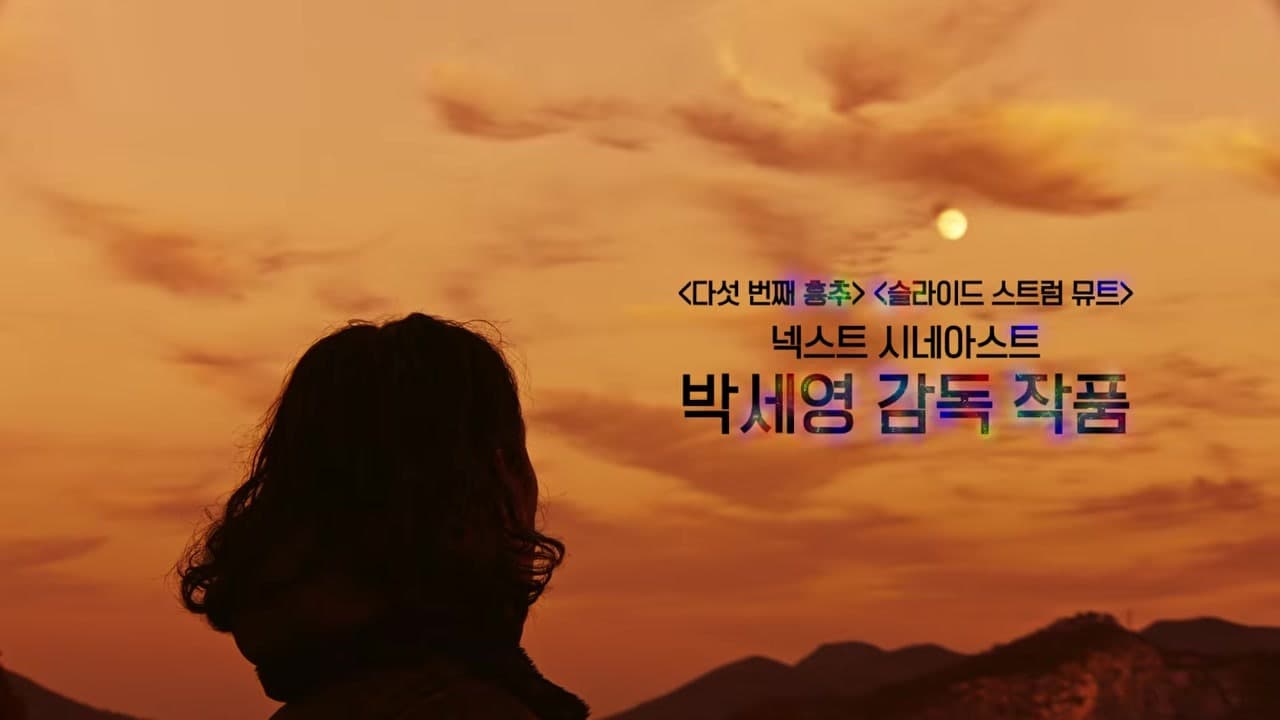
When pandemic lockdowns reshaped everyday life in 2020, most people found ways to cope. For 30-year-old Korean filmmaker Park Se-young, the experience became something else entirely: the emotional blueprint for a dystopian science fiction film that would eventually land at one of Europe's most prestigious film festivals.
That film, "Fins" (지느러미), opens in Korean theaters on July 22. It is Park's second feature — a dense, atmospheric dystopia set in a near-future unified Korea, where a genetically mutated underclass called "Omegas" are exploited, surveilled, and treated as something less than human. If the premise sounds dark, the execution is stranger and more poetic than the description suggests, filtered through a visual style that Park describes as shaped as much by accident as by intention.
The film has already made its mark internationally. Last year, "Fins" was selected for the New Directors competition at the 78th Locarno International Film Festival in Switzerland — a meaningful nod for any director, but particularly notable for a 30-year-old making only his second feature without major studio backing. Plans are in place for the film to open in France and North America following its Korean theatrical run.
Where the Idea Came From
Park began shooting "Fins" in October 2022, at a point when pandemic restrictions in Korea were still affecting daily life in tangible ways. The experience left a mark on how he thought about people and space. "When you meet someone, you're carrying the awareness that infection is a possibility," he said in a recent interview. "That changed how people related to each other — it pushed everyone further into individualism, and that felt genuinely despairing to me. The despair and anxiety and fear worked their way into the color and structure of the film."
The world of "Fins" reflects that texture directly. The Omegas — identifiable by their aquatic mutations, including fins that mark them as physically different and sonar-like voices powerful enough to rupture eardrums — live under constant watch, performing environmental labor in polluted coastal zones while human bureaucrats in yellow uniforms manage and regulate them. The film follows three characters whose paths intersect under this system: an Omega who escapes government surveillance, a new civil servant who becomes aware of what's actually happening, and a fishing site worker who has been quietly concealing her own Omega identity.
The Omega concept itself emerged from a combination of influences that Park describes as largely accidental. Research into the historical patterns of minority groups pushed to coastal margins led him to consider how such displacement might manifest in a specifically Korean context — filtered through decades of state propaganda and social fear. The coronavirus era provided the emotional register: the particular quality of how people looked at each other across a social distance, the specific texture of suspicion becoming policy.
Three Years in Berlin, and What It Produced
The film's production process was unconventional almost by necessity. Rather than working from a finished screenplay, Park and his cast approached the project in sections — devising new settings and story beats as they went, filming in short bursts, then heading back to the editing room to figure out how the pieces connected. "It's the result of intense improvisation," Park acknowledged, "but you can feel the spontaneity in certain scenes in a way that I think gives it originality."
What made "Fins" possible on the scale it ultimately achieved was an unexpected collaboration with French producer Philippe Bober. The two first met at the Sarajevo Film Festival in 2022, where Bober — who had produced Ruben Östlund's Palme d'Or winners "The Square" (2017) and "Triangle of Sadness" (2022) — saw an early cut of the film and approached Park about working together. Park flew to Berlin, where Bober's production company is based, and spent the next several years editing and completing additional photography at the same office where directors including Östlund, Lars von Trier, and Miike Takashi also worked.
The arrangement broke Park's isolation in ways he found genuinely useful. "Before, when I was in post-production, I had to judge everything alone — whether it was working, whether audiences could follow it," he said. "This time I had too many opinions, which was disorienting at first, but after a few years of that process I understood what I actually wanted much more clearly." Weekly screening sessions where established directors watched work-in-progress and offered feedback shaped the film's final form in ways that Park credits as essential.
The film is also a South Korea, Germany, and Qatar co-production — a level of international financing that introduced its own complications. "At the beginning, I wanted to satisfy everyone," Park said. "I lost the thread for a while." He found it again through the sustained collaboration with Bober's team, producing a film that has been described in early responses as both visually distinctive and genuinely demanding in the questions it asks.
A Visual Style Born From Necessity
One of "Fins'" most immediately recognizable qualities is its sepia-toned color palette, which gives the film the quality of something preserved rather than present — as if the near-future setting has somehow aged before it arrived. Park explains that this effect emerged from practical constraints rather than a deliberate stylistic choice. Certain scenes were shot in conditions where proper lighting wasn't available, producing footage that came out darker than intended. Rather than treating those shots as failures, the team adjusted the rest of the film's color grading to match, and the resulting consistency became the film's look.
Park describes the goal as capturing spaces that exist at the margins of capital — South Mountain Citizen Apartments, cramped back alleys, deteriorating industrial sites — places that feel closer to the past than to any imagined future. "I wasn't trying to show something beautiful or clean," he said. "I was looking for spaces that capital hadn't touched, places that people don't particularly want to go." The effect is a future that feels oddly familiar, which seems entirely intentional for a film about how systems of oppression tend to replicate themselves across time.
Sound plays an equally significant role. The film's soundscape was designed by Kim Yoo-hoon, and Park singled out both Kim and color grader Park Chan-woo as critical to giving the film the textural density it needed. "Their willingness to discover something new in every choice they made is why the film has the density it does," he said.
"Fins" runs 83 minutes and opens in Korean theaters on July 22. It has also screened at the Jeonju International Film Festival and the Seoul Independent Film Festival, and will open in France and North America in the coming months. For Korean cinema fans looking for something that operates outside the usual commercial lanes, it represents one of the more distinctive new voices to emerge from the domestic independent scene in recent years.
How do you feel about this article?
저작권자 © KEnterHub 무단전재 및 재배포 금지
Entertainment Journalist · KEnterHub
Entertainment journalist focused on Korean music, film, and the global K-Wave. Reports on industry trends, celebrity profiles, and the intersection of Korean pop culture and international audiences.
Comments
Please log in to comment