Four Songs, One Chart: How the 'KPop Demon Hunters' Soundtrack Made Billboard History
 By Park Chulwon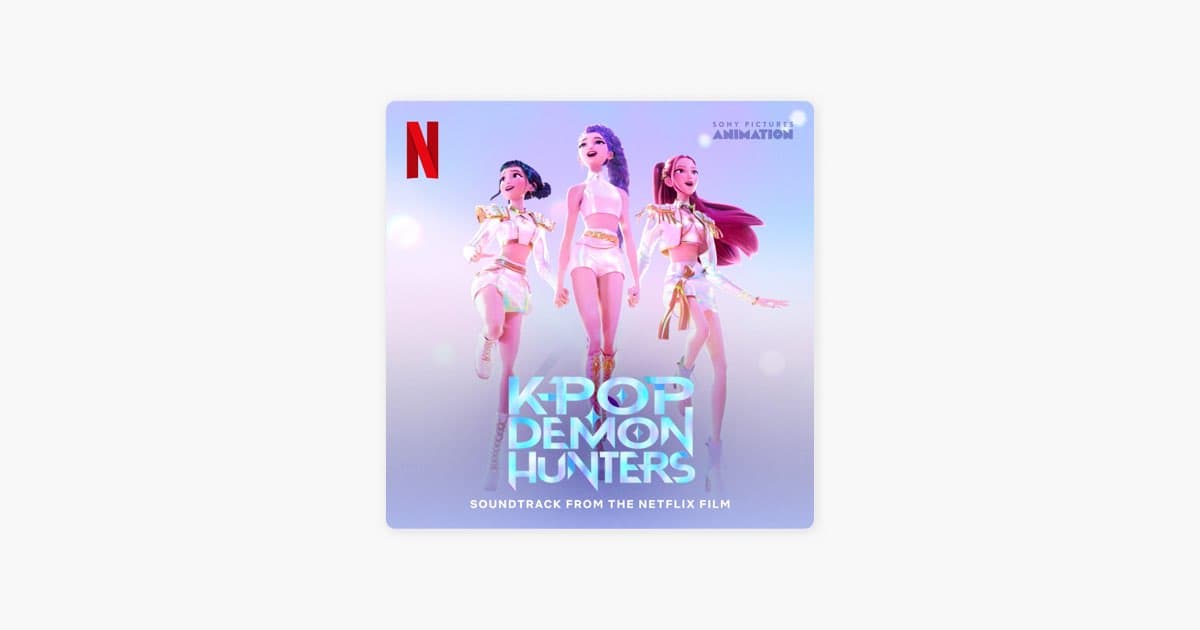
On September 20, 2025, the KPop Demon Hunters soundtrack reached number one on the Billboard 200. It was the first animated film soundtrack to top that chart since Encanto in 2022, and the most dominant soundtrack performance in American chart history since the disco era.
The milestone did not arrive quietly. At the moment the chart dated September 20 was published, the soundtrack held four simultaneous top 10 positions on the Billboard Hot 100: "Golden" by HUNTR/X at number one, "Your Idol" by the Saja Boys at number four, "Soda Pop" at number five, and "Huntrix's 'How It's Done'" at number nine. No soundtrack in the history of the Hot 100 had ever achieved four concurrent top 10 entries. The closest precedent — Saturday Night Fever's chart dominance in 1977–78 — came from a different era of music consumption entirely.
The Road to Number One
The KPop Demon Hunters soundtrack was released alongside the Netflix film's June 15, 2025 premiere and climbed steadily through a summer of chart competition. For seven nonconsecutive weeks it sat at number two on the Billboard 200 before the combination of a deluxe reissue on September 5 — adding new tracks and releasing a physical CD for the first time — pushed it over the threshold. In the tracking week ending September 11, the album earned 128,000 equivalent album units in the United States, up 7% from the prior week and its best performance to date.
That physical CD release was strategically significant. Deluxe editions with new content typically generate a one-week streaming and sales spike, but the physical format allows fans who stream exclusively to demonstrate support in a format that carries additional commercial weight in album unit calculations. The label, Republic Records, timed the release to maximize the September chart cycle — and the precision paid off.
Deep Analysis: What the Numbers Actually Mean
The four simultaneous Hot 100 top 10s represent something more than a statistical anomaly. The last time any soundtrack placed four or more songs in the top 10 at the same time was never — the historical precedents cited (Saturday Night Fever, Grease, Purple Rain) achieved four top 10 songs across their chart runs, not concurrently. The Waiting to Exhale soundtrack had five top 10 songs in 1995–96 but not simultaneously. The KPop Demon Hunters achievement exists in a category with no prior occupant.
What makes the achievement analytically interesting is the diversity of the songs' appeal. "Golden" by HUNTR/X — voiced by EJAE, Audrey Nuna, and REI AMI — operated in the tradition of classic girl-group pop crossover, produced by Teddy Park of The Black Label. The Saja Boys' tracks appealed to a different demographic register entirely: "Your Idol" and "Soda Pop" catered to audiences already familiar with K-pop idol aesthetics, while "How It's Done" bridged the gap with a harder-edged vocal presentation. Four songs, four distinct sonic identities, all simultaneously in the top 10. The soundtrack was not a monoculture phenomenon — it was a mosaic one.
To contextualize the rarity: among all soundtrack albums in the 67-year history of the Hot 100, only Saturday Night Fever, Grease, Purple Rain, and Waiting to Exhale had placed four or more songs in the top 10 — and none had done so concurrently. The KPop Demon Hunters soundtrack accomplished in one chart week what took those landmark albums their entire commercial lifespan. The comparison is not hyperbole; it is what the data shows when the historical record is examined directly.
The Billboard 200 number one required 128,000 equivalent album units in a single tracking week — a figure that reflects the sustained commercial force of a film that had already accumulated more than 236 million Netflix views by late August 2025 on its way to eventually becoming the platform's most-watched movie of all time.
K-Pop's Role in the Crossover
The KPop Demon Hunters soundtrack did not succeed despite being rooted in K-pop aesthetics — it succeeded because of them. Producer Teddy Park, who built BLACKPINK's sonic identity at The Black Label, designed the HUNTR/X tracks to carry the structural DNA of K-pop: layered vocal arrangements, hook-driven pre-choruses, production that rewards repeated listening. Saja Boys' tracks operated in the tradition of male idol pop, with choreography-ready beats and anthemic refrains. The film's creative team made a deliberate decision to make the music authentic to Korean pop conventions rather than diluted for Western palatability.
That decision represented a commercial and cultural bet. Prior K-pop crossovers into Western markets had typically involved either established groups (BTS, BLACKPINK) or individual breakout singles ("Gangnam Style," "Butter"). The KPop Demon Hunters model introduced fictional K-pop acts — animated characters with no prior audience base — and achieved simultaneous multi-song Hot 100 chart penetration that even the most established real K-pop artists had not managed. The Saja Boys' chart positions surpassed BTS's US Spotify streaming records for male K-pop groups; HUNTR/X's "Golden" outperformed BLACKPINK's highest US chart position for female K-pop groups.
Impact and Industry Reaction
The entertainment industry's response to the chart milestone was immediate. Major labels accelerated development of animated projects with original K-pop-adjacent soundtracks, recognizing the format's demonstrated capacity to generate simultaneous multi-song chart performances that traditional artist releases rarely achieve. The soundtrack's success also validated Netflix's strategic investment in K-pop-themed content following the global success of various Korean original series.
For the K-pop industry specifically, the achievement functioned as a proof-of-concept demonstration that K-pop production aesthetics could generate mainstream Western chart dominance without requiring the decade-long relationship-building that had preceded BTS's and BLACKPINK's American breakthroughs. The soundtrack reached number one in the twelfth week of its chart run — comparable in velocity to many of the biggest Western pop crossover success stories of the prior decade.
Looking Forward: What This Changes
The KPop Demon Hunters soundtrack's Billboard 200 number one on September 20, 2025 established a new reference point for what K-pop-informed music could achieve in the American market. The film would go on to surpass 500 million total Netflix views by December 2025 and win Best Animated Feature and Best Original Song at the 83rd Golden Globe Awards — outcomes that, from the vantage point of mid-September 2025, were already beginning to appear inevitable. The soundtrack would receive five Grammy nominations, with "Golden" ultimately winning Best Song Written for Visual Media, the first Grammy win for a K-pop song in that category.
What September 20 represented, in the moment, was a chart configuration that the music industry had no prior template for: four simultaneous top 10 songs from one soundtrack, one of them at number one, all rooted in the aesthetics of a genre that fifteen years earlier had been unknown to most American consumers. The conversation about K-pop's place in global music culture did not change on that date — it was confirmed.
How do you feel about this article?
저작권자 © KEnterHub 무단전재 및 재배포 금지
Entertainment Journalist · KEnterHub
Entertainment journalist focused on Korean music, film, and the global K-Wave. Reports on industry trends, celebrity profiles, and the intersection of Korean pop culture and international audiences.
Comments
Please log in to comment