From Nobel Prize to 3.58M Copies: How K-Literature Won the World
 By Park Chulwon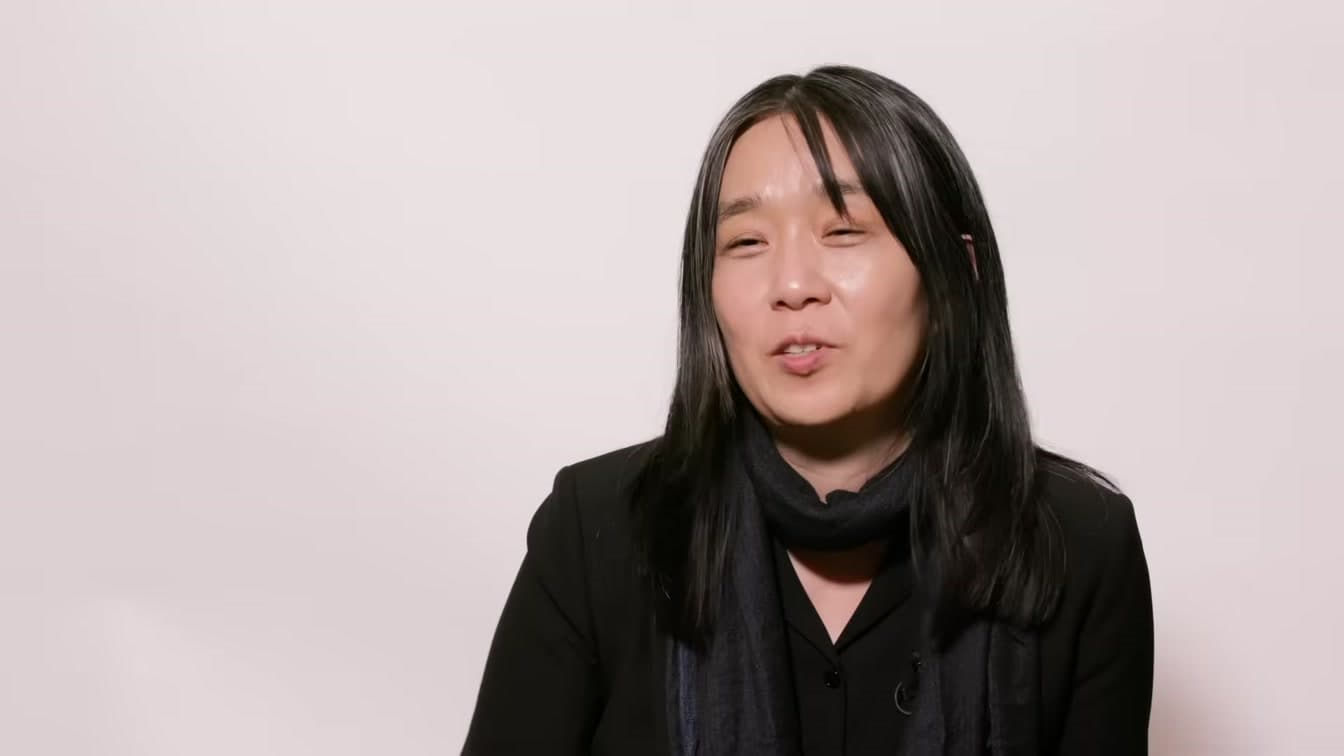
Korean literature has just crossed a landmark milestone: 3.58 million copies sold overseas in five years, with annual global sales holding steady at approximately 1.2 million copies for two consecutive years. New data released by the Literature Translation Institute of Korea (LTI Korea) confirms that the worldwide appetite for Korean fiction has grown into something far more durable than a Nobel Prize bounce.
The numbers cover 1,026 titles published between 2021 and 2025 with support from LTI Korea, spanning 40 language regions. Compared with the previous five-year cumulative total of 2.68 million copies, this represents a gain of 900,000 additional readers — and it is accelerating.
Han Kang's "We Do Not Part" Leads Every Chart
No title dominates this golden era of Korean literature quite like Han Kang's "We Do Not Part" (작별하지 않는다), a novel rooted in the trauma of the Jeju April 3 Incident. From 2023 through 2025, the book sold approximately 300,000 copies across 13 countries — the highest cumulative sales total of any title in the survey.
The geographic spread is as remarkable as the numbers themselves. The United Kingdom and France each recorded around 60,000 copies sold. Turkey, which has emerged as one of the most enthusiastic markets for Korean fiction, accounted for 40,000. Japan, Poland, and Italy each moved around 30,000 copies. Taiwan and Brazil both surpassed the 10,000-copy mark — reflecting a readership that now stretches from East Asia to South America to Eastern Europe.
LTI Korea's analysis points out that both new translations and previously published editions of Han Kang's work continued attracting readers across multiple language regions simultaneously. This simultaneous multi-market momentum suggests the Nobel Prize awarded to her in October 2024 did not merely create a short-lived spike, but rather unlocked a long-term global audience that keeps renewing itself.
Han Kang was recently spotted at the Avignon Festival in France on July 12, engaging with audiences in a "Talk with the Author" event — a visible signal that her international literary presence continues to expand well beyond the awards circuit.
Beyond One Author: A Broader Wave Takes Shape
What makes the 2025 report particularly striking is how much of the growth is happening outside Han Kang's catalog. The data shows that Korean literature is no longer dependent on a single star or a single genre, and that a diverse range of styles and voices is now resonating globally.
Hwang Bo-reum's "Welcome to the Hyunam-dong Bookshop" (어서 오세요, 휴남동 서점입니다) — a warm, introspective novel about a woman who opens a neighborhood bookshop as an act of personal healing — sold around 88,000 copies across six language editions. Its Turkish translation alone moved nearly 70,000 copies in 2025, with cumulative Turkish sales exceeding 160,000 copies since the 2023 local publication. Kim Ho-yeon's "Convenience Store by Night" (불편한 편의점), a similarly feel-good urban story, has sold approximately 66,000 copies in nine languages.
Yoo Young-gwang's debut novel "A Shop That Opens When It Rains" (비가 오면 열리는 상점) has sold around 16,000 copies in just two years since its English publication — a notably fast start for a first-time author entering the global market.
The institutional markers are also moving in the right direction. The number of titles selling more than 5,000 copies in a single year has risen to 50, up five from the prior survey. Among those, 28 titles cleared the 10,000-copy threshold — four more than in 2024. Seven titles have now sold at least 4,000 copies per year for three consecutive years, signaling that a cohort of Korean works is becoming genuinely perennial in international markets rather than fading after an initial surge.
Turkey's Unexpected Love Affair With Korean Fiction
Among all the geographic surprises in this year's data, Turkey stands out. The country is now one of the most dynamic and fastest-growing markets for Korean literature, with both literary fiction and comfort-driven stories performing at scale simultaneously.
The Turkish edition of "Welcome to the Hyunam-dong Bookshop" became the single best-selling Korean translation of 2025, while Han Kang's work also maintains strong Turkish numbers. LTI Korea researchers view this dual success as a meaningful indicator of market depth rather than narrow interest in a specific style.
"The fact that both works — different in nature — performed strongly in Turkey suggests that Korean literature's global appeal isn't converging on a single genre or trend," LTI Korea noted in its assessment. "One readership responds to historical gravity and literary depth; another seeks comfort and community. Both are finding what they want in Korean fiction."
Turkey joins established Korean literature markets like the United Kingdom, France, Germany, Spain, and Poland as a country where publishers are now investing consistently in Korean titles — a structural shift that benefits both emerging and established Korean authors.
Expanding Genre Diversity and New Markets
Beyond prose fiction, the data reveals healthy growth in adjacent areas. Kim Geum-suk's graphic novel "Grass" (풀), a testimony-based narrative documenting the experiences of Korean comfort women survivors during World War II, has sold more than 60,000 cumulative copies in Spain, with over 10,000 copies sold in 2025 alone. The title's sustained Spanish-language success shows that literary graphic works can carve out long-term readership in markets where Korean literary novels have also taken root.
The Chinese-language market also posted notable results. Author Jung Ji-ah's "My Father's Liberation Day" (아버지의 해방일지), published in Chinese in 2024, sold nearly 20,000 copies within its first year — a strong debut that adds to the evidence that Korean literary fiction is diversifying beyond its original strongholds.
Han Kang's own back catalog continues to generate significant sales beyond "We Do Not Part." Her "Greek Lessons" (희랍어 시간) in English is among the 28 titles that cleared 10,000 copies in 2025, further cementing her status as the single most globally read Korean literary author of this era.
What's Driving Sustained Growth
The structural story behind these numbers involves both institutional support and cultural momentum. LTI Korea has long operated as a behind-the-scenes engine for Korean literature's global expansion — identifying promising titles, funding translation costs, supporting rights exports, and facilitating relationships between Korean publishers and their overseas counterparts.
In 2026, the organization launched a new "K-Literature Global Package Support Program" designed to cover the entire international journey of a Korean title: from rights export through translation, publication, promotion, and critical reception. The goal is to build a more cohesive and long-range approach to overseas market development rather than relying on ad-hoc opportunities.
LTI Korea president Jeon Su-yong framed the data in explicitly structural terms. "Maintaining overseas sales of 1.2 million copies for two consecutive years, and exceeding 1,000 supported publications over the past five years, shows that the international spread of Korean literature is not a fleeting phenomenon," he said. "It is taking place on the foundation of a sustainable readership, and we will continue strengthening strategic translation and publishing support so that more diverse Korean literary works can meet readers around the world."
The comparisons with K-pop and K-drama are hard to avoid. Both of those cultural exports followed a similar arc — a breakthrough moment (a hit song, a viral drama) that created initial global interest, followed by a period of consolidation in which the breadth and diversity of the ecosystem grew to support something lasting. Korean literature now appears to be entering that consolidation phase, with a Nobel Prize playing the role that "Gangnam Style" or "Squid Game" played for other parts of Korean culture.
The next milestone to watch may be whether the current generation of Korean authors — Hwang Bo-reum, Cheon Seon-ran, Kim Geum-suk, and others — can replicate the kind of international staying power that Han Kang has demonstrated. Based on where the numbers are pointing, the answer appears to be yes.
How do you feel about this article?
저작권자 © KEnterHub 무단전재 및 재배포 금지
Entertainment Journalist · KEnterHub
Entertainment journalist focused on Korean music, film, and the global K-Wave. Reports on industry trends, celebrity profiles, and the intersection of Korean pop culture and international audiences.
Comments
Please log in to comment