From Survival Show Darlings to Electronic Edge — How Kep1er's 'Crack Code' Rewrites the Rules for Project Groups
The Girls Planet 999 group's bold pivot to hip-hop signals a new chapter — but it also reveals the harsh economics of K-pop contract renewals
 By Jang Hojin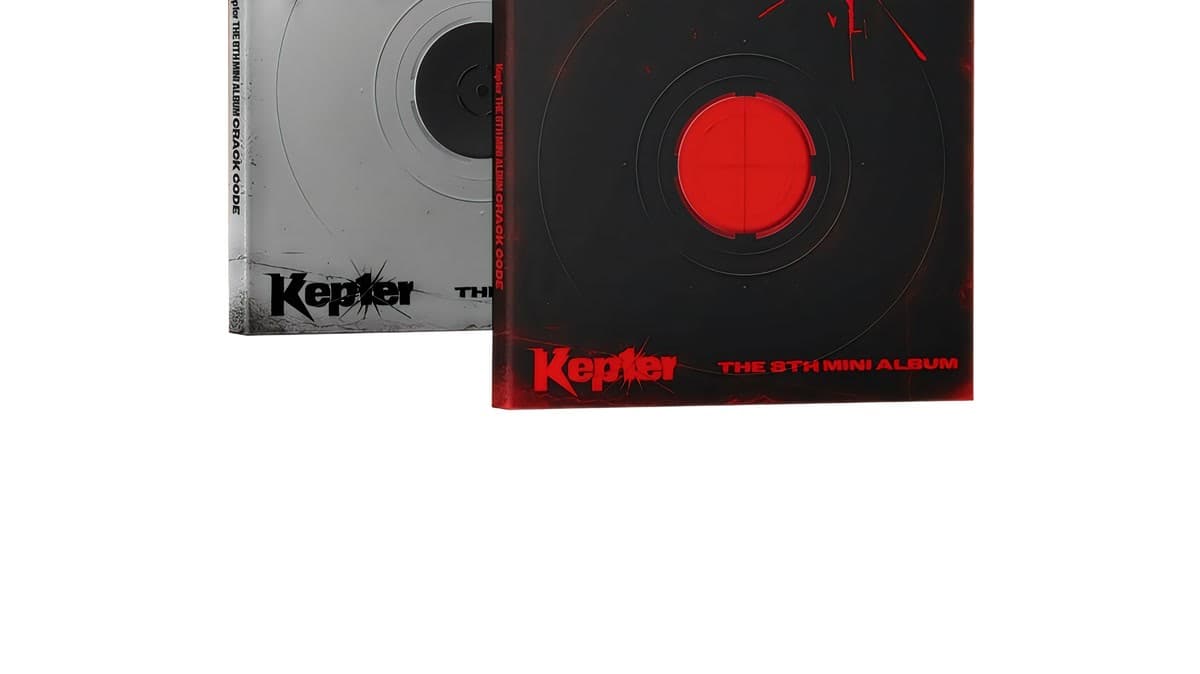
When Kep1er announced their eighth mini album Crack Code for a March 31 release, the title track alone told a story. "KILLA (Face the other me)" is built on electronic hip-hop — a genre miles away from the bright, energetic pop that defined the group since their formation on Mnet's Girls Planet 999 in 2021. This is not a subtle shift. It is a declaration.
The move matters far beyond Kep1er's own catalog. It speaks to a larger question facing K-pop's fourth generation: can a group born from a survival show reinvent itself enough to outlast the very format that created it? With Crack Code, the six remaining members are betting their answer is yes.
The Long Road From Nine to Six
Kep1er debuted as a nine-member group on January 3, 2022, with First Impact shattering expectations. The album sold 150,153 copies on its first day alone, setting a Hanteo record for the highest first-day sales by any girl group debut album at the time. Within ten months, the group had crossed one million cumulative album sales across three releases — First Impact, Doublast, and Troubleshooter — a pace that few fourth-generation acts could match.
But survival show groups operate on borrowed time. When Kep1er's original contract neared its July 2024 expiration, the industry watched closely. Seven of nine members chose to stay, making Kep1er the first Mnet survival show group to successfully extend its contract — an unprecedented decision in an ecosystem where disbandment was the only expected outcome. Mashiro and Yeseo departed after the group's July concerts in Yokohama, and the lineup continued as seven.
Then came March 2026. Seo Young-eun's departure reduced Kep1er to six members: Yujin, Xiaoting, Chaehyun, Dayeon, Hikaru, and Huening Bahiyyih. Each departure has forced the group to redistribute vocal parts, reconfigure choreography, and — most critically — reconsider who they are as artists. The question was no longer whether Kep1er could survive, but whether they could evolve fast enough to justify their continued existence.
Why the Genre Pivot Changes Everything
The concept photos for Crack Code confirm the transformation visually. Gone are the pastel palettes and playful aesthetics of earlier releases like Doublast and Magic Hour. In their place: dark tones, sharp styling, and an unmistakable girl-crush intensity that signals artistic maturity. The album packaging itself — a black-and-red target motif with shattered glass elements — looks nothing like anything in Kep1er's previous visual lexicon.
This is a calculated risk with measurable stakes. Kep1er's fanbase, known as Kep1ians, initially coalesced around the group's youthful charm and survival show camaraderie. Pivoting to electronic hip-hop means courting a different audience segment while hoping the existing fanbase follows. But the commercial data suggests the timing is right — or rather, that staying the course was no longer viable.
Their seventh mini album Bubble Gum, released in August 2025, debuted at number one on the Hanteo daily chart with 31,641 first-day copies. A solid figure on its own, but one that revealed stabilization rather than growth when measured against the group's earlier trajectory.
For a group that once moved nearly 400,000 copies per release, the numbers tell a clear story: the initial survival show momentum has faded. Crack Code needs to be more than just another comeback — it needs to redefine the group's commercial ceiling. The pivot to electronic hip-hop is, in essence, an attempt to reset audience expectations entirely.
The Tracklist as a Strategic Blueprint
Crack Code features five tracks: "I am Kep1," "KILLA (Face the other me)," "MIC CHECK," "You Know...," and "Addicted 2 Ya." The album opener, "I am Kep1," reads as a statement of identity reclamation — a necessary gesture for a group that has lost a third of its original lineup. It positions the remaining six members not as survivors of attrition, but as a self-determined unit choosing to move forward on their own terms.
"MIC CHECK" suggests hip-hop elements extending well beyond the title track, indicating that the genre shift is not a one-song experiment but an album-wide commitment. Meanwhile, "You Know..." and "Addicted 2 Ya" likely provide melodic contrast, ensuring the project does not alienate listeners seeking the emotional depth that Kep1er has historically delivered well.
The five-track format is lean by design. Rather than diluting the concept across seven or eight songs, Kep1er is betting on cohesion. Every track needs to reinforce the new identity, because Crack Code is not just an album — it is a proof of concept for the group's second life.
A Precedent With No Playbook
No Mnet survival show group has successfully navigated what Kep1er is attempting. I.O.I disbanded in 2017 after a single year. Wanna One followed suit in 2019. IZ*ONE dissolved in 2021 despite amassing massive commercial success and a devoted global fanbase. In each case, the contract structure — designed as a temporary project with a predetermined expiration — made continuation structurally impossible.
Kep1er broke that pattern by extending, but extension alone does not guarantee relevance. The group now competes against fourth-generation peers like IVE, NewJeans, and LE SSERAFIM, all of whom have established distinct sonic identities and enjoy robust sales figures. Kep1er's challenge is not simply survival; it is differentiation in the most saturated and competitive era K-pop has ever seen.
The electronic hip-hop pivot is their answer. By moving away from the bright, concept-driven pop that characterized their early work, Kep1er is carving a niche that few of their direct competitors currently occupy. Groups like NMIXX and Stray Kids have explored harder sounds, but among girl groups in the fourth generation, the electronic hip-hop space remains relatively uncrowded. It is a gamble, but for a group that has already beaten the odds once, calculated risk may be the only viable strategy.
What Comes Next
Crack Code drops on March 31, and its first-week sales will serve as the clearest indicator of whether the rebrand resonates. If the numbers climb above Bubble Gum's opening figures, Kep1er will have demonstrated that reinvention — not nostalgia for their survival show origins — is the path forward for project groups seeking permanence. If they falter, the conversation inevitably shifts to whether any group born from a competition format can truly outlive its origin story.
What makes this moment particularly significant is its potential ripple effect. Future survival show contestants, producers, and agencies will be watching Crack Code's reception closely. A successful genre pivot by Kep1er would establish a template: that project groups can transcend their manufactured beginnings by embracing radical artistic evolution. A failure would reinforce the conventional wisdom that such groups are, by nature, temporary.
Either way, Kep1er has already rewritten the rulebook simply by being here — four years and three lineup changes past their expected expiration date. The question now is whether anyone will follow the blueprint they are drawing.
How do you feel about this article?
저작권자 © KEnterHub 무단전재 및 재배포 금지
Entertainment Journalist · KEnterHub
Entertainment journalist specializing in K-Pop, K-Drama, and Korean celebrity news. Covers artist comebacks, drama premieres, award shows, and fan culture with in-depth reporting and analysis.
Comments
Please log in to comment