Frozen's Music Director Has Surprising Words for Korean Performers
 By Park Chulwon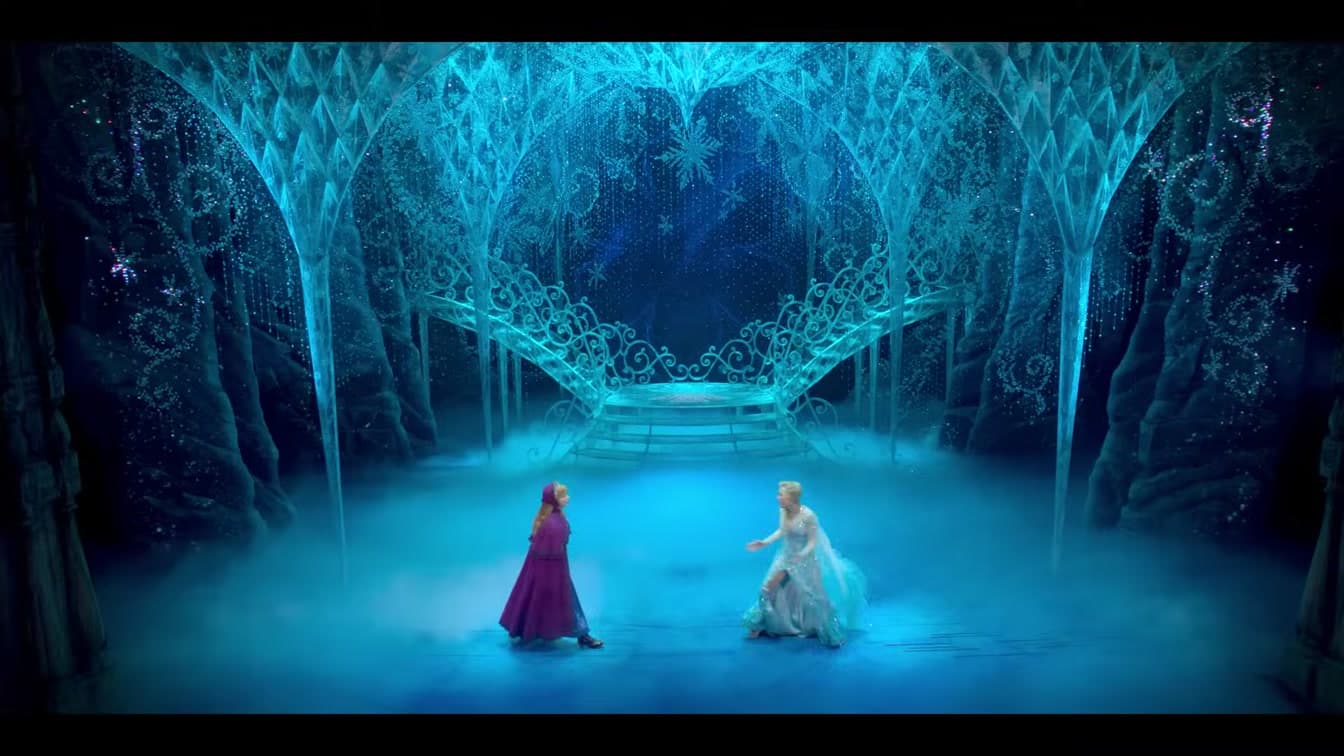
When the international creative team behind the global stage production of Frozen the Musical held its Seoul press event on July 16, music director Sebastian de Domenico said something that stopped the room. Korean actors, he explained, have a quality he hadn't encountered quite the same way elsewhere — and he traced it directly to K-pop.
"I can naturally sense the influence of K-pop in Korean actors' vocal style," de Domenico told journalists at a Seoul café. "Korean actors have a uniquely clean sound. It is very clear, unadorned, and a style that conveys emotion directly." For a musical production that has played to more than 11 million audiences worldwide across North America, the UK, Japan, Australia, Germany, and Singapore, de Domenico has heard a lot of casts. His observation about what makes Korean performers different carries weight.
An Audition Like No Other
The story of how that comparison crystallized is telling. During the Korean production's audition process, de Domenico made an unusual request. He asked each candidate not only to prepare the designated audition material but also to bring a K-pop song of their own choice. "I felt that Korean actors' vocals were K-pop-like because they instinctively have an outstanding melodic sense and musicality," he explained.
The decision wasn't a gimmick. De Domenico said it reflected how he understood the performers he was working with — and what he wanted the Korean production to preserve rather than override. "Rather than asking actors to abandon the style they are familiar with, I want to naturally blend each person's individuality into the show," he said. It's a philosophy that treats the existing vocal culture of Korean performers as an asset rather than an obstacle to be corrected.
The result, if de Domenico's enthusiasm is any indication, is a production that retains the show's established staging and musical framework while being shaped by the particular expressiveness Korean actors bring to it. He specifically highlighted their instinct for melody, their emotional directness, and the clarity of tone — qualities, he noted, that trace back to the intense vocal training culture that K-pop demands of its performers even before they make their debut.
Eight Years in the Making — And This Is the Version
Frozen the Musical has been touring the world since its Broadway debut in 2018. In that time, it has been refined through hundreds of performances across dozens of cities in multiple languages. The Korean production, which opens on August 13 in Seoul, is the beneficiary of all of that accumulated experience.
Director Adrian Sarple, who has helmed the production through its global run, framed the Korean staging in deliberately significant terms. "The Korean production is a version that integrates all the ideas and experiences accumulated over eight years of touring the world," he said. "It will be the most polished version of Frozen ever presented."
That claim is worth pausing on. A show in its eighth year of international performance has had time to identify what works and discard what doesn't — time to smooth the technical and staging challenges that even the best productions encounter in their earlier iterations. The Korean run arrives as the product of all of that learning, with a cast whose vocal approach de Domenico has described in terms of genuine excitement rather than diplomatic praise.
Why This Matters for Korean Musical Theater
There is a larger story embedded in de Domenico's comments. Korean musical theater has grown significantly in sophistication and scale over the past two decades, producing performers who move between original Korean productions, adaptations of international shows, and increasingly prominent roles in global productions. The K-pop training pipeline — which produces singers with exceptional technical control, stage presence, and vocal endurance — has fed into musical theater in ways that practitioners in the field have noted but that rarely receive this kind of direct acknowledgment from international creative directors.
When de Domenico says he couldn't separate the vocal style of Korean performers from the K-pop tradition they came up in, he is describing something that Korean audiences and industry insiders have long observed. The ability to project emotion clearly through melody, to hold a phrase without unnecessary ornamentation, to be technically precise while remaining genuinely expressive — these are skills cultivated through years of practice in both the idol training system and the dedicated musical theater programs attached to major arts universities.
The fact that an international music director, arriving with no particular stake in the local discourse, offered this observation unprompted makes it land differently than it might from a Korean source. It reads as a genuine report of what de Domenico encountered in the audition room rather than a promotional talking point.
What to Expect from the Seoul Run
Frozen the Musical is one of the most technically elaborate stage productions to reach Seoul audiences. The show is built around the emotional architecture of the 2013 Disney animated film — centered on the sisters Elsa and Anna, their estrangement, and the journey of reconciliation that follows. But where the film delivered its effects through animation, the stage version has to achieve a comparable sense of wonder through live performance, practical staging, and what de Domenico's work on the score brings to the material musically.
The production opens August 13 in Seoul. For audiences familiar with the film's beloved soundtrack — and for those who have followed the global theatrical run through coverage of its earlier productions in New York, London, and Tokyo — the Korean staging promises something specific: the same show, now shaped by performers whose voices carry a tradition de Domenico found genuinely remarkable.
The music director's comments are, in a sense, an advance review. After hearing thousands of auditions across a decade, he knows what the show sounds like when it works. In Seoul, he found something he wasn't quite expecting — and he wanted to talk about it. For Korean audiences, whose entertainment culture has shaped these very vocal qualities de Domenico admires, there is something quietly satisfying about hearing that acknowledged directly by someone from the outside.
How do you feel about this article?
저작권자 © KEnterHub 무단전재 및 재배포 금지
Entertainment Journalist · KEnterHub
Entertainment journalist focused on Korean music, film, and the global K-Wave. Reports on industry trends, celebrity profiles, and the intersection of Korean pop culture and international audiences.
Comments
Please log in to comment