G-Dragon's 'Übermensch' Broke IU's Streaming Record and Proved 12 Years Was an Absence, Not a Conclusion
A comprehensive analysis of the most commercially significant K-pop comeback of 2025
 By Park Chulwon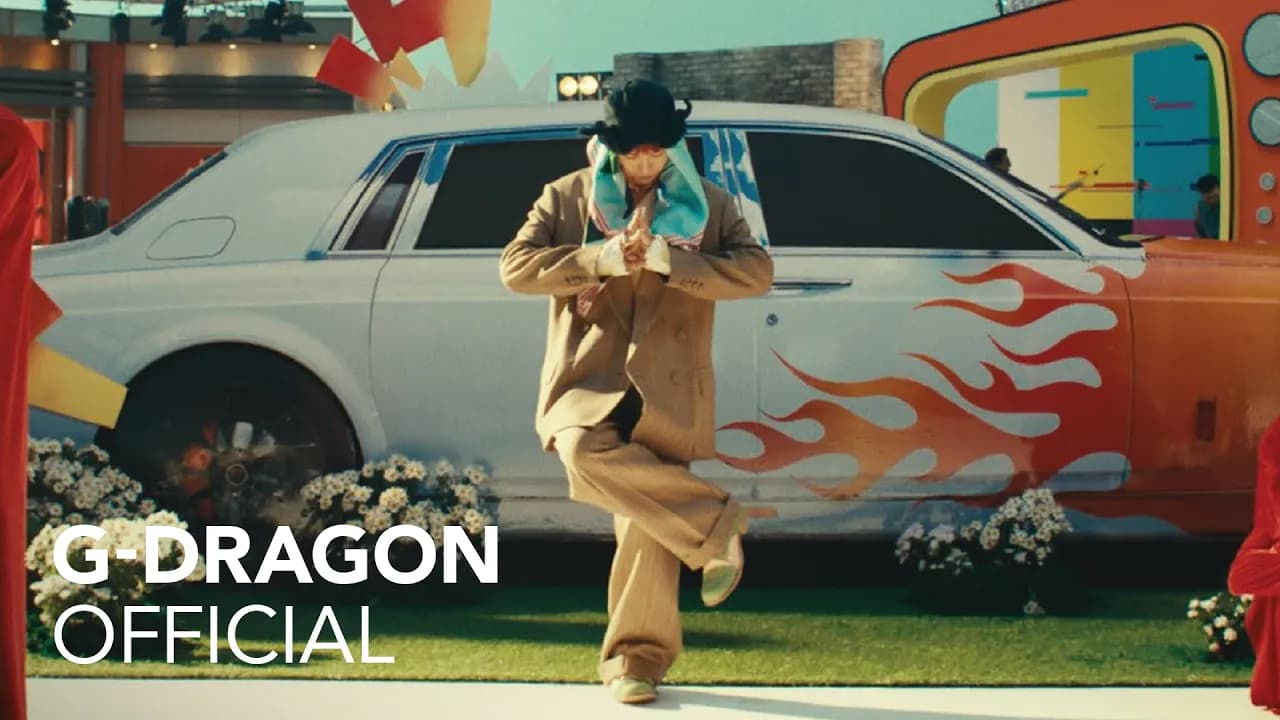
G-Dragon released "Übermensch" on February 25, 2025, his first solo full-length album in twelve years and his first release under Warner Music after leaving YG Entertainment in 2023. By the time the promotional cycle reached March — with the world tour's opening dates confirming that the commercial response was exceeding every projection — the album had already established itself as the year's most significant K-pop cultural event. First-day sales of 639,176 copies broke his own previous record by a margin that indicated not simply retained fandom but genuine expansion: a commercial performance that suggested new audiences alongside the reactivated existing ones. On Melon, the album generated 4.2 million cumulative streams in its first 24 hours, crushing IU's previous solo artist record of 3.18 million and placing the figure in a category previously occupied only by group releases. The streaming figure was particularly notable because Melon's algorithm favored organic listening over coordinated fandom streaming in ways that other platforms did not, and reaching 4.2 million streams within 24 hours required an audience beyond the organized GD fandom to be actively discovering the music independently.
The twelve-year absence that preceded "Übermensch" had not been twelve years of inactivity. BIGBANG had continued as a group through the mid-2010s into the early 2020s, with G-Dragon releasing material under that umbrella; there had been collaborations, appearances, and the extended drama of the legal and personal matters that had reduced his visibility from 2019 onward. But as a solo artist with a solo full-length album, the gap was genuine: "Coup d'Etat" in 2013 had been his last full-length solo statement, and the twelve years between that album and "Übermensch" represented a span large enough that a generation of K-pop listeners had entered the culture after G-Dragon's last solo peak and understood him primarily through reputation rather than active engagement. "Übermensch" was designed, among other things, to close that gap — to demonstrate that the reputation was not archival but current.
The Nietzsche Framework and What It Did for the Album
The choice of "Übermensch" as the album's title — drawing on Friedrich Nietzsche's concept of the individual who transcends conventional moral and social frameworks to create their own values — was either an artist claiming philosophical lineage that the album would need to justify or a marketing frame that elevated the commercial product into a cultural conversation. "Übermensch" was both, and the tension between those two functions was one of the album's generative qualities. G-Dragon had spent his career cultivating an aesthetic identity that positioned him at the intersection of Korean pop and global art and fashion culture, and the Nietzsche reference was consistent with that positioning: a frame that announced intellectual seriousness while remaining accessible enough not to alienate the commercial audience that solo album releases depended on.
The eight-track album structure was disciplined in a way that twelve-year absences from full-length solo work sometimes failed to produce. "Power" opened with the declarative energy appropriate to a return announcement — direct, physically commanding, sonically modern enough to place the artist in the current landscape rather than evoking 2013-era aesthetics. The production avoided the trap of nostalgia-baiting: there were no deliberate callbacks to "Crayon" or "One of a Kind" that would have positioned the album as a victory lap rather than a new statement. Instead, "Power" established that G-Dragon had been paying attention to twelve years of sonic development in Korean and global pop, and that he had arrived with an album that reflected that attention rather than ignoring it.
"Home Sweet Home" provided the emotional grounding that the opener's aggression required: a track that acknowledged the personal dimensions of the return, the specific quality of arriving somewhere after a very long time away and finding that both the place and the person returning had changed in ways that made the reunion neither simple nor simply welcome. The track's production, layered and introspective against "Power"'s forward momentum, demonstrated the dynamic range that a full-length album required and that EPs could not consistently sustain.
Track Deep-Dive: Collaborations and Sonic Architecture
"Too Bad" — featuring Anderson .Paak — represented the album's most internationally oriented collaboration, pairing G-Dragon's Korean hip-hop-rooted delivery with an American R&B producer whose Grammy-winning work with Silk Sonic had placed him at the intersection of retro soul and contemporary pop production. The collaboration was not simply a status-signaling feature credit but a genuine exchange of sonic sensibilities, and "Too Bad" demonstrated what happened when those sensibilities found common ground: a track that operated in international pop idioms without requiring G-Dragon to abandon the specific Korean textures that distinguished his production from Western equivalents.
"Drama" occupied the album's emotional midpoint and became one of its most broadly discussed tracks upon release. Where "Power" announced a return and "Home Sweet Home" processed it emotionally, "Drama" examined what the years of reduced activity had meant from the inside — the experience of watching a career that had been defined by constant forward motion enter a period of enforced stillness, and the creative and psychological work of transforming that experience into material rather than simply enduring it. The track's self-referential quality was unusual for an artist whose aesthetic identity had been built on projecting confidence rather than vulnerability, and it was precisely the departure from that template that gave "Drama" its emotional resonance.
"IBELONGIIU" served as the album's most intimate emotional statement, while "Gyro-Drop" — the track most frequently cited in domestic Korean audience discussions as the album's sonic peak — demonstrated that G-Dragon's production instincts for Korean pop remained sharp despite the years away from active domestic releases. The track's kinetic energy, built around a production framework that incorporated contemporary Korean pop conventions without being defined by them, offered evidence that the return was not simply a statement of continued existence but of continued creative vitality.
"BONAMANA" — the album's penultimate track — carried a title that Korean audiences would inevitably associate with Super Junior's 2010 hit of the same name, though G-Dragon's version shared nothing with that song beyond the title. The choice acknowledged the shared history of K-pop's second generation without being bound by it, a gesture toward the cultural landscape the artist had emerged from that was affectionate rather than retrospective. "Take Me" served as the album's penultimate statement before "Gyro-Drop" closed — an arrangement that prioritized emotional arc over commercial sequencing and reflected the artistic confidence that comes from having nothing left to prove to the audience already convinced.
Critical Reception and Cultural Context
The critical response to "Übermensch" was consistent in identifying it as G-Dragon's most coherent solo full-length and in finding the twelve-year absence to have produced, counterintuitively, an album more focused and directed than either of his previous solo full-lengths had managed to be. Pitchfork's review noted that "Übermensch" achieved what most reunion or comeback albums failed to — a genuinely forward-looking statement that used the gap as generative material rather than as a problem to be overcome through nostalgia or excessive contemporary alignment. The album was cited as evidence that K-pop's second generation, at its best, had produced artists whose creative intelligence was independent of the industry machinery that had originally elevated them.
Domestic Korean critical reception was extensive and largely enthusiastic, with multiple publications noting the Melon streaming record not simply as a commercial data point but as evidence of how G-Dragon had maintained his position in Korean pop consciousness through an absence that would have permanently diminished most artists' domestic standing. The streaming figure, accumulated through organic listening behavior rather than fandom coordination, indicated that the album had found audiences beyond the core GD fanbase — casual listeners who might not have organized their streaming around a first-day release but who encountered the music on Melon's recommendation algorithms and continued listening, driving cumulative numbers that the algorithm registered as genuine engagement rather than inflated fan-driven data.
The World Tour: 825,000 People and the Commercial Validation
The "Übermensch" world tour, which opened in Goyang in late March 2025, ultimately concluded with a total audience of 825,000 across its run — a figure that placed G-Dragon's solo tour among the largest in K-pop history for a single artist's promotional cycle. The tour's geographic scope expanded significantly from its initial Asian dates as demand in North America and Europe demonstrated that the international audience for G-Dragon was not simply the K-pop-organized fandom that followed Korean artists through official channels but a broader music audience whose awareness of him predated the current K-pop global expansion and had been maintained through his cultural visibility even during the years of reduced musical activity.
The Goyang opening provided the domestic commercial anchor that the international touring required. Korean audiences who had grown up with the second and third generations of K-pop, who remembered G-Dragon's BIGBANG peak and his position as K-pop's most significant crossover figure in the mid-2010s, had maintained their investment through the absence and arrived at the Goyang shows with the accumulated expectation of twelve years. The tour's live evidence — the performance quality, the production scale, the setlist that balanced "Übermensch" material with the catalog that had built the audience over two decades — confirmed that the investment had been sustained by something worth sustaining.
The North American leg of the tour produced some of the most commercially significant data points: sellouts in major markets that had not hosted G-Dragon solo shows since before the BIGBANG hiatus years demonstrated that his international commercial standing had not simply survived the reduced activity but had, in certain markets, been enhanced by the mythology that accumulated around an absence. The anticipation that a twelve-year gap between solo albums generated was a different commercial phenomenon than the anticipation generated by regular release cycles, and the tour's box office figures captured that difference in ways that streaming and sales data could not fully reflect.
The Warner Music Transition and Post-YG Independence
G-Dragon's departure from YG Entertainment in 2023 and his subsequent signing with Warner Music represented one of the most structurally significant artist transitions in Korean entertainment history. YG Entertainment had been the institutional context of his entire career — the company that had trained him, managed BIGBANG's commercial development, and provided the infrastructure for his most significant commercial and artistic achievements. The departure was not simply a label change but a redefinition of the institutional framework within which his career operated, and "Übermensch" was the first evidence of what that redefinition produced.
Warner Music's international distribution infrastructure gave "Übermensch" a global release capacity that YG's institutional network had provided in different form during the BIGBANG years. The difference was in the institutional logic: where YG's global distribution had been organized around the Korean entertainment industry's relationships with international markets, Warner's distribution was organized around the global music industry's established pathways, giving G-Dragon access to commercial channels that were not primarily defined by Korean pop industry networks. The 4.2 million Melon streams in 24 hours reflected the Korean domestic audience's response; the international tour's 825,000 total audience reflected what Warner's infrastructure could mobilize when the Korean domestic commercial event had demonstrated that the artist's commercial potential warranted the investment.
The independence from YG also produced observable differences in the album's aesthetic presentation. YG's house aesthetic — the visual language, stylist choices, and promotional framework that had defined the BIGBANG era — was absent from "Übermensch," replaced by a visual identity that G-Dragon appeared to have developed more directly in collaboration with the international fashion and art world relationships he had cultivated during the years of reduced musical activity. The album's cover art, promotional images, and associated visual material reflected a sensibility more closely aligned with luxury fashion and contemporary art contexts than with Korean pop industry conventions — consistent with G-Dragon's established positioning but executed with a freedom from institutional aesthetic constraints that the YG context had not provided in the same way.
Fashion, Cultural Impact, and the Broader Return Narrative
G-Dragon's return in March 2025 was not only a musical event but a cultural and fashion event of the first order. His reputation as K-pop's most significant figure at the intersection of music and global fashion had been sustained throughout the years of reduced musical activity through his continued presence in fashion contexts — the brand ambassadorships, the editorial appearances, the relationships with designers and fashion houses that positioned him as a cultural figure whose relevance was not dependent on active music releases. "Übermensch" reactivated the musical dimension of that cultural presence and demonstrated that the fashion and cultural credibility had provided not merely aesthetic continuity but a commercial asset: an audience that had maintained engagement through the fashion-world visibility was predisposed to engage with the musical return rather than approaching it as a stranger's comeback.
CHANEL, one of his most sustained brand partnerships, activated around the album's release in ways that amplified the cultural event beyond music industry channels — positioning "Übermensch" not simply as a K-pop release but as a cultural moment that warranted cross-industry attention. The album's press coverage reflected this cross-industry positioning: coverage in fashion publications alongside music publications, in art and culture outlets alongside Korean entertainment media, suggested an audience and cultural footprint significantly wider than a solo K-pop album release would typically generate. This cross-industry attention was not simply a byproduct of G-Dragon's established reputation but an active component of the album's promotional strategy, and the commercial results suggested the strategy had been effective.
G-Dragon and the Second-Generation Legacy in a Fifth-Generation Landscape
"Übermensch" arrived in a K-pop landscape that had been entirely remade since "Coup d'Etat." The fourth and fifth generation groups that dominated 2025's commercial conversations had grown up in a K-pop ecosystem partly shaped by the template G-Dragon had helped establish — the fusion of global fashion culture, hip-hop aesthetics, and Korean pop production that BIGBANG had made commercially viable in the years when Western music industry acceptance of Korean artists was theoretical rather than demonstrated. The artists who had been influenced by his aesthetic framework were now the commercial mainstream, and G-Dragon was returning to a landscape in which his innovations had been so thoroughly absorbed that they no longer read as innovations but as conventions.
The challenge of returning to a landscape shaped by your own influence was one that "Übermensch" navigated with varying degrees of success. The album's forward-looking tracks — the ones that engaged with current sonic conventions rather than retreating to the aesthetic territory where G-Dragon's innovations had been original rather than conventional — demonstrated that the navigation was possible. The tracks that felt most vital were those in which G-Dragon had absorbed the current landscape and responded to it on his own terms rather than on terms defined by his own legacy.
The Melon and Hanteo data suggested that the audience had not simply recalibrated "Übermensch" as nostalgia consumption. The streaming figure — which required active, organic listening behavior rather than coordinated fandom purchasing — indicated that the album was finding an audience that was engaging with it on current terms rather than on archival ones. The world tour's 825,000 total audience, spanning multiple continents, provided the live evidence that the engagement was translating into the physical commercial investment that concerts required. G-Dragon's return was not a retrospective celebration but a current commercial event, and "Übermensch" had earned that status on its own merits rather than on the borrowed credit of two decades of accumulated legacy.
Verdict: The Return That Proved the Absence Was Not the End
The twelve-year gap between "Coup d'Etat" and "Übermensch" could have been the kind of career interruption that permanently restructured an artist's commercial position — reducing a central figure to a legacy act, shifting the audience relationship from active engagement to historical appreciation. "Übermensch" demonstrated that the restructuring had not occurred, or at least had not occurred permanently. The 639,176 first-day sales, the 4.2 million Melon streams, and the 825,000-person world tour together constituted evidence that G-Dragon's absence had been exactly that: an absence, not a conclusion.
The philosophical framework embedded in the album title turned out to be not simply a marketing gesture but a reasonably accurate description of what the album attempted and, in its best moments, achieved: the construction of a new value system adequate to the present rather than derived from the legacy. "Übermensch" was not a retrospective album that revisited the aesthetic territories of G-Dragon's peak commercial period; it was a forward-facing one that used the foundation of what he had built to construct something oriented toward what came next. The album's disciplined eight-track structure, the collaborative intelligence of "Too Bad," the emotional candor of "Drama," and the sonic vitality of "Gyro-Drop" collectively demonstrated that the twelve years had not diminished the creative faculty but had, through the accumulation of experience and the necessity of processing what those years had contained, enriched it.
In March 2025 and through the tour that followed, the audience that had sustained their investment through twelve years of reduced activity found that the investment had been warranted. The übermensch had returned, and the music gave evidence that the concept was not merely claimed but earned. For the generation of K-pop listeners who had grown up knowing G-Dragon's name before knowing his music, "Übermensch" provided the first opportunity to understand the reputation through current experience rather than historical reference — and the album's commercial and critical performance suggested that the experience justified the reputation fully.
How do you feel about this article?
저작권자 © KEnterHub 무단전재 및 재배포 금지
Entertainment Journalist · KEnterHub
Entertainment journalist focused on Korean music, film, and the global K-Wave. Reports on industry trends, celebrity profiles, and the intersection of Korean pop culture and international audiences.
Comments
Please log in to comment