G-Dragon's 'Übermensch' Tracklist Decoded: What Anderson .Paak, Nile Rodgers, and LunchMoney Lewis Say About His Return
 By Jang Hojin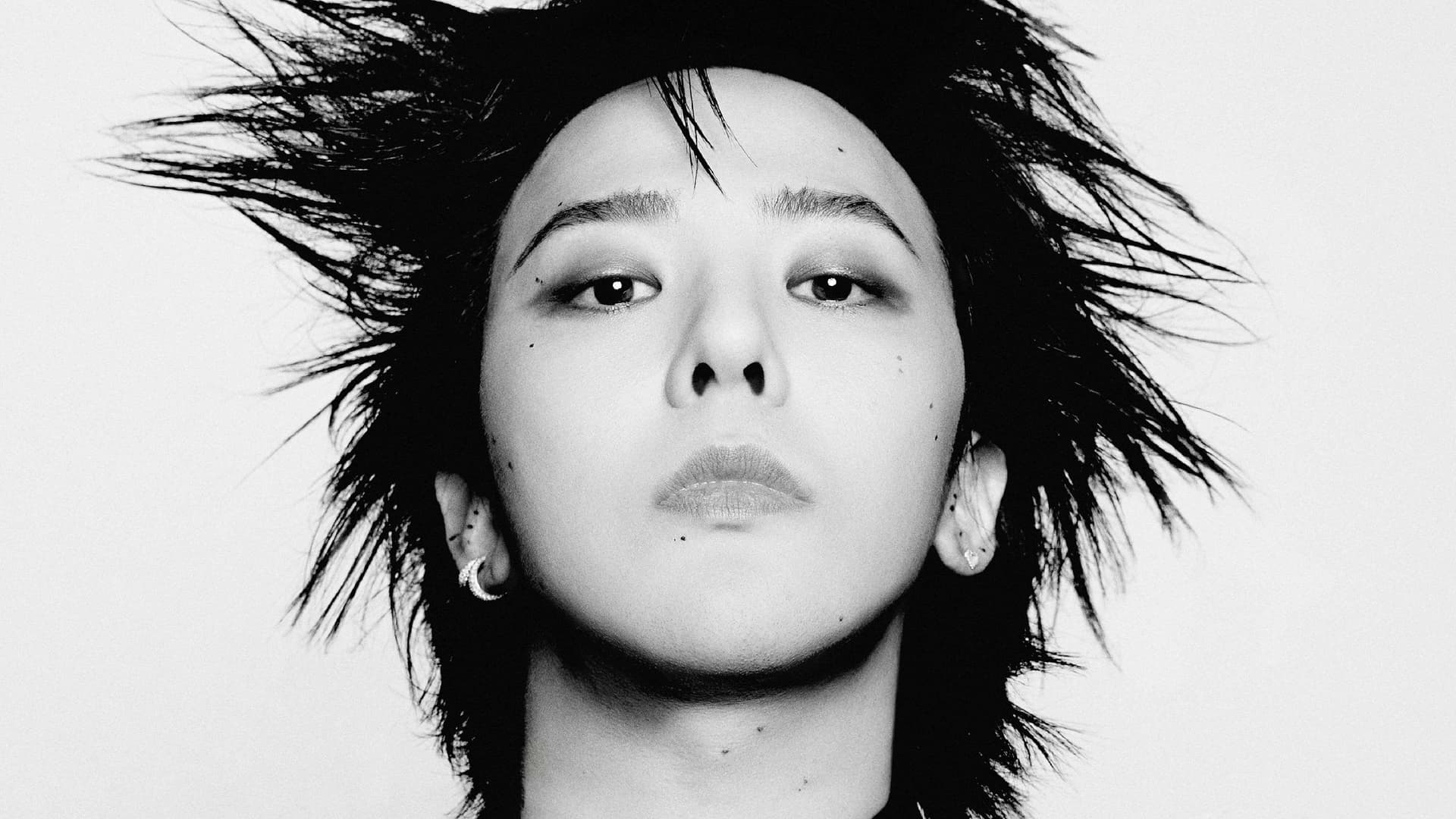
G-Dragon revealed the eight-track listing for "Übermensch" on February 10 — and the collaborator credits tell you more about it than any single track title does. The tracklist — "Power," "Home Sweet Home," "Too Bad," "Drama," "IBELONGIIU," "Take Me," "Bonamana," and "Gyro-Drop" — comes with Anderson .Paak on "Too Bad," Nile Rodgers on "Take Me," and LunchMoney Lewis on "Gyro-Drop." The three names together form a statement about exactly what kind of K-pop-adjacent record G-Dragon intends this to be, and how far outside K-pop's standard collaborative framework he is operating.
What the Collaborators Say About the Album's Musical Direction
Anderson .Paak is the most legible choice in the context of G-Dragon's existing catalog. .Paak's sonic territory — compressed funk, hip-hop percussion, melismatic vocal runs, productions that feel both live and heavily processed — overlaps with the aesthetic G-Dragon has been navigating since "Coup d'État" (2013), his previous studio album. Both artists work in a space where the line between hip-hop and R&B is deliberately blurry, and both tend to favor arrangements that prioritize groove over brute production weight. "Too Bad" landing with .Paak as a co-credit suggests a track built around rhythmic sophistication rather than maximalism.
Nile Rodgers on "Take Me" is the choice that reaches furthest back. Rodgers — the CHIC guitarist and Daft Punk collaborator who has built his second career on appearing in hits from David Bowie's "Let's Dance" through to Pharrell's "Get Lucky" — brings a specific signifier: his sound reads as prestige-disco-heritage, a marker of having engaged with the lineage of Black American dance music at the source rather than through its derivatives. For a Korean artist releasing his first album independently, having Rodgers's name on a track does cultural work that goes beyond the sonic contribution; it places G-Dragon in a canon of artists who treat Rodgers as a quality signal.
LunchMoney Lewis functions differently from both. Where .Paak and Rodgers carry genre-specific prestige, Lewis brings an atmosphere: a loose, melodic pop-funk sensibility that keeps productions from getting too dense. His appearance on "Gyro-Drop" — the most evocative track title on the album — hints at something playful and momentum-driven within what is otherwise a tracklist that leans into philosophical weight.
The Post-YG Context: Galaxy Corporation and Empire Distribution
"Übermensch" is the first album G-Dragon releases entirely outside the YG Entertainment infrastructure he occupied from his trainee years through 2023. The label situation matters because YG's production apparatus has always been entangled with how G-Dragon's studio albums were made — the house producers, the house aesthetic, the label's marketing and international distribution frameworks. "Übermensch" comes through Galaxy Corporation, G-Dragon's own label, distributed by Empire Distribution in international markets. Empire is not a mainstream major; it is a distribution and services company that has worked with artists like T.I., French Montana, and Tyga, and is associated with US hip-hop and urban music rather than K-pop's established international rollout paths.
That distribution choice, alongside the collaborator list, signals that G-Dragon is not approaching this album through K-pop's standard Western market pathways — the major label distribution deal, the radio promotion campaign, the streaming editorial placements. He is releasing it through US hip-hop infrastructure while filling the tracklist with high-prestige names from that context. Whether that strategy produces different streaming or chart outcomes than a YG-adjacent Korean major label approach would have is the commercial experiment embedded in the album's entire structure.
Twelve Years: What Übermensch Is and Isn't
The twelve-year gap between "Coup d'État" and "Übermensch" — with only the mixtape-adjacent "Kwon Ji Yong" (2017) in between — means that G-Dragon's studio album debut for the current generation of K-pop listeners will land without the accumulated context that his core fanbase carries. For listeners who were ten years old when "Coup d'État" came out, "Übermensch" is not a return but an introduction. The album title itself is doing philosophical work that requires some translation: Friedrich Nietzsche's Übermensch (often rendered as "overman" or "superman") is not a superhero concept but a philosophical framework about self-overcoming, the creation of values rather than adherence to inherited ones, and the transformation of the self through will.
Applied to an album released twelve years after a previous studio record, with entirely new label infrastructure, Western hip-hop collaborators, and a genre blend described as hip-hop, industrial pop, and alternative electronic, the title becomes a statement of intent. G-Dragon is not presenting "Übermensch" as a continuation of where "Coup d'État" left off. He is presenting it as an album made by someone who has moved past his previous artistic identity and is building a new one from material that bears little resemblance to the scaffolding it replaced.
The pre-release singles "Power" and "Home Sweet Home" are already in circulation, giving listeners partial entry into what the full album sounds like before February 25. "Power," released alongside the Übermensch World Tour announcement, established the industrial electronic framework early — a dense, compressed production with G-Dragon placing his vocals over machine-driven percussion in a way that reads as deliberately different from his mid-2010s K-pop production context. "Home Sweet Home" took a different register, suggesting the album's tonal range is wider than either single captures alone.
The weight of the full collaborator list — .Paak, Rodgers, Lewis alongside G-Dragon's own co-production — will land differently as a complete eight-track record than as individual tracks assessed in isolation. Whether the whole coheres as a listening experience or functions as an impressive but uneven showcase of strategic partnerships is the question February 25 will answer. Eight tracks is a tight canvas; if the industrial electronic framework of "Power" and the hip-hop warmth of an Anderson .Paak collaboration exist on adjacent tracks, the album will need something to make the transitions feel intentional rather than documentary.
How do you feel about this article?
저작권자 © KEnterHub 무단전재 및 재배포 금지
Entertainment Journalist · KEnterHub
Entertainment journalist specializing in K-Pop, K-Drama, and Korean celebrity news. Covers artist comebacks, drama premieres, award shows, and fan culture with in-depth reporting and analysis.
Comments
Please log in to comment