G-Dragon's Seoul Encore Sold Out in Eight Minutes: What the Übermensch Numbers Mean for K-Pop Touring
With 820,000 fans across 39 shows and a domestic encore sellout that took less time than a coffee order, G-Dragon has reset the commercial ceiling for Korean solo acts
 By Jang Hojin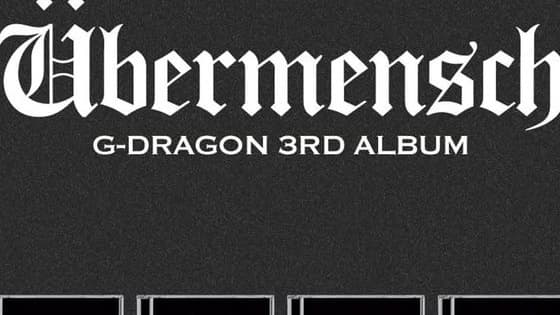
G-Dragon's Seoul encore tickets for the Übermensch world tour sold out in eight minutes flat. The instant sellout crystallized exactly what kind of market force the BIGBANG leader remains — more than a decade into a solo career that has consistently redefined what Korean solo artists can achieve on the global stage.
The October ticket sale was not a surprise to anyone who had tracked the Übermensch tour since its March launch at Goyang Stadium, where 60,000 tickets were exhausted the moment they became available. What the encore sellout confirmed, however, is that the demand curve for G-Dragon live performances has not flattened. If anything, it has steepened.
The Scale of Übermensch
The 2025 Übermensch world tour — named after Friedrich Nietzsche's concept of the "overman" — ran through 17 cities across Asia, North America, and Europe, drawing an audience of over 820,000 fans across 39 shows. The Korean version of the tour title, 위버맨쉬, reflects G-Dragon's deliberate interweaving of Western philosophical reference with K-pop visual spectacle, a combination that has defined his aesthetic since the BIGBANG era.
Phase one opened in Seoul before moving through Tokyo and Osaka, then extending to Bulacan, Macau, Taipei, Kuala Lumpur, Jakarta, and Hong Kong. Phase two expanded the tour's geographic scope to North America — Newark, Las Vegas, and Los Angeles — before crossing to Paris. A final Asia leg wrapped in Singapore, Kuala Lumpur (a return), Hong Kong, Bali, and Jakarta, closing on September 27.
Why Eight Minutes Tells the Whole Story
The encore sellout speed functions as a compression of everything that defines G-Dragon's market position. Standard K-pop ticket dynamics typically involve high demand for initial releases followed by a flattening of urgency as tours extend. The Übermensch encore inverted this pattern — demand accelerated rather than moderated as the tour reached its conclusion.
Several factors converged to produce that outcome. First, the Seoul finale carries different symbolic weight than any other stop: G-Dragon is Seoul, and Seoul audiences approach his local performances as cultural events rather than concerts. Second, the encore was positioned as a definitive sendoff, which transformed each ticket into something closer to a keepsake than an entertainment purchase. Third, and perhaps most structurally important, Galaxy Corporation's ticketing strategy for Übermensch consistently undersupplied available inventory relative to actual demand — a deliberate mechanism for sustaining perceived scarcity throughout the year.
The eight-minute sellout, then, is less a ticket metric than a signal about the durability of G-Dragon's cultural authority over his domestic fan base, even after years of reduced activity and public visibility.
The Solo K-Pop Touring Benchmark
The 825,000-fan attendance figure — confirmed across multiple Anglophone tracking sources — places the Übermensch tour in a category that has no direct Korean precedent. Solo Korean artists have historically underperformed their group counterparts in live revenue, partly due to smaller fandom bases and partly due to more conservative venue programming. G-Dragon's 2025 run challenged both assumptions simultaneously.
The North American and European legs broke regional Boxscore records for Korean solo acts, with the Prudential Center and Los Angeles dates producing revenue figures that rivaled the per-show averages of major Western touring acts. The Paris date, the only European stop, sold through quickly enough to prompt internal discussions about expanded European routing in future cycles — discussions that the encore sellout has likely accelerated.
What makes the commercial achievement analytically interesting is its timing. G-Dragon returned to active performing after a period of military service and legal proceedings that would have substantially damaged the trajectory of a less established artist. Instead, the Übermensch cycle functioned as a market re-entry that performed at a level the original career peak had not fully reached in global touring terms.
Impact and Industry Reading
South Korean entertainment agencies have been studying the Übermensch model throughout the year. The specific combination of philosophical branding, visual-art-adjacent staging, and tightly managed ticket supply created a commercial template that does not translate easily to younger or less established acts — but several elements, particularly the scarcity-driven ticketing approach and the multi-phase geographic structure, are already showing up in planning documents for 2026 tours.
Fan response to the encore announcement tracked across major platforms — Weverse, X, and fan community boards — skewed heavily toward relief rather than surprise. The prevailing sentiment among VIPs, G-Dragon's fandom, was that Seoul deserved a proper conclusion to a tour of this scale. The December shows will provide that. The eight-minute sellout confirmed that the audience agreed.
What Comes Next
The December Seoul encore closes the Übermensch cycle, but the trajectory it has established is likely to shape G-Dragon's next creative phase in ways that go beyond simple venue sizing. A tour that attracts 820,000 fans and sells out a domestic encore in eight minutes generates leverage — with streaming platforms, brand partnerships, and production collaborators — that a less commercially validated artist cannot access.
The Übermensch name was always a provocation as much as a title. Whether G-Dragon intends to sustain the momentum it generated, or to step back into another extended creative period, the sellout number will inform the conversation. In eight minutes, the market delivered its verdict on where K-pop's most singular solo act stands heading into 2026.
How do you feel about this article?
저작권자 © KEnterHub 무단전재 및 재배포 금지
Entertainment Journalist · KEnterHub
Entertainment journalist specializing in K-Pop, K-Drama, and Korean celebrity news. Covers artist comebacks, drama premieres, award shows, and fan culture with in-depth reporting and analysis.
Comments
Please log in to comment