GOT7's 'Winter Heptagon' Is a Masterclass in K-Pop Independence
How seven members across seven labels are rewriting the rules of group comebacks
 By Jang Hojin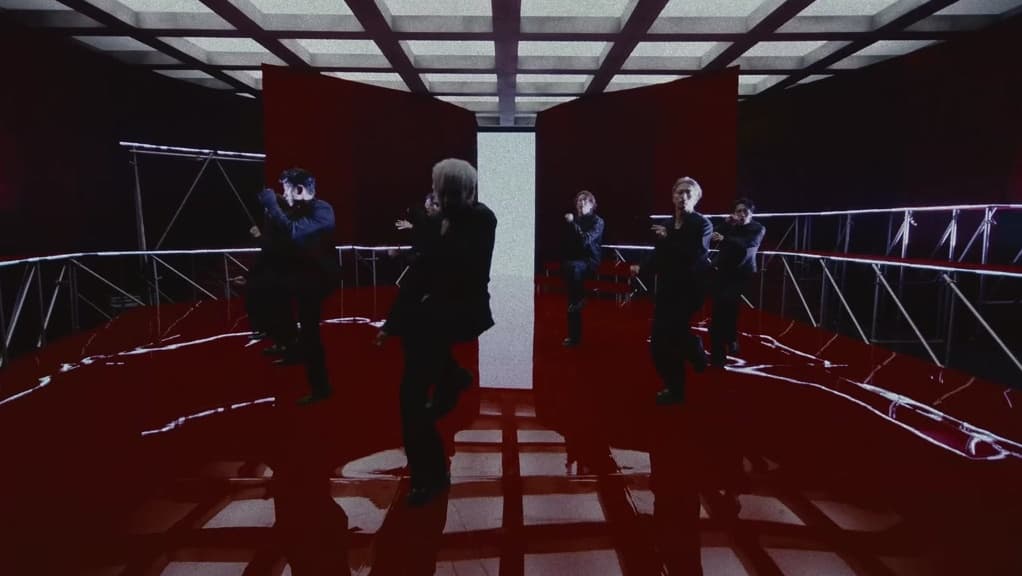
GOT7 will release their mini album "Winter Heptagon" on January 20, 2025. The comeback marks the group's first full release in three years, and all seven members are confirmed to participate.
The announcement sent immediate shockwaves through the K-pop community — not simply because one of the genre's most beloved groups was returning, but because all seven members had navigated the notoriously turbulent terrain of post-label independence and emerged intact. Pre-orders opened December 20, 2024, and within hours demonstrated that the fanbase known as IGOT7 had held its loyalty across every silent year. The lead single "PYTHON" has already set the tone: fierce choreography bathed in red light, signaling that this is no nostalgic reunion.
The Road to Independence
When GOT7 departed JYP Entertainment in January 2021, the K-pop industry offered its usual quiet prediction: the group would dissolve. History had made that expectation reasonable. Label departures typically fracture groups along commercial lines — members scatter to competing agencies, scheduling conflicts arise, and collective identity weakens until collapse.
GOT7 refused that trajectory. Each member signed with a different agency: Jay B with CDGM, Mark with AOMG, Jackson with his own Team Wang label in China, Jinyoung with BH Entertainment, Youngjae with Sublime Artist Agency, BamBam with his own label in Thailand, and Yugyeom with llegAcy Curation. Seven members, seven separate homes, zero central coordination.
What followed was four years of parallel solo careers conducted across vastly different markets. Jackson built a significant presence in mainland China. BamBam cultivated a distinct identity in Southeast Asia. Jinyoung pursued acting in Korean dramas and films. The diversity was radical — yet the group never formally disbanded, never issued a farewell statement, and never stopped publicly affirming one another. That sustained affirmation was not accidental. It was infrastructure.
The economics of maintaining a seven-person group without a central label are staggering. Coordination required negotiating with seven different management teams for scheduling, creative direction, and commercial rights. Album production demanded studio time, creative alignment, and promotional planning across time zones and national borders. That GOT7 managed this not once but twice — first with the self-titled EP in 2022, and now with "Winter Heptagon" — speaks to a level of organizational commitment that transcends industry convention.
What "Winter Heptagon" Represents
The album's title is a deliberate, layered statement. A heptagon has seven sides — seven members, visually codified into geometry. "Winter" grounds the release in a specific emotional season: quiet, stripped of distraction, the kind of cold that makes presence feel more precious.
The album also carries the weight of the group's 11th debut anniversary — their original debut landed on January 16, 2014. That the comeback is scheduled just four days after that date is deliberate punctuation. GOT7 is completing a sentence they began over a decade ago under very different conditions.
Compare this to other high-profile label departures. TVXQ split into two factions after leaving SM Entertainment in 2009. 2NE1 disbanded entirely after leaving YG. EXO lost members to individual contracts and never recovered full roster stability. GOT7 offers a genuinely different data point — a group that treated independence not as dissolution but as a structural experiment in collective autonomy.
The logistics of "Winter Heptagon" are themselves a kind of artistic statement. Every creative decision — from the album concept to the track sequencing to the visual direction of "PYTHON" — was made through collective agreement rather than top-down label instruction. The choreography in the music video, performed with an intensity that belies a three-year gap between releases, demonstrates that GOT7's performance chemistry has not diminished. If anything, the distance seems to have sharpened their awareness of what the group means when it moves as one.
Industry Impact
The K-pop industry has long operated on a model that concentrates power at the label level. Agencies control scheduling, image rights, promotional calendars, and artistic direction, and the implicit assumption has been that group cohesion is a product of centralized control. GOT7's continued existence challenges that assumption directly.
What GOT7 has demonstrated is that fan community can function as connective tissue in the absence of institutional infrastructure. IGOT7, the fanbase affectionately known as Ahgase, maintained organized international fan projects, streamed solo content across all seven members, and functioned as a distributed network that kept group identity alive. When GOT7 announced "Winter Heptagon," the fandom did not need to be re-recruited. It had never disbanded either.
For younger K-pop groups watching contract renewals approach, GOT7's model offers a framework: group identity can survive label separation, but only if the members themselves choose to preserve it and the fanbase is organized enough to hold the center.
Future Outlook
"Winter Heptagon" is only the first movement of what appears to be a larger reactivation. GOT7 has announced NESFEST, a live concert event scheduled for February 1-2, 2025, at the SK Olympic Handball Gymnasium in Seoul — a venue that signals confidence in the group's current commercial standing.
Whether this release represents a one-time reunion or the beginning of a sustained independent era remains to be seen. But the question itself marks a shift. Three years ago, the industry was asking whether GOT7 would survive. Now, with pre-orders open and a lead single already in motion, the question is something altogether different: not whether they can come back, but how far they intend to go. For an industry built on the premise that labels are the essential ingredient, GOT7 has offered a compelling counterargument: sometimes the most powerful thing a group can do is prove it does not need permission to exist.
How do you feel about this article?
저작권자 © KEnterHub 무단전재 및 재배포 금지
Entertainment Journalist · KEnterHub
Entertainment journalist specializing in K-Pop, K-Drama, and Korean celebrity news. Covers artist comebacks, drama premieres, award shows, and fan culture with in-depth reporting and analysis.
Comments
Please log in to comment