Han Kang Moves Avignon With a Korean-Language Stage Moment
 By Park Chulwon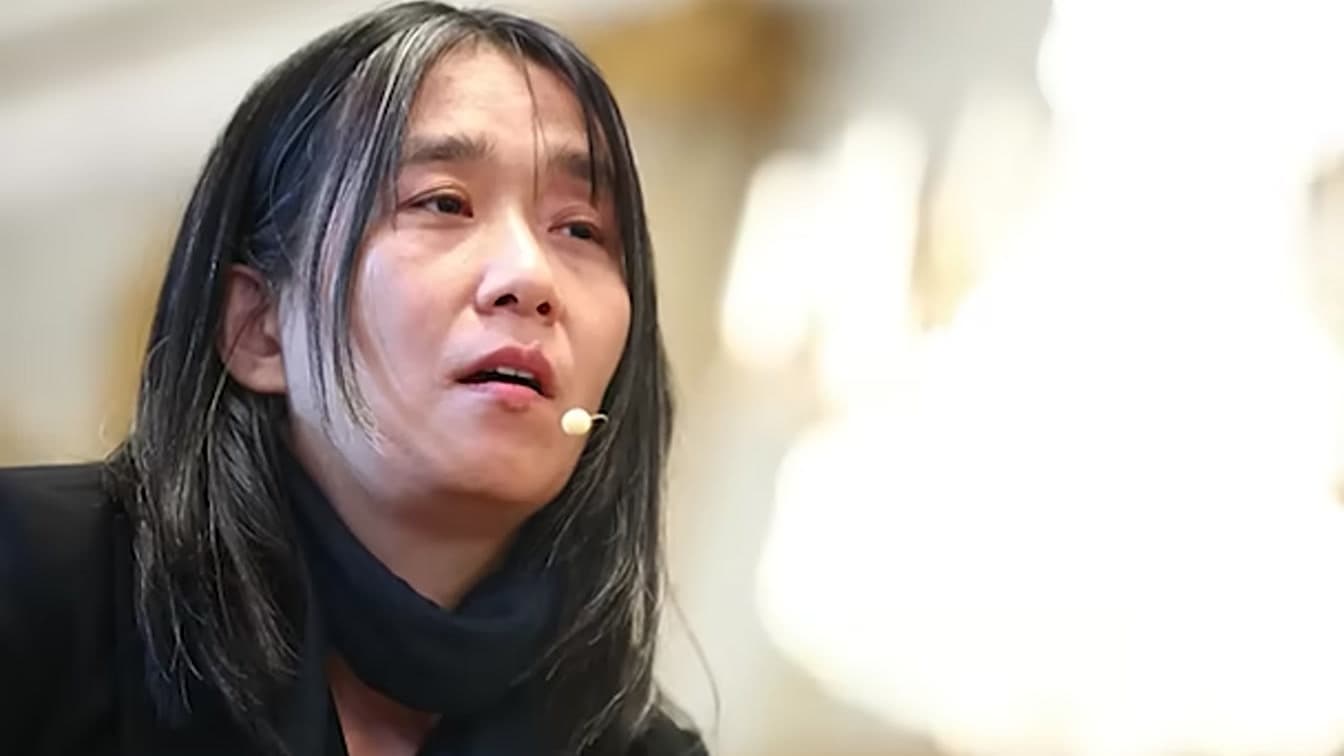
Han Kang’s words moved from the page to one of Europe’s most symbolic stages this week, as the Avignon Festival placed Korean language and memory at the center of its 80th edition. A reading performance based on Han’s novel We Do Not Part brought French actor Isabelle Huppert, Korean actor Lee Hye-young and the Nobel Prize-winning author herself before a packed audience at the Palais des Papes, turning a literary adaptation into a major global K-culture moment.
The performance, titled The Bird, opened on July 15 local time in the Honor Courtyard of the medieval papal palace, a venue closely associated with the prestige and scale of the Avignon Festival. Korean reports from the festival described all 1,900 seats as filled before the late-night reading began, with the palace walls used as a stark backdrop for a story rooted in personal grief, historical violence and the long aftermath of the Jeju April 3 tragedy.
The event also carried broader cultural weight because this year’s festival selected Korean as an official invited language for the first time. That decision, made during a year marking 140 years of Korea-France diplomatic relations, placed Korean literature, theater and performance in unusually visible conversation with European audiences.
A Korean Novel Finds a New Voice in Avignon
The Bird adapts the first section of We Do Not Part, Han Kang’s novel about a writer named Kyungha who travels through a snowstorm to Jeju at the request of her injured friend Inseon. The journey begins with the practical mission of saving a bird left alone in Inseon’s home, but it gradually opens into the buried pain of Inseon’s family and the mass civilian deaths connected to Jeju April 3.
Rather than turning the novel into a conventional play, French director Julie Deliquet shaped the piece as a reading performance. That choice kept language at the center of the work. Huppert and Lee stood onstage in white clothing and moved between French and Korean, allowing the audience to hear the different textures of the two languages while following projected French and English surtitles on the stone wall behind them.
Reports from the venue emphasized how restrained the staging was. The actors did not rely on elaborate sets or dramatic spectacle. Instead, they used voice, timing and small gestures to guide the audience from a hospital room to snow-covered Jeju and then into the historical memory that the novel refuses to leave behind.
Han appeared near the end of the roughly 90-minute performance and read a passage herself. Her presence changed the evening from an adaptation into a direct encounter between author, actors and audience. The performance ended close to midnight, and the applause reportedly continued long enough for Han, Lee and Huppert to return to the front of the stage for several more minutes of bows.
Why Lee Hye-young and Isabelle Huppert Mattered
The casting gave the performance a cross-cultural charge. Lee Hye-young, one of Korea’s most respected actors, carried the Korean side of the text, while Isabelle Huppert, an internationally recognized French screen and stage figure, gave the work a familiar voice for many European theatergoers. Together, they made the performance less a translation exercise than a dialogue between performance traditions.
For English-speaking readers who may know Han Kang mainly through her Nobel Prize and translated novels, this Avignon appearance shows how quickly her work is moving across formats. We Do Not Part is not simply being introduced abroad as a Korean literary title. It is being staged, heard and interpreted through major festival programming, which gives the novel a new public life beyond bookstores and prize coverage.
The festival is also presenting another adaptation of the same novel. Italian theater artist Daria Deflorian is staging a separate work based on We Do Not Part at the Cloister of the Carmes through July 18. Deflorian, who previously adapted Han’s writing for the stage, said after visiting Jeju and the April 3 Peace Park that the island’s landscape changed the way the novel reached her on a second reading.
That parallel programming matters because it shows Avignon treating Han’s novel not as a single prestige guest event, but as a work capable of supporting multiple theatrical approaches. One production foregrounds the sound of the text through a bilingual reading. The other turns the whole novel into a fuller stage adaptation. Together, they frame Korean literature as active material for global theater rather than as a distant subject of admiration.
Han Kang’s Message After the Nobel Spotlight
Han’s appearance in Avignon was also notable because it came after a period of relative quiet following her 2024 Nobel Literature Prize. In a meeting with Korean reporters at the festival, she said the attention after the award had been burdensome, but that time had made it feel lighter as the literary world moved toward new cycles and new laureates.
Her comments did not focus on celebrity. Instead, she spoke about language, hatred and the responsibility to recognize social wounds before they are buried by the next controversy. Discussing the rise of hatred in Korea and around the world, Han described it as a serious problem that society must learn how to turn away from. She also suggested that hope begins when people agree that hatred is not normal but something that must be named as a problem.
Han connected that concern to recent debate in Korea over students accused of mocking the May 18 Democratic Uprising during a baseball game. She did not present herself as someone with a simple answer. Her point, as reported by Korean outlets, was that shocking incidents should not be allowed to disappear under the next shock. They should become moments for teachers, older generations and society more broadly to ask what has failed and what can still be repaired.
That theme sits naturally beside We Do Not Part. The novel asks how people live with violence that others would rather forget. In Avignon, the same question reached a public space where many spectators may not have detailed knowledge of Jeju April 3 or modern Korean history, but could still follow the emotional movement of grief, remembrance and care.
A Global K-Wave Moment Beyond Pop Music
For years, the global Korean wave has often been described through K-pop, dramas, films and streaming hits. The Avignon Festival’s Korean-language focus points to a wider picture. Korean culture is no longer traveling only through fan communities and entertainment platforms. It is also moving through literary translation, theater festivals, public conversations about history and collaborations among major international artists.
That does not make the story less accessible. The emotional hook is clear: a Korean novel about memory and loss was heard in Korean and French by a full audience in one of Europe’s most storied performance spaces. The larger significance is that the work did not have to flatten itself for global consumption. It kept its Korean language, its Jeju setting and its historical weight, while still reaching spectators who came from outside that context.
The audience reaction suggests that the performance met that challenge. One French attendee quoted in Korean coverage said the experience of hearing Korean through a novel was unusual, and that even without deep knowledge of Korean history, the feelings of sadness and mourning came through. That response captures why the Avignon appearance is important: the performance did not erase cultural specificity, but it gave audiences a way into it.
After Avignon, The Bird is expected to reach Korean audiences at the Seoul Performing Arts Festival in October. By then, the production will return to Korea with a new layer of meaning: a Korean-language work that traveled to France, met a 1,900-seat European audience under the open night sky, and came back as proof that Han Kang’s literature is becoming a shared stage language.
The moment is not just about one famous author, one festival or one night of applause. It is about how Korean stories of pain, survival and memory are being carried by performers across languages. In Avignon, Han Kang’s sentences did what literature at its strongest can do: they asked strangers to listen carefully, and for a little while, they did.
How do you feel about this article?
저작권자 © KEnterHub 무단전재 및 재배포 금지
Entertainment Journalist · KEnterHub
Entertainment journalist focused on Korean music, film, and the global K-Wave. Reports on industry trends, celebrity profiles, and the intersection of Korean pop culture and international audiences.
Comments
Please log in to comment