Hanroro's Ipsun Climbs After Masked Busking
 By Jang Hojin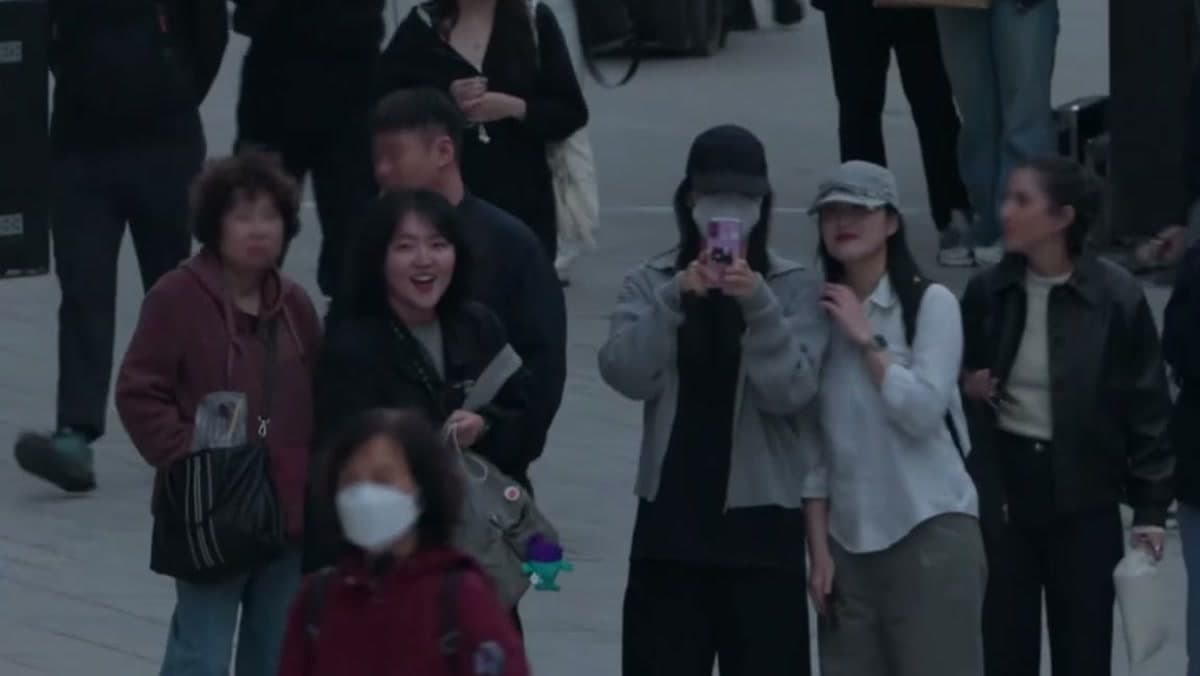
Hanroro's "Ipsun" has turned a masked street performance into one of the week's most interesting Korean music stories. The song, first released in 2022, is climbing again on Melon after Jung Seung Hwan performed it on Young K's YouTube busking project, giving a four-year-old single the kind of second wind that usually comes from a drama placement, a festival clip or a sudden social-media loop.
The timing explains why the story is moving through Korean search. Google Trends KR picked up Hanroro as a live keyword this week, and the source articles around that keyword point to a clear trigger: a May 26 episode of Project PRANK 2 on Young K's channel Gong K. Jung Seung Hwan appeared in the episode wearing the season's dog-mask concept, sang Hanroro's "Ipsun" in an outdoor busking setting, and left viewers treating the performance less like a simple cover than a rediscovery of the song itself.
What makes the moment stronger than a normal cover clip is that the chart movement followed almost immediately. Reports cited Melon's daily chart as the main signal. "Ipsun" had been moving around the lower end of the Top 100, then rose to No. 94 on May 27, No. 91 on May 29, No. 84 on May 30, No. 70 on May 31, No. 67 on June 1 and No. 66 on June 2. By June 3, it had jumped to No. 52, a 14-place rise from the previous day and the song's reported personal high on the daily chart.
A Cover That Changed The Song's Public Temperature
Jung Seung Hwan's role in the resurgence is not just that he performed a popular indie song. It is that his vocal identity reframed it. Hanroro's original "Ipsun" is already known among Korean listeners for its sense of youth, renewal and emotional pressure. Jung's version leaned into a different texture: a ballad singer's restraint, a less polished street setting, and the strange anonymity created by the mask.
That anonymity mattered. In the episode, Jung described the performance as unusually freeing because passersby did not know who was singing. The setup removed the usual expectation attached to a recognized vocalist and pushed attention back onto the sound. For viewers, that became part of the appeal. The clip looked casual, but it carried a strong story: a singer famous for emotional delivery standing in the open, hidden behind a playful costume, making a familiar song feel newly intimate.
Online reaction quickly turned that reading into momentum. Korean coverage noted that viewers praised the performance as if Jung had made the song his own, with many comments focusing on how naturally the track fit his voice. Others treated the clip as proof of how powerful Project PRANK has become as a music discovery format. The performance did not need a comeback teaser, a music-show stage or a formal release. It needed one persuasive live take and a platform where fans could replay and share it.
The view count added a second layer of evidence. Newsen reported that the main Project PRANK 2 episode had passed 860,000 views by the afternoon of June 4, nine days after release. Short-form clips of Jung singing "Ipsun" had also crossed hundreds of thousands of views, pushing the combined official video traffic related to the song above 1.3 million. For an older single competing inside a crowded Korean streaming market, those numbers are enough to change awareness.
Why Hanroro's Trend Feels Different
Hanroro was not an unknown artist waiting for one viral cover to introduce her. She has already built a strong profile as a singer-songwriter, and her 2026 momentum has included attention around Jamong Salgu Club, a project that has appeared in book-market coverage as well as music discussion. That matters because the new "Ipsun" interest is not happening in isolation. It is arriving during a broader moment in which Hanroro's name is being searched through music, literature and youth-culture conversations at the same time.
The Google Trends source queue captured that overlap. Several of the pending trend items around Hanroro were not only about the chart reversal. Some referenced bestseller lists where Jamong Salgu Club appeared, while others placed her beside Korean literary and pop-culture topics. The strongest article angle, however, is still the song's chart revival, because it offers a simple public signal: people heard a performance, then the original recording rose.
This is also why the story has Discover potential. It has emotion, a visible performance hook, a measurable chart climb and a clean before-and-after structure. A fan does not need to follow Korean chart methodology to understand the narrative. A masked busking clip made listeners return to a four-year-old song, and the numbers moved. That is the kind of small but legible music-industry event that often travels beyond the existing fandom.
For Hanroro, the benefit is especially valuable because "Ipsun" is one of the songs that defines her songwriting voice. The single's title, often translated around the beginning of spring, already carries a built-in metaphor of seasonal change. A late-May and early-June revival gives that metaphor a second life. The song is not being introduced as a novelty; it is being re-heard as something listeners may have missed, or something they now understand through another singer's interpretation.
Young K's Project Is Becoming A Chart Catalyst
The other name in the story is Young K. As a DAY6 member and a musician with his own credibility as a vocalist and songwriter, he gives Project PRANK more weight than a standard variety-channel format. The show is built around a simple idea: invite singers into a busking environment, hide the familiar celebrity frame, and let the performance create the reveal.
Season 1 had already developed goodwill with guests such as 10CM, MeloMance's Kim Min Seok, RIIZE's Sohee and Tei. Season 2's Jung Seung Hwan episode suggests the project can do more than generate warm comments. It can send audiences back to streaming platforms. That is a meaningful shift for Korean music promotion, where live clips, festival fancams and YouTube shorts increasingly sit beside radio, music shows and playlisting as real discovery channels.
The project also suits Jung Seung Hwan's current image. He returned from military service with the kind of public memory that can either freeze a singer in past ballad hits or open space for a broader musical chapter. Performing "Ipsun" let him show taste as well as technique. It connected him to Hanroro's younger indie-rock audience while reminding longtime listeners of the emotional precision that made his voice recognizable in the first place.
That cross-audience effect is probably the most important reason the chart rise worked. Hanroro's existing listeners had a reason to revisit the track. Jung Seung Hwan's listeners had a reason to discover it. DAY6 and Young K fans had a reason to circulate the performance because it belonged to the Project PRANK universe. Those three audiences overlapped for long enough to create a visible streaming bump.
What To Watch Next
The next question is whether "Ipsun" can hold its new position or whether the jump remains a short-lived performance effect. The early pattern is promising because the song rose step by step before its larger June 3 jump, rather than appearing for a single day and disappearing. Sustained replay is what separates a viral clip from a true reverse-run hit.
There is also a release question. When a cover performance becomes this visible, fans often ask for an official audio version, a live-session upload or a collaboration stage. Nothing in the current reporting confirms such a plan, so it should be treated as fan demand rather than an announced schedule. Still, the appetite is clear: listeners want the emotional shock of the busking version to exist in a form they can return to as easily as the original track.
For now, the chart story belongs to Hanroro's song and the performance that revived attention around it. "Ipsun" did not become new because it changed. It became new because a different voice, a mask, a street audience and a highly shareable format made people hear what was already there. That is why this trend is more than a passing keyword. It is a reminder that in Korea's current music ecosystem, one sincere live moment can still move the chart.
How do you feel about this article?
저작권자 © KEnterHub 무단전재 및 재배포 금지
Entertainment Journalist · KEnterHub
Entertainment journalist specializing in K-Pop, K-Drama, and Korean celebrity news. Covers artist comebacks, drama premieres, award shows, and fan culture with in-depth reporting and analysis.
Comments
Please log in to comment