Hearts2Hearts Pushes RUDE! Into the Spotlight
 By Jang Hojin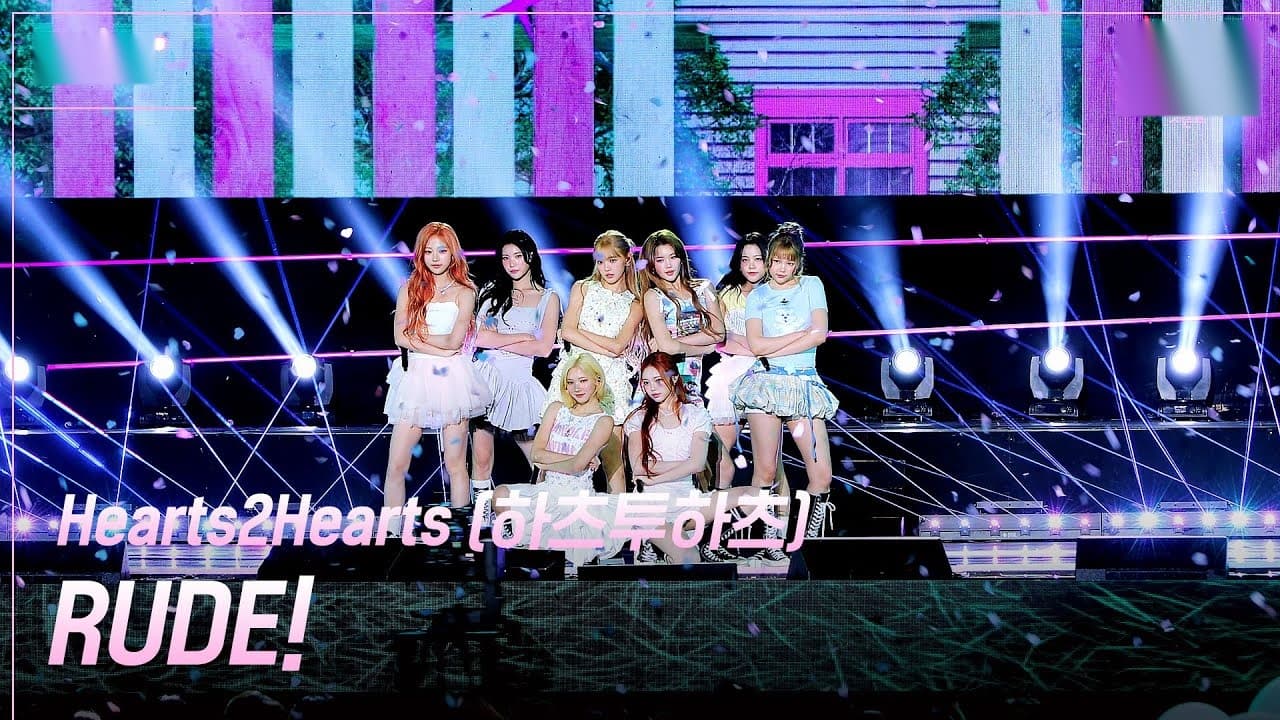
Hearts2Hearts brought “RUDE!” to a broader broadcaster audience through KBS Kpop’s official YouTube clip from The Seasons: Sung Si Kyung’s Gommagnamchin, giving the SM Entertainment girl group a polished live-stage asset at a key point in its early career. The June 12 broadcast video presents the group in the program’s horizontal performance format, where the emphasis falls on stage presence, group balance, and how the song reads outside a standard idol music-show setup. According to the KBS Kpop upload, the clip is part of the official The Seasons broadcast package, making it a reliable source for fans who want a clean version to share and revisit.
For a newer group, a stage like this carries more weight than its short runtime might suggest. Hearts2Hearts is still in the phase where each official appearance helps define public expectations. “RUDE!” offers a sharp title, a performance-ready attitude, and enough immediacy to work well in a television clip. When placed on The Seasons, however, the song also has to communicate beyond the fandom. It needs to hold the attention of viewers who may be discovering the group through KBS Kpop’s channel rather than through an agency teaser or algorithmic fan edit.
A rookie-stage test with broadcaster reach
The value of the KBS Kpop clip is that it tests Hearts2Hearts in a different context. Standard idol stages often foreground camera choreography, costume impact, and comeback-cycle energy. The Seasons offers a more curated setting, even when the performance remains upbeat. That can reveal whether a group’s concept travels well beyond its core promotional materials. In this case, “RUDE!” benefits from the contrast. Its direct title and confident tone stand out clearly, while the official broadcast production gives the performance a sense of legitimacy that fan-circulated snippets cannot provide.
Hearts2Hearts’ existing profile as an SM Entertainment girl group also shapes how the clip will be read. SM acts are often watched closely for vocal color, group formation, visual identity, and the way a concept fits into the company’s broader lineage. A performance on a respected broadcaster channel gives viewers another data point. It shows how the members occupy a stage when the setting is less dominated by agency branding and more connected to a public music program. That distinction is important for a group trying to move from curiosity to recognition.
The official upload also helps international fans. KBS Kpop is one of the channels global viewers already use to follow Korean television performances, and a clear clip title can place Hearts2Hearts in front of listeners who did not search for the group directly. For younger acts, discovery often happens through this kind of sideways exposure. A viewer may arrive for the program, the host, another guest, or a recommended performance, then leave with a new group name to follow.
How RUDE! reads on an official stage
“RUDE!” is built around attitude, and the challenge for any televised version is to keep that attitude controlled rather than exaggerated. The KBS clip gives the song a clean frame, allowing the group’s performance energy to carry the impact without excessive visual clutter. That is useful because early-career girl groups often need to show both precision and personality. Too much restraint can make a stage feel anonymous; too much force can make it feel unpolished. The performance aims for the middle ground where confidence is readable and the song’s hook can do its work.
The stage also supports the group’s identity by presenting Hearts2Hearts as a full ensemble rather than a concept image. Viewers can watch how members move through formation, how the performance distributes attention, and how the song’s mood is sustained across the runtime. Those details matter for fandom growth. Fans do not attach only to a title track; they attach to repeatable moments, recognizable expressions, and the sense that a group has an internal rhythm. Official clips help preserve those details in a format that can be replayed and discussed.
For K-pop coverage, the appearance is also a reminder that broadcaster YouTube channels now function as promotional infrastructure. A group no longer depends solely on the original television airing. The official upload becomes searchable, embeddable, and playlist-friendly. It can be shared across fan accounts, linked in articles, and used as a reference point in discussions about the group’s stage development. Hearts2Hearts gains not just a performance but a public artifact.
That public artifact is especially useful for a newer act because it fixes a specific stage in the group’s timeline. Fans can return to it later to compare confidence, arrangement choices, and camera presence as the team develops. For casual viewers, it reduces the distance between curiosity and recognition by presenting “RUDE!” in a trusted broadcaster environment.
Fan momentum and next steps
The expected fan response will likely focus on the group’s confidence and the usefulness of having an official live clip from The Seasons. For supporters, the video is easy to circulate because it comes from KBS Kpop rather than an unofficial recording. For casual viewers, it offers a low-friction introduction: the group name, song title, and program context are all clear from the upload, and the performance is short enough to sample without commitment.
That kind of accessibility matters for a group building momentum. Hearts2Hearts does not need every viewer to become a fan immediately. It needs repeated official touchpoints that make the name familiar and the performance identity legible. “RUDE!” on The Seasons contributes to that process by placing the group in a public music setting associated with both idol guests and established musicians. The stage says that the group can exist in the same broadcast flow as senior acts, solo vocalists, and cross-genre performers.
Looking ahead, the clip should help Hearts2Hearts maintain visibility between larger promotional moments. If the group continues to collect official performances across major channels, fans will have a stronger archive to point to and new listeners will have more entry points. For a rookie act, that archive becomes part of the brand. It shows growth, consistency, and the ability to adapt a song to different rooms. With “RUDE!” now added to KBS Kpop’s official performance ecosystem, Hearts2Hearts has another stage that can keep working long after the broadcast date.
How do you feel about this article?
저작권자 © KEnterHub 무단전재 및 재배포 금지
Entertainment Journalist · KEnterHub
Entertainment journalist specializing in K-Pop, K-Drama, and Korean celebrity news. Covers artist comebacks, drama premieres, award shows, and fan culture with in-depth reporting and analysis.
Comments
Please log in to comment