Heo Gyeong-hwan’s Catchphrases Get A Starry Twist
 By Baek Seoyun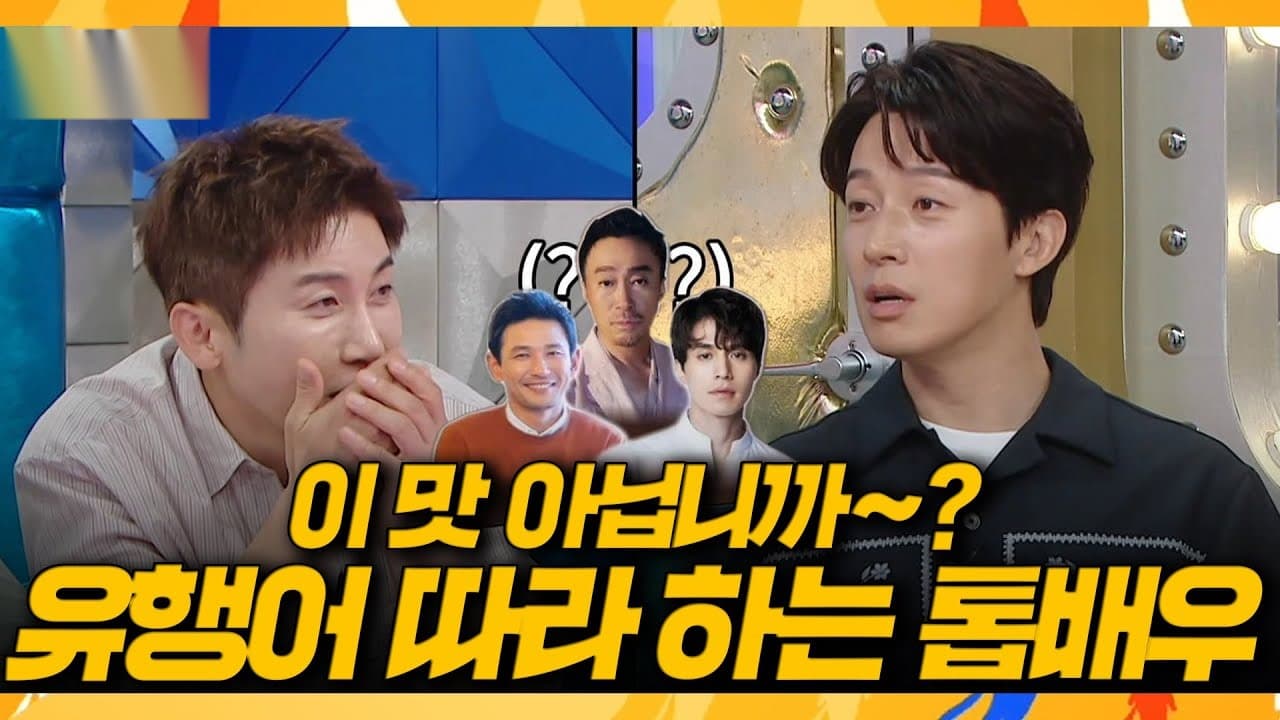
Heo Gyeong-hwan's latest Radio Star highlight turns a comedy anecdote into a surprisingly warm portrait of a performer enjoying a second wind. In the MBC Entertainment clip, Heo recalled realizing the reach of his old catchphrases when top actors at a Pinggyego awards event began debating which line best represented him. For a comedian who spent years pushing simple phrases until they became part of public memory, the moment sounded less like a joke than a career receipt.
Featured on MBC Entertainment, the segment centers on Heo's return to public attention and the strange afterlife of variety-show language. He explained that when Yoo Jae-suk raised a quiz about his famous lines, actors including Hwang Jung-min, Lee Sung-min, and Lee Dong-wook tried to work out the answer behind him. Heo described that scene with visible gratitude, saying in effect that hearing major actors recognize and argue over his material made him feel the years of repetition had not been wasted.
The topic fits Radio Star well because the program often turns small entertainment-industry memories into broader reflections on survival. Heo was not announcing a drama role, a new album, or a record-breaking project. He was talking about catchphrases, the oldest and sometimes most fragile currency in Korean comedy. Yet the highlight shows why those lines matter: they can travel farther than the original sketch, outlast the exact context, and become a shorthand for an entertainer's public identity.
A Second Heyday Built On Recognition
The phrase “second heyday” can sound exaggerated when applied to variety entertainers, but Heo's story gives it a concrete shape. He has been known for pushing catchphrases with stubborn consistency, sometimes to the point where fellow entertainers joke about his persistence. In the Radio Star conversation, that persistence became the source of the reward. The people remembering his lines were not only comedy fans; they were respected actors, gathered in a setting where his name appeared as a quiz answer.
Heo's reaction was telling. Rather than framing the scene as proof of his own greatness, he described feeling thankful. The image of famous actors quietly debating his catchphrase behind him seems funny on the surface, but it also captures a rare kind of validation. Comedians often work in repetition, risking failure every time a line does not land. When the same line eventually becomes recognizable across the industry, it means the repetition has entered shared culture.
The segment also reminded viewers how important Yoo Jae-suk's variety ecosystem has become in circulating older and newer entertainment references. A line that first belonged to Heo's comedy career can resurface through a quiz, become a memory test among actors, and then travel again through an MBC YouTube highlight. That is how variety culture now works: television, web programs, short clips, and social conversation constantly recycle the moments audiences remember.
Catchphrases As Comedy Memory
Heo and the Radio Star panel used humor to discuss something more serious: what remains of a comedian's work after the original broadcast has passed. He joked about wanting fellow comedians to remember his lines even at the end of his life, a darkly comic way of saying that catchphrases can become a performer's legacy. The panel's laughter kept the tone light, but the underlying idea was clear. In Korean variety, a line that survives can be as powerful as a signature role.
The conversation also touched on the risk of forcing a phrase before it is ready. Heo recalled a failed attempt connected to a debate-comedy format, explaining that he had tried to push another line but eventually accepted that it did not work. That admission gives the segment balance. It shows that catchphrase comedy is not simply about repeating anything loudly enough. Timing, situation, character, and audience acceptance all decide whether a phrase becomes memorable or disappears overnight.
That self-awareness is part of why the highlight feels generous rather than merely nostalgic. Heo is willing to laugh at the material that failed, not only celebrate the material that survived. For viewers who know him as a variety personality, the admission makes his current resurgence feel earned. It presents him as someone who understands both the absurdity and the craft of what he does.
Why This Radio Star Moment Resonated
For international fans of Korean entertainment, the clip is also a useful reminder that variety fame often operates differently from idol or drama fame. A singer may be remembered for a hit song, and an actor for a character. A comedian can be remembered for a phrase that audiences repeat at dinners, in online comments, or between friends long after the original sketch has faded. Heo's story shows that this kind of fame can appear modest but reach unexpectedly high places.
The mention of Hwang Jung-min, Lee Sung-min, and Lee Dong-wook gives the anecdote its punch because it crosses entertainment categories. These are actors with serious screen reputations, yet in Heo's memory they were caught up in a playful debate over variety-show catchphrases. That crossover is exactly what makes Korean entertainment culture so interconnected. Comedy lines, drama references, music hooks, and YouTube moments all circulate in the same public conversation.
The clip does not need a dramatic conclusion to work. Its appeal comes from watching a comedian recognize that people were paying attention after all. Heo's second heyday is not presented as a sudden reinvention, but as the delayed return on years of being recognizable, persistent, and willing to risk embarrassment for a laugh. In that sense, the Radio Star highlight gives fans a satisfying entertainment story: the joke kept going, and eventually the industry laughed with him.
That is why the anecdote works even for viewers who may not know every phrase being referenced. The emotional logic is easy to understand. A performer spends years trying to make people remember a rhythm, a gesture, or a comic word. Then, much later, he discovers that people from another part of the industry have been carrying those bits around too. The humor remains, but the scene also becomes a small recognition ceremony.
Radio Star's format sharpened that feeling because the hosts did not let the story become sentimental for too long. They teased Heo about old material, failed ad-libs, and the sometimes exhausting nature of catchphrase repetition. That push-and-pull kept the segment in the language of variety television. It allowed Heo to be grateful without turning solemn, which is exactly the balance that has helped many veteran comedians reintroduce themselves to younger audiences through clips.
For Heo, that may be the most valuable part of the current attention. A second heyday built on catchphrases is not about pretending the past is new again. It is about showing that familiar material can gain new meaning when audiences see the persistence behind it. The MBC highlight frames his old lines as living entertainment currency, still funny because people continue to trade them back and forth.
That continuing circulation is exactly why the story fits a YouTube highlight. It is short, easy to share, and built around names viewers recognize, but it also says something durable about comedy work: a line survives only when enough people keep choosing to remember it. That shared memory is the real punchline of Heo's current resurgence.
How do you feel about this article?
저작권자 © KEnterHub 무단전재 및 재배포 금지
K-Drama & TV Correspondent · KEnterHub
Television and drama correspondent covering Korean series from first script reading to finale. Baek Seoyun tracks casting news, OTT release strategies, and the creative teams behind Korea's biggest shows, with a particular interest in how K-dramas travel to global audiences.
Comments
Please log in to comment