H.O.T. Revealed god's Hit Show Was Originally Theirs
On the 30th anniversary of H.O.T.'s debut, Toni An drops the story Korean fans have waited decades to hear
 By Jang Hojin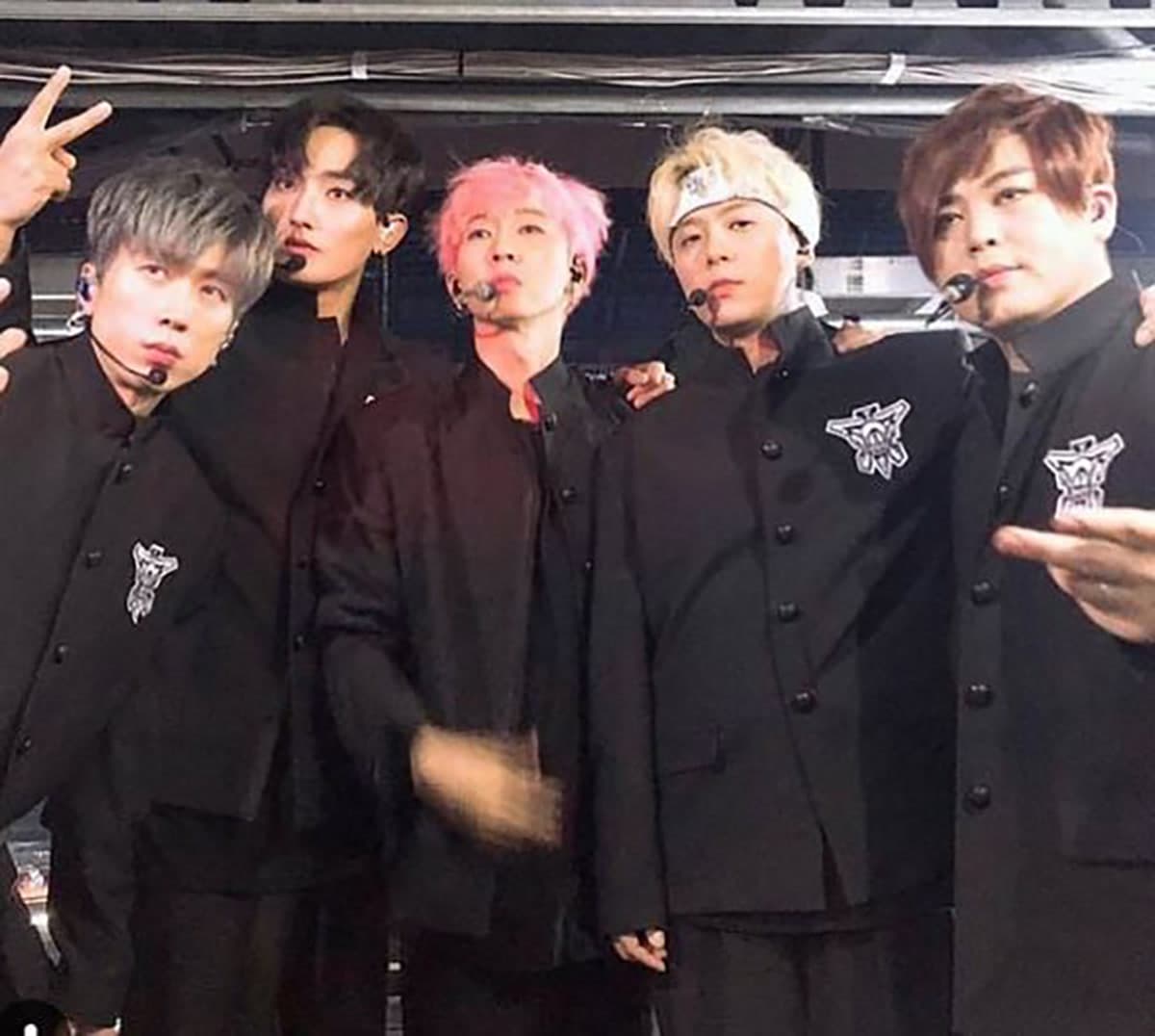
Korean entertainment history was quietly rewritten on May 3, 2026, when Toni An of H.O.T. revealed a secret about one of the most beloved reality shows in K-pop history: god's iconic parenting variety program was originally offered to H.O.T. — and it took two separate rejections before it landed with the group that made it famous.
The revelation came during a special episode of SBS variety show My Ugly Duckling (미운 우리 새끼) in which four first-generation idols gathered on the same stage for the first time in years. Toni An and Moon Hee-jun represented H.O.T., Park Jun-hyung appeared on behalf of god, and Jang Su-won joined from Sechs Kies. The episode aired days after TXT launched their own parenting diary revival — "TXT's Parenting Diary" on Wavve — reigniting public interest in the original show and the history behind it.
The Show That Was Turned Down Twice
god's parenting diary concept became one of the defining variety formats of early Korean entertainment — a reality segment in which the group's members took care of a baby, revealing their off-stage personalities and generating the kind of genuine, unscripted moments that television rarely captures. For Korean audiences who grew up in the early 2000s, the program remains a touchstone of the era.
What no one knew publicly until this week was that the show had been offered and rejected before it ever reached god. Park Jun-hyung was the first to raise the subject. "The parenting diary wasn't originally ours," he said with a knowing smile. "H.O.T. got the offer first."
Toni An confirmed it. "We did receive the offer," he said. "But things were complicated for the team at that time. The circumstances made it difficult to take on." Moon Hee-jun filled in the additional detail that those present had been waiting to hear: the production had one specific condition that was non-negotiable. "They wanted us to appear without any makeup, straight out of bed," Moon Hee-jun explained. "That was completely at odds with the concept we had built. H.O.T. had a very particular image. The idea of showing ourselves in that raw state — it just didn't fit."
Park Jun-hyung added the final piece of the story: H.O.T.'s rejection was not the last one the production received. The same offer went next to Sechs Kies, who also declined. Only then did it find its way to god — and the rest became K-pop history. "It had a fateful quality to it," Park Jun-hyung said. "The right show found the right group, even if it took a few stops along the way."
The Image Problem That Shaped K-Pop History
Understanding why H.O.T. turned down the offer requires understanding the persona they had constructed. When H.O.T. debuted on September 7, 1996 — a date Korean fans now celebrate as the formal beginning of the modern idol era — they introduced a new template for what a Korean pop group could be. Their look was precisely calibrated: dramatic hair, styled outfits, a polished visual coherence that made every public appearance feel like an event.
The no-makeup condition was not simply an inconvenience. It represented a fundamental incompatibility with their identity. In the mid-to-late 1990s, H.O.T.'s image was so carefully controlled that their departure from it — even briefly, even for a charming variety show — was treated as a real risk. The group's popularity had already created disruptions serious enough that schools reportedly issued attendance warnings to prevent students from skipping classes to attend their events. That kind of visibility came with expectations.
Sechs Kies, their fiercest contemporaries and the group with whom they shared the bulk of the era's fandom fervor, faced similar considerations. Their rejection of the same offer adds an additional layer to the story: for both groups, the parenting diary concept was simply not the right vehicle at the right moment.
Secret Dates and 90s Confessions
The parenting diary revelation was the evening's biggest moment, but it was far from the only one. The May 3 episode featured a wider conversation about what 1990s idol life actually looked like behind the curtain — and much of it surprised even people who had followed these artists for decades.
Toni An disclosed that his most-used date location was the Han River. "It came up most often," he said. "You'd see other celebrities there too. We all kept our windows closed — except when it rained, when you could finally roll them down." He then revealed a second location that caught Moon Hee-jun visibly off guard. "I also spent a lot of time at the KBS main building," Toni An said. Moon Hee-jun stared at him. "You went to a broadcast station to date?" Toni An's response was immediate: "I was there for the energy."
Jang Su-won offered a Sechs Kies perspective that diverged entirely from H.O.T.'s approach. "We didn't really do the Han River thing," he said. "We had a van. We'd drive out to the Misari area." The image of two rival idol groups navigating the same city in entirely different ways — one gravitating toward the river's open public spaces, the other to the quieter roads east of Seoul — felt like an appropriate metaphor for groups that had defined themselves in opposition to each other.
Park Jun-hyung added his own piece of idol history: he was among the first entertainers of his generation to publicly acknowledge a romantic relationship, taking the unusual step of holding a formal press conference about it. "At the time, it was not something people did," he noted. "But I felt it was the right thing."
The evening ended on a quietly emotional note when Toni An observed something about the gathering: of the four men present, he was the only one who had never married. "I just realized," he said, looking around at the others, "everyone else has moved on in that direction." He laughed, but the moment carried a particular weight in the context of a night already steeped in nostalgia.
Why the Timing Matters: TXT and the Living Legacy
The episode did not happen in a vacuum. The launch of TXT's Parenting Diary on May 1, just two days earlier, had already prompted a wave of commentary about god's original show and what it meant to Korean entertainment. The TXT version — in which members of the current HYBE act cared for a 14-month-old baby named Yujun — was described in early coverage as a deliberate tribute to the format god had popularized roughly twenty-five years earlier.
That continuity makes the H.O.T. revelation even more resonant. The show that TXT is now reviving, the show that became synonymous with god's warmth and likeability, the show that shaped public perceptions of what an idol could be beyond their musical output — it very nearly belonged to an entirely different group. Had H.O.T. accepted the offer, or had Sechs Kies said yes, god's trajectory might have been fundamentally different. The 2026 TXT revival might be carrying forward a different legacy entirely.
As H.O.T. moves through its 30th anniversary year — the group debuted in 1996, making 2026 a significant marker — moments like these take on additional meaning. The behind-the-scenes truths that felt too delicate to share during the height of competition have started to surface, not as exposés but as gifts: pieces of context that help fans understand the era they loved more fully. The story of the parenting diary is one of those gifts. It does not diminish anyone involved. It simply completes the picture.
How do you feel about this article?
저작권자 © KEnterHub 무단전재 및 재배포 금지
Entertainment Journalist · KEnterHub
Entertainment journalist specializing in K-Pop, K-Drama, and Korean celebrity news. Covers artist comebacks, drama premieres, award shows, and fan culture with in-depth reporting and analysis.
Comments
Please log in to comment