How a Voice Disorder Made Singer Park Jae-jung Love Music More
 By Jang Hojin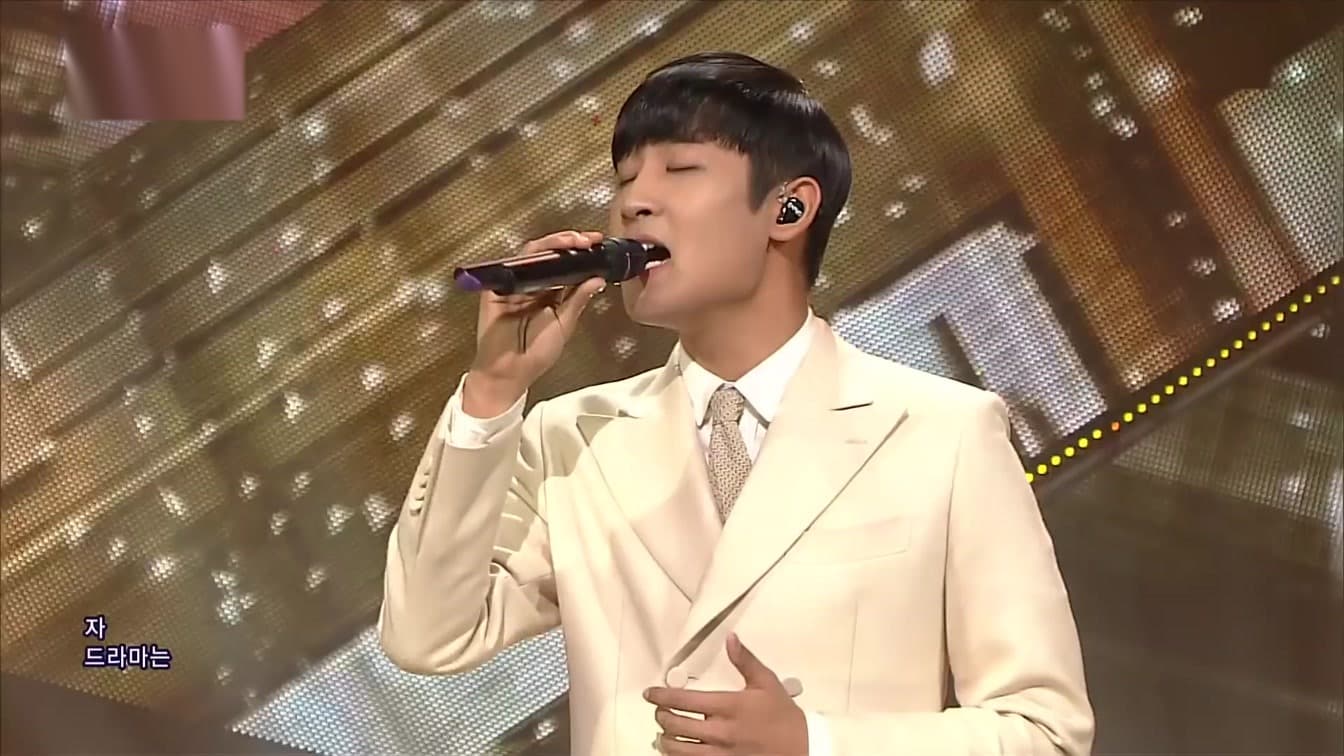
There are some revelations that change the way you hear an artist's voice. On the July 24 episode of KBS2's musical competition show Happy Together — So Glad I'm Not Alone, singer Park Jae-jung shared one of those: after the song that made him famous, he lost the ability to sing normally for a significant period of time.
Appearing alongside close friend and fellow musician Ju Si-k, Park Jae-jung disclosed that following the success of his hit song "Please Break Up With Me" — a track that climbed the charts and turned him into one of South Korea's most recognizable independent musicians — he developed vocal cord nodules. More severely, he was diagnosed with muscle tension dysphonia, a condition in which the muscles involved in voice production become chronically overactivated, causing hoarseness, strain, and in serious cases, the near-complete loss of one's ability to sing.
"Music became more precious to me," Park Jae-jung said on the program. "I want to go back to basics and focus on music again." It's the kind of statement that lands very differently once you understand what was behind it.
The Song That Changed Everything — and What Came After
"Please Break Up With Me" established Park Jae-jung as a name to know in Korean indie music. The song's emotional directness — its mix of vulnerability and melodic pull — resonated with a wide audience and put Park Jae-jung in the position that every independent musician works toward: having a hit that brings new listeners while keeping the fans who were there from the beginning.
What listeners heard on that recording didn't come without cost. The vocal demands of promoting and performing a popular song repeatedly, combined with the pressure that comes with an artist's first major moment of visibility, created the conditions for the injury that followed. Vocal cord nodules are common among professional singers who push their voices beyond sustainable limits — they develop when repeated trauma to the vocal cords causes small calluses to form on the vibrating edges. Muscle tension dysphonia often accompanies or follows nodules, as the voice compensates for the impaired instrument by recruiting surrounding muscle groups in increasingly unhealthy ways.
The recovery process is neither short nor linear. Treatment typically involves a combination of voice rest, speech therapy, and a gradual reintroduction of singing — a process that can last months or longer depending on severity. Park Jae-jung confirmed on the show that his condition has largely recovered, but his description of the experience suggests it fundamentally shifted his relationship to music, stripping away whatever professional anxieties may have accumulated and returning him to something closer to the original impulse.
Veteran singer and MC Yoon Jong-shin, who witnessed Park Jae-jung's recent output as a songwriter and performer, offered a pointed observation: "It seems like he has now become a completed artist." The comment suggests that whatever Park Jae-jung went through has not diminished him but refined him — that the person writing and performing songs now is someone who has chosen to be doing exactly that, without reservation.
A Friendship Built on Complementary Gaps
The context for Park Jae-jung's disclosure is a performance pairing that has its own story worth telling. He appeared on Happy Together alongside Ju Si-k, a musician whose career trajectory has followed a different kind of arc.
Ju Si-k is the writer and performer behind "Thinking of You", a song that generated genuine affection among listeners. But recognition, as Park Jae-jung described it, didn't translate into the kind of general name recognition that makes someone's face familiar: "He had a hit song but lacked name recognition, while I was the opposite." The observation is delivered with humor but points at something real — the peculiar disconnection that happens when a song becomes known but the person behind it remains invisible to audiences who love the music.
Ju Si-k himself recounted the experience in concrete terms. He described being at a restaurant and discovering that the service extended to his table was directed entirely at Park Jae-jung — the raw fish dish that arrived as a gift from the establishment was, Ju Si-k was informed, specifically for his better-known companion. The gap between how much his music was loved and how little he himself was recognized made for exactly the kind of self-deprecating story that works on variety television.
The name change that Ju Si-k underwent adds another layer. When he performed under his legal name, Yun Ju-sik, internet searches for his name consistently returned results about the stock market — a quirk of Korean romanization and internet indexing that made building any kind of digital presence nearly impossible. The switch to the stage name Ju Si-k solved a practical problem, but the anecdote reveals something about how unpredictable the logistics of a music career can be.
A First Duet Stage — With Meaning Behind the Song Choice
For the competition broadcast, Park Jae-jung and Ju Si-k performed as a team, competing together in the show's main round. Their song selection was Kang-ta's "North Star" — a choice that carries particular weight for Ju Si-k, for whom the performance represented his first-ever broadcast stage appearance despite having been active in music for years.
The debut nature of Ju Si-k's broadcast performance gives the duet a specific emotional charge. For Park Jae-jung, who has made his return to music the central story of his current chapter, performing alongside a friend taking his own kind of first step makes the pairing feel less accidental than it might appear. Five years of mutual support between the two, by Park Jae-jung's account, shaped the kind of ease that makes collaboration feel like something other than professional obligation.
Park Jae-jung's disclosure about his vocal injury, set against the context of this performance, reframes his presence on the competition program. He is not simply a known musician making a variety television appearance — he is someone who has come through something significant, who chose to return to music and is now choosing to talk about why that return mattered. The voice that once strained under the pressure of a hit song is, by his own account, healing. Happy Together — So Glad I'm Not Alone airs Fridays at 8:30 PM on KBS2.
How do you feel about this article?
저작권자 © KEnterHub 무단전재 및 재배포 금지
Entertainment Journalist · KEnterHub
Entertainment journalist specializing in K-Pop, K-Drama, and Korean celebrity news. Covers artist comebacks, drama premieres, award shows, and fan culture with in-depth reporting and analysis.
Comments
Please log in to comment