How AI Subtitle Glasses Could Open K-Musicals To Global Audiences
The rental data behind Beethoven shows why smart caption glasses are becoming serious infrastructure for Korean theater.
 By Noh Yechan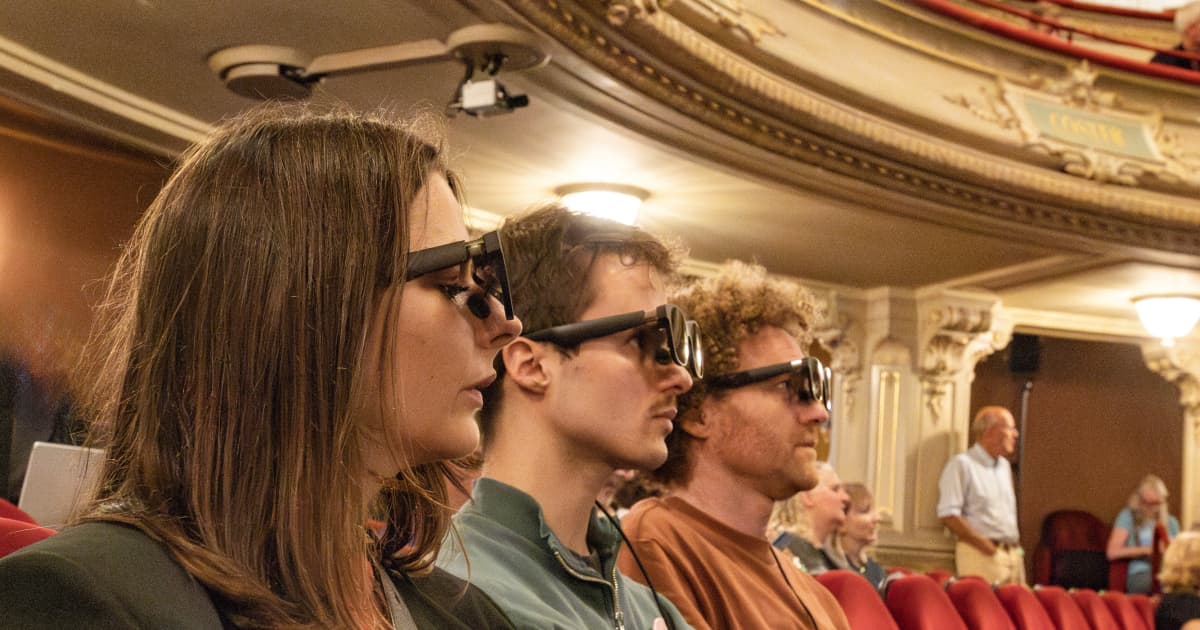
AI subtitle glasses are becoming a practical answer to one of Korean musical theater's biggest global barriers. At major Seoul venues, including Sejong Center, Charlotte Theater and Blue Square, the devices let audiences read lyrics and dialogue inside their field of vision while watching the stage. The immediate news is simple: foreign-language use for the glasses at the musical Beethoven reached 77.3 percent of rentals, according to Dong-A Ilbo reporting. The larger meaning is more ambitious.
This guide explains why AI subtitle glasses matter for K-musicals, how the technology changes the viewing experience, and why the device could become a bridge between Korea's live-theater boom and international cultural tourism. The glasses are not just a gadget. They are an access layer for a genre where language, singing style and stage emotion are tightly connected.
For international K-culture fans, that access layer could be decisive. K-pop and K-drama travel through screens with subtitles already attached. Korean musicals ask foreign audiences to buy a ticket, sit in a theater and follow fast-moving songs in real time. AI subtitle glasses reduce that gap without forcing the production to change language.
To understand the impact, start with the problem the glasses are trying to solve.
The Language Barrier Was A Structural Problem
Musicals are harder to export as live experiences than songs or dramas. A K-pop performance can reach global fans through YouTube clips, translated interviews and social media edits. A drama can travel through streaming platforms with professional subtitles. A musical, by contrast, depends on a shared moment inside a theater. If the audience cannot understand lyrics and dialogue as they happen, the emotional engine weakens.
Korean theaters have used subtitles before. In earlier periods, audiences often looked toward side screens, and later some venues used tablets. Those solutions helped comprehension, but they pulled attention away from the performers. That matters because musical acting is physical and vocal at once. A viewer who is reading off to the side may understand the sentence but miss the face, breath or gesture that gives the line its force.
AI subtitle glasses change that geometry. The device projects text onto the lens so the stage and subtitles sit inside the same line of sight. Viewers can follow a song while keeping their eyes on the actor. That is a small ergonomic change with a large artistic effect. It keeps translation from becoming a competing screen.
The technology was originally developed with accessibility in mind, especially for Deaf and hard-of-hearing patrons. Its newer growth among foreign visitors does not replace that mission. It expands it. The same tool that supports hearing accessibility can also support language accessibility, which makes the business case stronger and the cultural case broader.
That broader use is already visible in the rental data.
What The Rental Numbers Reveal
The most striking figure from the Beethoven case is the split between foreign-language and Korean-language subtitle use. Foreign-language subtitles accounted for 77.3 percent of rentals, while Korean subtitles accounted for 22.7 percent. Among the foreign-language selections, Japanese led at 31.6 percent, followed by English at 25.7 percent and Chinese at 20.0 percent.
Those numbers do more than prove that foreign audiences are curious. They show that the devices are being used primarily as a gateway for non-Korean comprehension. That is important because it moves the conversation from accessibility as a narrow support service to accessibility as core audience development. A venue is not just helping a small group of patrons. It is expanding the addressable market for the show.
The price point matters as well. The reported rental fee is about 15,000 won per performance, low enough to feel like an add-on rather than a premium barrier. That makes the service easier to test for tourists who may already be paying for tickets, transportation and merchandise. It also makes repeat use plausible for foreign residents and international students in Korea.
The language mix points toward Asia first, but not only Asia. Japanese demand leading the list makes sense because Japanese audiences have long been important to Korean stage productions, especially when K-pop-adjacent stars appear. English at 25.7 percent shows a different opening. It suggests that Korean musical theater is not limited to neighboring markets if the comprehension problem is handled well.
Still, technology alone does not create a global theater market. It has to fit a larger cultural moment.
Why The Timing Is Especially Important
Korean musicals are entering a more visible international phase. The Broadway success of Maybe Happy Ending, which won six Tony Awards in 2025, gave the sector a rare global proof point. It showed that a Korean-origin musical could travel beyond specialist interest and compete at the center of the Broadway awards conversation. That kind of success changes expectations at home.
AI subtitle glasses answer a related but different question. Maybe Happy Ending traveled by adapting into the Broadway system. Subtitle glasses could help Korean-language productions travel without fully transforming themselves. A Korean cast could perform in Korean while international audiences follow the text in real time. That preserves more of the original vocal texture, timing and performance culture.
That preservation matters. Theater is not only a story delivery system. It is also an encounter with language, sound and presence. Korean musical actors often bring a vocal style shaped by Korean theater training, ballad singing and K-pop-adjacent expectations of clarity and emotional directness. If every export requires full linguistic replacement, part of that identity can be diluted. Subtitle glasses offer another path.
The tourism angle is just as practical. Seoul already attracts visitors for concerts, pop-up stores, filming locations and fan events. Evening theater can become part of that itinerary if the language barrier feels manageable. The glasses make a musical less intimidating for a visitor who may know the star, the composer or the title but not enough Korean to follow two hours of sung drama.
The real promise is not automatic translation for its own sake. It is giving live Korean performance the same discoverability that subtitles gave K-drama.
That promise comes with limits, and those limits should be taken seriously.
What Still Has To Improve
The current technology is not perfect. Reports from theater use point to occasional timing issues, where captions can appear slightly before or after the line. In a straight play, that may be mildly distracting. In a musical, timing is more sensitive because rhythm and lyric delivery are part of the emotional design. A delayed subtitle can weaken a joke, a confession or a musical reveal.
Comfort is another issue. Even a relatively light device becomes noticeable over a full performance, especially for viewers who already wear glasses. If theaters want subtitle glasses to become a normal part of international audience service, they will need clearer pickup procedures, better pre-show instructions and enough inventory for high-demand performances. The device cannot feel like a complicated rental chore.
There is also an editorial challenge. Subtitle quality matters as much as display quality. Literal translation may help audiences follow the plot, but musical lyrics often need rhythm, metaphor and emotional compression. If the translated text is flat, the glasses will solve comprehension while underselling the artistry. The best version of this system will combine reliable speech recognition, careful preloaded scripts and theater-aware translation.
Venues will also need to treat the service as part of the ticketing journey, not only as a booth at the lobby. A foreign visitor should be able to see whether subtitle glasses are available before choosing a performance date, reserve the device in the same flow as the ticket, and know which languages are supported before arriving. That sounds operational, but it is central to trust. Tourists plan around certainty.
The marketing language should be just as clear. "AI subtitle glasses" can sound experimental to a first-time visitor, while "English, Japanese and Chinese subtitles available through smart glasses" tells the audience what problem is solved. Korean theaters do not need to overexplain the technology. They need to make the access promise visible at the decision point where a hesitant foreign fan decides whether a musical is worth the risk.
That clarity also protects the audience experience after arrival. When viewers know the device is part of the official service, they are less likely to worry about etiquette, seat visibility or whether the subtitles will disturb nearby patrons.
Even with those caveats, the direction is clear. AI subtitle glasses are becoming a serious infrastructure tool for K-musicals, not a novelty accessory. The reported rental pattern at Beethoven suggests that foreign audiences will use the service when it is available, affordable and easy to understand.
The next step is scale. More venues need consistent availability, more productions need multilingual preparation, and tourism platforms need to explain the option before visitors buy tickets. If that happens, Korean musicals could gain a new route to global audiences: not by leaving Korean behind, but by making Korean performance easier to enter.
How do you feel about this article?
저작권자 © KEnterHub 무단전재 및 재배포 금지
Film & Global Culture Reporter · KEnterHub
Film and culture reporter following Korean cinema from Chungmuro to Cannes. Noh Yechan covers theatrical releases, festival circuits and award season, and writes about how Korean entertainment reshapes global pop culture.
Comments
Please log in to comment