How 'Bon Appétit, Your Majesty' Became the Biggest K-Drama Moment of 2025
YoonA's career-defining performance, a newcomer's breakthrough, and 588 million Netflix hours — the anatomy of a phenomenon
 By Park Chulwon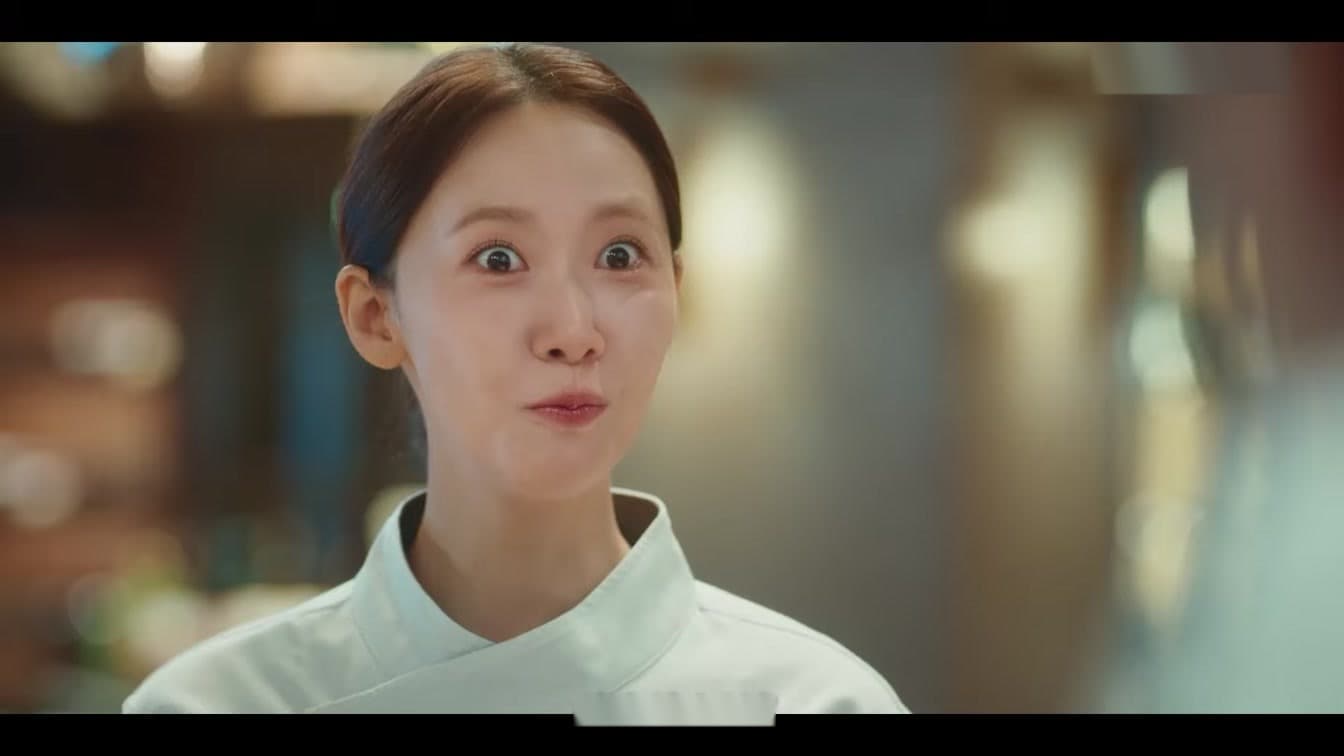
When Bon Appétit, Your Majesty aired its finale on September 28, 2025, the numbers told a story that few in the Korean television industry had dared to predict. A nationwide viewership rating of 17.107 percent — peaking at 19.4 percent — placed the tvN drama twelfth among the highest-rated cable dramas in South Korean history. More strikingly, it was the only tvN production in all of 2025 to crack double digits, in a year when the network had aired twelve dramas and quietly wondered whether its era of hit-making was fading.
On Netflix, the numbers were even more remarkable. By the end of its run, Bon Appétit, Your Majesty had accumulated 588.3 million hours viewed — making it the third most-watched title globally on Netflix for the second half of 2025, behind only Wednesday Season 2 and Stranger Things 5. For a Korean cable drama that was not even a Netflix original, that ranking was historic. It became the first-ever non-original K-Drama to reach number one on Netflix's Global TV Show chart, and it held that position for two consecutive weeks.
The drama that achieved all this was a time-travel fantasy about a French-trained Korean chef who slips back to the Joseon dynasty, falls in love with a tyrannical king who happens to be a food obsessive, and navigates palace politics that would be lethal in any era. The premise sounds light. The execution was anything but.
The Premise: Food, Time, and a King Who Eats Everything
Bon Appétit, Your Majesty — known in Korean as 폭군의 셰프, literally "Tyrant's Chef" — was written by fGRD and directed by Jang Tae-yoo. The series is based on Park Kook-jae's web novel Surviving as Yeonsangun's Chef, which draws inspiration from the historical reign of King Yeonsangun of Joseon and the Gapja Sahwa, the second purge of the literati in 1504.
The story follows Yeon Ji-yeong, a South Korean chef who has just won the top prize at a prestigious Paris-based Michelin chef competition — the culmination of a decade of relentless ambition and sacrifice. On the night of her triumph, a solar eclipse sends her hurtling backward through time to the Joseon dynasty. She arrives inside the royal kitchen of King Lee Heon, a ruler simultaneously feared for his cruelty and renowned throughout the court for his extraordinarily refined palate.
What unfolds over twelve episodes is a layered drama that blends romantic comedy, political thriller, and historical costume spectacle. Ji-yeong must survive palace intrigue — including a scheming royal consort and a prince plotting regicide — while deploying the only weapon she actually possesses: her modern culinary knowledge. Through dishes she recreates from memory, she earns the king's protection, then his respect, and eventually something neither of them planned for.
The setup is structurally similar to other beloved time-slip K-dramas. But Bon Appétit succeeds where many of its predecessors stumbled because it treats the food element not as a quirky backdrop but as the drama's emotional engine. Every dish Ji-yeong prepares carries a memory, a strategy, or a confession. When she reconstructs a croissant from scratch using Joseon-era ingredients, it is not played for comedy alone — it is the moment the king begins to understand that she comes from somewhere he cannot imagine, and that she is not afraid of him.
Ratings That Defied a Difficult Year
The commercial television landscape in South Korea in 2025 had been humbling for many networks. Streaming was continuing to fragment audiences. Younger demographics in particular were consuming content across multiple platforms — Netflix, Disney+, TVING, Wavve — making the traditional metric of live cable ratings increasingly difficult to move. Against that backdrop, Bon Appétit, Your Majesty defied gravity.
The drama premiered on August 23 with a respectable 4.856 percent nationwide rating. Episode 2 rose immediately to 6.642 percent. By Episode 4, broadcast on August 31, it crossed 11 percent — the first tvN drama in 2025 to do so — and earned the network's highest single-episode rating of the year at that point. The momentum never broke.
Episode 6, which aired September 7, pulled 12.7 percent nationwide and peaked at 14.5 percent, with the metropolitan Seoul area reaching 13.1 percent peaking at 15.1 percent. Episode 9 climbed to 13.463 percent. Episode 10 set what was then a series record of 15.75 percent nationwide, peaking at 17.3 percent. The finale eclipsed everything, landing at 17.107 percent nationwide with a peak of 19.4 percent.
Daishin Securities analyst Kim Hoe-jae noted that the figures carried additional weight given structural circumstances: viewership was being split across simultaneous streaming on Netflix and TVING, meaning the cable number alone was representing only a fraction of the total audience. The true combined reach of the drama, when accounting for live streaming, same-day OTT viewing, and Netflix catchup, was significantly larger than the headline rating suggested.
For Studio Dragon, which produces the majority of tvN's premium slate, the run ended a difficult period. The production company had seen mixed results through the first half of 2025, and analysts had raised questions about whether its strategy of premium, big-budget weekend dramas could sustain itself against increasing platform competition. Bon Appétit, Your Majesty answered the question decisively. On November 6, Studio Dragon cited it as a primary driver of its return to profitability in Q3 2025.
The Casting Crisis That Became a Stroke of Fortune
The drama's path to production was not without turbulence. Actor Park Sung-hoon had originally been cast as the male lead, King Lee Heon. On December 30, 2024, he became the center of controversy after posting an explicit image on his Instagram story. The incident prompted a rapid reassessment by Studio Dragon. Following discussions between the production company and Park, it was mutually agreed that he would step down from the role.
The production then turned to Lee Chae-min, a young actor who had previously appeared in a relatively minor supporting role in the 2023 drama Crash Course in Romance. The decision was met with considerable skepticism. Lee Chae-min had essentially no experience carrying a lead role, particularly not in a prestige historical drama that required conveying the volatile psychology of a king infamous in the historical record for unpredictable cruelty.
What followed was one of the most unexpected breakthroughs in recent Korean television. Lee Chae-min's performance earned near-universal praise. Viewers and critics highlighted his ability to shift between menace and vulnerability — a king who rules through terror but has, somewhere beneath the courtly armor, an emotional core that has been systematically suppressed since childhood. His scenes with Yoona, despite a decade age gap, generated chemistry that audiences found entirely convincing. By the finale, he was being discussed as one of the breakthrough leading men of the year.
The casting reversal became a narrative within a narrative — another way in which the drama seemed to accumulate good fortune from adverse circumstances. A crisis that might have derailed production instead produced a performance that arguably elevated the entire series.
This Is YoonA's Era: A Career Decade in the Making
For Lim Yoona — known professionally as YoonA, a member of Girls' Generation since her debut in 2007 — the drama represented something more than a hit. It was the culmination of a career arc that had been building across fifteen years of simultaneous idol career management and acting development.
YoonA had appeared in supporting and second-lead roles that drew strong ratings before. Big Mouth (2022) pulled 13.7 percent as a drama in which she was second lead. King the Land (2023), in which she was a co-lead in a more conventional romance, also achieved 13.7 percent as its series high. But neither placed her at the center of the story in the way that Bon Appétit, Your Majesty did.
As Yeon Ji-yeong, YoonA carried a drama that required comedic timing, physical performance, emotional range across grief and joy and fear, and the specific challenge of making a modern person's bewilderment in a historical setting feel grounded rather than cartoonish. She succeeded on all fronts. Fan reactions to her performance — catalogued across Naver, social media, and international fandom forums throughout the run — repeatedly emphasized how much the character felt real rather than archetypal.
The drama's social media footprint reflected her dominance. Good Data Corporation's weekly rankings of TV personality buzz placed YoonA at number one in the TV-OTT combined category for multiple consecutive weeks during the run. The broader cultural conversation around the drama frequently circled back to her as the anchor of its success. Industry observers noted that she had effectively completed what many idol-turned-actors attempt but few fully achieve: the transition to genuine leading actress status, not by abandoning her identity as an idol, but by building something distinct alongside it.
In South Korea, where the distinction between "idol acting" and "actor acting" remains a charged subject, her performance in this drama was widely described as having settled the question — at least in her case.
The Netflix Effect: 588 Million Hours and a Global First
The international numbers for Bon Appétit, Your Majesty require a separate analysis because they tell a different story from the domestic ratings — and in some respects, a more consequential one.
The drama entered Netflix's Global Top 10 TV (Non-English) chart within two days of its August 23 premiere, ranking fourth. By September 8, it had entered the US Top 10 — a market that K-dramas have historically found difficult to crack for non-Netflix original productions. On that same day, the show ranked first globally across all non-English television content on Netflix. This made it the first-ever non-original K-Drama to reach the number one position on Netflix's Global TV chart.
The first week accumulated 9.4 million hours viewed across 3.5 million households. The second week expanded dramatically to 43 million hours viewed by 8.1 million households. The show held the top position in Netflix's non-English TV rankings for two consecutive weeks, and remained in the global top ten for ten weeks — a duration that exceeded most K-drama entries, including some Netflix originals.
In Netflix's H2 2025 Engagement Report, released in January 2026, the drama's full cumulative total came in at 588.3 million hours viewed. That figure placed it third globally for all series content across all languages on Netflix for the second half of 2025 — behind only Wednesday Season 2 and Stranger Things 5, two of the most-watched franchise continuations in Netflix's history. For a Korean cable drama that was licensed to Netflix rather than produced by it, the achievement had no meaningful precedent.
The geographic spread was similarly striking. The series ranked number one in 23 countries simultaneously and entered the top ten in 91 countries. Its performance in Japan was particularly notable — a market that has historically shown strong appetite for K-dramas but also clear preferences for certain genres. The combination of Joseon-era aesthetics, which Japanese audiences have consumed consistently for decades, and the modern-woman-in-historical-setting premise proved highly effective.
Netflix, in its Q3 2025 earnings call in October, identified the series by name as one of its hit titles for the period — a designation the platform reserves for a small number of titles per quarter. The commercial relationship between Netflix and Studio Dragon has now been extended and expanded, with the H2 2025 success reinforcing the platform's commitment to Korean cable content as a key pillar of its non-English programming strategy.
Why the Formula Worked — and What It Suggests for K-Drama
Korean television has a long and lucrative history with time-slip dramas. Queen In-hyun's Man, Faith, Moon That Embraces the Sun, Mr. Queen, The King's Affection — the genre has proven itself repeatedly capable of generating mass audiences when executed well. But the success rate has never been consistent, and the reasons behind any specific hit are rarely reducible to a single element.
Bon Appétit, Your Majesty worked for several reasons that, individually, exist in other dramas, but rarely in combination at this density.
The food element gave the drama a structuring metaphor that transcended the romance. Every major emotional beat in the narrative was mediated through cooking or eating. The king's first moment of vulnerability came when Ji-yeong recreated a dish that reminded him of a memory from before he became a tyrant. Her deepest moment of homesickness was played out through an attempt to recreate a dish from her mother's recipe. The political climax of the drama involved the king making a life-or-death decision in the kitchen, not the throne room. The food was not decoration — it was the language the drama spoke in.
The casting chemistry was, by all accounts, exceptional. YoonA and Lee Chae-min spent their scenes together playing a game of tension — between his instinct to dominate and her refusal to be dominated, between historical helplessness and modern self-possession — that viewers found genuinely compelling rather than predictable. The dynamic was supported by writing that understood how to delay romantic payoff in ways that built rather than frustrated audience investment.
The production design also drew significant commentary. The Joseon-era royal court settings were constructed with an attention to detail that enhanced the show's visual authority. Foreign audiences with limited familiarity with Joseon history found the settings immersive without being alienating. The food preparation sequences, in particular, were shot with a documentary-influenced precision that made them satisfying to watch independently of the narrative they were embedded in.
Studio Dragon's Larger Significance
The business story running parallel to the drama's content is also worth examining. Studio Dragon has been the dominant force in Korean premium television production for nearly a decade, having been responsible for dramas like The Glory, Queen of Tears, Crash Landing on You, and dozens of other internationally recognized titles. But 2024 and early 2025 had been characterized by mixed results, rising production costs, and investor concern about whether the studio's premium strategy was sustainable in an era of intensifying streaming competition.
The H2 2025 Netflix Engagement Report reveals a pattern that may offer reassurance. In 2023, The Glory ranked third globally with 622.8 million hours. In 2024, Queen of Tears ranked third globally with 682.6 million hours. In H2 2025, Bon Appétit, Your Majesty ranked third globally with 588.3 million hours. Three consecutive years, three Studio Dragon productions, three global top-three finishes on Netflix. The consistency is not accidental — it reflects a production approach that has learned to balance local cultural specificity with narrative structures that translate across languages and cultural contexts.
For CJ ENM, which owns Studio Dragon, the Q3 profitability recovery was significant at the corporate level. But perhaps more significant is what the drama demonstrated about the continued viability of the cable drama model in a streaming-first environment: that a show airing on a weekend cable slot, simultaneously available on a streaming platform, could still generate appointment-viewing behavior at a scale that moved ratings needles in ways that the industry had begun to doubt were possible.
An Ending That Divided the Room
No assessment of Bon Appétit, Your Majesty would be complete without acknowledging its most consistent criticism. Viewers who loved the drama — and they were numerous — almost universally agreed that the twelve-episode format was too short. The finale, which aired September 28, attempted to resolve multiple storylines that had been accumulating over the run, and the compression showed. Several plot threads were closed in ways that felt summary rather than earned. Characters who had been developed carefully throughout the middle episodes were resolved in montage sequences that left audiences feeling the story had more room to breathe than it was given.
Some fans speculated that the original run had been planned as sixteen episodes and was condensed during production. The production never confirmed this. What was clear was that the finale, despite setting a series ratings record, received more qualified reviews than any preceding episode. The IMDB audience score of 8.0 reflects a drama that overwhelmingly satisfied its viewers while leaving them wanting something it ultimately did not fully provide.
This is, in some respects, the critique of success. A drama that had been more modestly received would not have generated the hunger for a better ending that this one did. The fact that audiences were invested enough to be disappointed by a finale that was, by any conventional standard, successful, is its own form of testimony to how thoroughly the drama had earned their engagement.
Verdict: The K-Drama That Defined 2025
In a television year marked by high-budget misfires, streaming saturation, and industry anxieties about whether the golden era of K-drama was plateauing, Bon Appétit, Your Majesty arrived and reminded everyone why the genre has the global reach it does. It worked because its creative elements — script, direction, casting, production design, food — aligned in ways that are not replicable by formula. But it also worked because it understood something fundamental: that audiences come to Korean romantic dramas not just for the romance, but for the sensation of watching someone in an impossible situation discover that they are capable of more than they knew.
YoonA's Ji-yeong does not survive the Joseon court because she is the hero of an action drama. She survives because she is extraordinarily good at the thing she loves, and because that skill turns out to be enough. In an era when entertainment increasingly optimizes for spectacle, there is something quietly radical about a drama whose climaxes happen in a kitchen.
The 17.107 percent finale. The 588.3 million Netflix hours. The third-place finish on the global chart. The Studio Dragon profitability recovery. By every quantitative measure, Bon Appétit, Your Majesty was the K-drama story of 2025. The numbers are impressive. What they represent — a drama that earned every one of them through clarity of vision and execution — is more impressive still.
What Comes Next: YoonA, Lee Chae-min, and Studio Dragon's Roadmap
The success of Bon Appétit, Your Majesty has set a new baseline of expectation for everyone attached to it. For YoonA, the question is no longer whether she can carry a drama — it is what kind of drama she chooses to carry next. Industry sources indicated in October 2025 that her management had received multiple scripts within weeks of the finale, spanning genres from contemporary thriller to period melodrama. She has not yet confirmed a follow-up project, and there is reason to believe she will be selective: an actress who has spent fifteen years building to this moment has no need to rush the sequel.
Lee Chae-min's trajectory is perhaps the more immediately consequential story for the industry. He entered production as an unknown quantity and exited it as one of the most sought-after young leading men in Korean television. The roles available to him now are categorically different from what they would have been without this drama. How he manages the transition — and whether he can sustain the quality of his debut lead performance across a wider range of material — will be one of the more closely watched stories in Korean entertainment over the next two years.
For Studio Dragon, the drama has reinforced a strategic conviction: that the weekend cable slot, properly supported with global streaming distribution and the right creative team, can still generate returns that justify premium investment. The company's next major weekend dramas are already being tracked by analysts and fans alike as potential successors to the crown. The bar has been set high — higher than it has been in years.
And for the genre itself, the drama offers a model worth studying. Time-travel K-dramas have been a reliable commercial vehicle since at least 2012. What Bon Appétit, Your Majesty demonstrated was that the genre still has room to surprise — that a familiar framework, loaded with a genuinely original thematic premise and cast with precision, can produce something that feels new. The food metaphor alone generated fan analysis, culinary content creation, recipe reconstructions, and cultural commentary in a way that no K-drama had done since Jewel in the Palace first aired more than two decades ago.
The 2025 K-drama landscape offered no shortage of ambitious productions. Disney+ invested enormous sums. Netflix produced and co-produced at scale. Yet the drama that ended the year most thoroughly dominating the conversation was a cable production about a chef who travels back in time. In television, as in cooking, the simplest ingredients, handled with care, produce the most memorable results.
How do you feel about this article?
저작권자 © KEnterHub 무단전재 및 재배포 금지
Entertainment Journalist · KEnterHub
Entertainment journalist focused on Korean music, film, and the global K-Wave. Reports on industry trends, celebrity profiles, and the intersection of Korean pop culture and international audiences.
Comments
Please log in to comment