How BTS Became the First K-Pop Act to Headline a World Cup Final
ARIRANG World Tour, 720,000 European fans, and a halftime show that changed everything
 By Seung Jung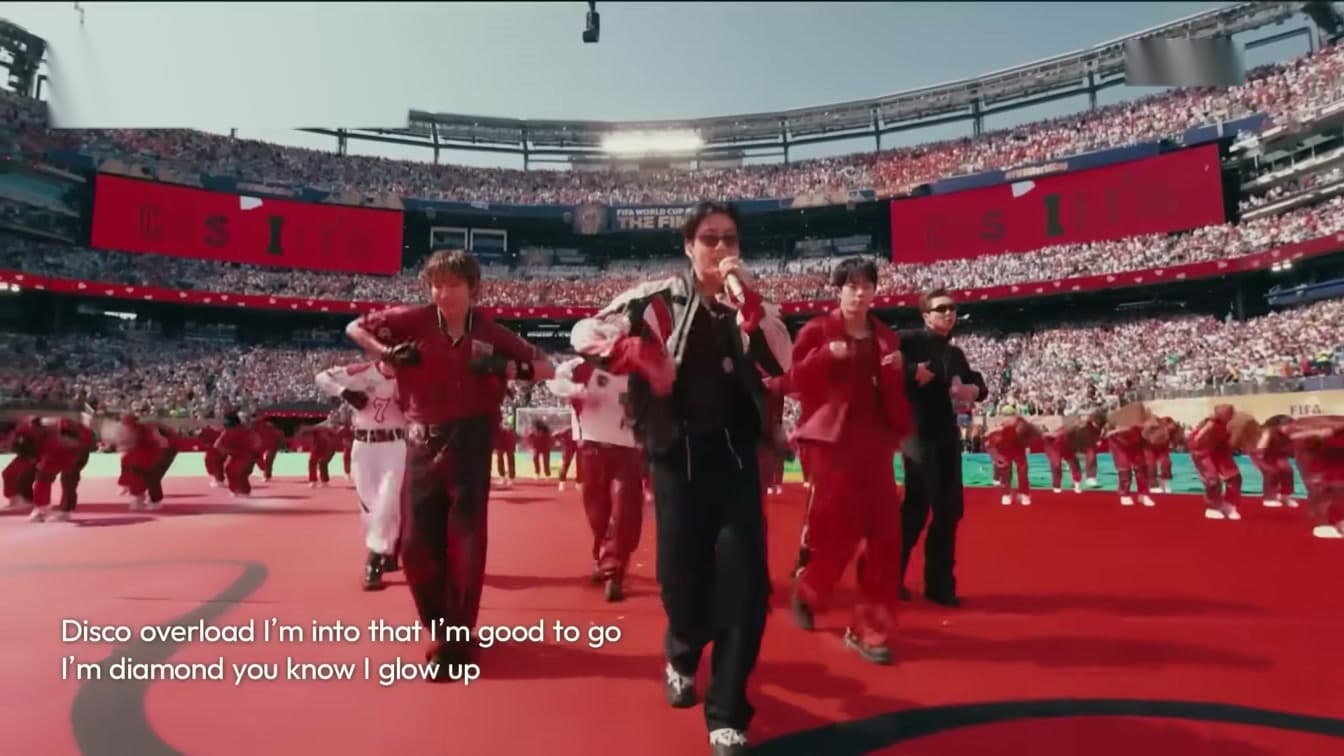
When the 2026 FIFA World Cup Final needed a halftime act, the organizers made a choice that had never been made before in the tournament's 96-year history: they invited BTS. On July 19 at MetLife Stadium in New Jersey, the seven-member group stood at center field alongside Madonna, Shakira, and Justin Bieber as co-headliners of the first halftime performance ever staged at a World Cup Final — and in the days that followed, the internet made clear what it thought of the decision.
Google Trends data released on July 22 showed that searches for "BTS" spiked to roughly four times their typical volume on the day of the match, outperforming even the group's own comeback in March, when their fifth studio album Arirang dropped and search interest peaked at an index of 54. The World Cup day index hit 100. The geographic reach of that surge was particularly striking: significant increases came from Europe, South America, and parts of Africa — regions where K-pop search traffic has historically been much lower than in East and Southeast Asia.
The Night BTS Performed for the Entire Planet
The World Cup Final halftime show had been kept secret from the public until shortly before the event, which only amplified the reaction when BTS appeared on screen. Dressed in costumes evoking the imagery of the Taeguk — the symbol at the center of the South Korean flag — the seven members opened their set with Dynamite, the English-language track that became their first Billboard Hot 100 number-one single in 2020 and remains one of their most globally recognized songs. For the occasion, the group reworked portions of the lyrics to reference football directly, weaving in phrases about the game as the stadium crowd responded in real time.
At the center of the stadium floor, production crews deployed a massive light installation shaped like an Earth Ball, the image visually underlining a message about global unity. The combination of the spectacle, the familiar song, and the football-specific adaptation produced a moment that circulated across social media for days afterward. Reaction videos from fans watching in dozens of countries reflected the same general tone: surprise, excitement, and a recognition that something unusual had just happened at an event that historically kept its entertainment very firmly within the mainstream of Western pop.
The Paris leg of BTS's European tour earlier this month had already given the group one notable headline: French President Emmanuel Macron and his wife attended a performance at Stade de France, drawing significant attention from both the Korean and French press. The World Cup Final, two weeks later, amplified that visibility considerably further.
What the ARIRANG World Tour Has Already Achieved
To understand the scale of what BTS is currently doing, it helps to look at the numbers behind their ongoing world tour. The BTS WORLD TOUR ARIRANG — named after their fifth studio album, which the group released in March — is, by total concerts and cities planned, the largest world tour in K-pop history. Across 34 cities and 88 concerts, the tour has already passed two milestones that would have seemed extraordinary for any artist only a few years ago: approximately 840,000 attendees across the North American leg, and roughly 720,000 across the completed European dates covering Madrid, Brussels, London, Munich, and Paris.
Those European figures become more meaningful when you consider that the Paris concerts sold out within minutes of tickets going live, and that in several cities, local promoters received enough public pressure to announce the possibility of additional dates. The full data from each market suggests consistent, overwhelming demand — not a tour coasting on the momentum of past success, but a group actively drawing its largest crowds to date.
The Arirang album itself has performed on a trajectory that reflects the same pattern. "NORMAL," one of the album's standout tracks and an alternative pop composition about the private emotional cost of public life, entered the Billboard Hot 100 at number 41 and spent three consecutive weeks on the chart. Its lyrical subject matter — quiet singing-rap reflecting on the emptiness and fear that exist beneath the spotlight — has resonated particularly strongly with long-term fans who have followed the group through their various solo projects and returns.
The NORMAL Live Clip and What It Says About BTS in 2026
On July 21, two days before the World Cup Final search surge data was released, BTS dropped something very different from stadium spectacle: an intimate live performance video for "NORMAL," released at midnight Korean time on their official YouTube channel, BANGTANTV. The clip was filmed at Sunhyewon, a traditional hanok compound in Seoul that the group had also used for the live video of their album's title track "SWIM" back in March.
Where the World Cup performance was global and theatrical, the NORMAL video was deliberately small. The quiet performance space, the acoustic feel of the hanok interior amplifying the members' harmonies, and the unhurried pacing of the clip stood in deliberate contrast to the scale of the tour taking place simultaneously around the world. Big Hit Music, BTS's label, noted in the release statement that the recording captures "the vivid vocals of the members, down to their subtlest breaths," filling the traditional space with an intimacy that arena performances necessarily cannot replicate.
The release strategy — major stadium performances running in parallel with stripped-back studio content on YouTube — reflects something intentional about how BTS has managed its presence during the Arirang era. The group has been consistently active across multiple registers at once: spectacle for the stadiums, depth for the listeners who want to sit with the music in a quieter way. Both threads have been performing well.
Brand Reputation, Next Stops, and What Comes After
In South Korea, the Korea Institute of Corporate Reputation's monthly idol group brand ranking for July placed BTS at number one, as assessed across participation index, media index, communication index, and community index. The ranking reflects what the tour data and the Google Trends figures have also suggested: that the group's cultural footprint, far from contracting after members completed their mandatory military service periods over the past several years, has continued to expand.
The Arirang tour continues in August, with New York concerts scheduled for August 1 and 2. Additional cities and dates are expected to follow as the tour extends through the second half of 2026, with the group's management describing the current run as an ongoing expansion of an itinerary that was already the most ambitious in K-pop history when it was first announced.
The World Cup halftime appearance will likely serve as a reference point in discussions of BTS's 2026 for some time. It was, by definition, a singular event — the first of its kind, at one of the most-watched sporting broadcasts on the planet. But it also arrived in the middle of a period of sustained creative and commercial activity that has produced striking numbers across every metric the music industry tracks. The halftime show was the loudest moment in a year that has not been short of them.
For fans tracking the group's trajectory from their early days as underground hip-hop acts signed to a small label in Seoul, the image of BTS on a World Cup Final stage, drawing a four-times-normal Google search spike in regions that barely registered on K-pop's radar a decade ago, offers a particular kind of satisfaction. The scale was always the aspiration. In 2026, it has become the reality.
How do you feel about this article?
저작권자 © KEnterHub 무단전재 및 재배포 금지
Senior Entertainment Correspondent · KEnterHub
Senior entertainment correspondent with a wide-angle view of Korean show business. Seung Jung covers celebrity news, variety television and award season, and writes the interviews and features that connect individual stories to the larger currents of Korean entertainment.
Comments
Please log in to comment